Fragrance Notes Are Layers Of Scent That Are Layered To Form The Final Fragrance. Fragrance Notes Are Categorised Into Three Main Elements Based On How Long They Take To Evaporate, And How Long They Typically Last Following Application: Top Notes, Heart Notes And Base Notes.
Pea
Pea offers a crisp, vegetal green note, capturing the freshness of a crushed pod. It has an aqueous, delicate sweetness reminiscent of fresh garden growth, lending a natural, bright, and slightly earthy dimension to fragrances, often used to enhance transparent green or subtle fruity-floral compositions.

Origin & Extraction Of Pea
The "Pea" note, symbolizing a crisp, vegetal freshness, is a relatively modern and specialized concept in perfumery, rather than an ingredient with centuries of classical use like rose or citrus. Historically, perfumery focused on volatile floral and heavy resinous notes. The green, aqueous, and subtle sweetness of pea, which captures the scent of a freshly crushed pod, became relevant primarily with the rise of hyper-realistic and "naturalistic" fragrance movements in the late 20th and early 21st centuries. Perfumers began seeking out complex green notes beyond simple grass or leaf accords to evoke specific elements of a garden.
Today, the pea note is often created synthetically, using molecules that capture its delicate sweetness and aqueous quality, as direct natural extraction is uncommon. It is strategically used in contemporary niche and high-end perfumery to lend a translucent, bright, and slightly earthy dimension to compositions, often bridging fresh green top notes with delicate floral hearts. It is valued for its ability to add a sense of quiet authenticity and refined clarity to subtle fruity-floral or springtime fragrances.
Extraction Methods of Pea
The extraction of aromatic and bioactive compounds from the pea (specifically Clitoria ternatea or Butterfly pea) traditionally involves maceration, where plant material is soaked in a solvent like water or alcohol to release its phytochemicals. Historically, this straightforward method has been the standard for producing food colorants and medicinal infusions in Ayurvedic traditions, often involving simple boiling or long-term steeping.
Modern extraction techniques have evolved to significantly improve yield and efficiency. The application of ultrasound-assisted extraction (UAE) is a leading contemporary method, using ultrasonic waves to create cavitation that breaks down plant cell walls more effectively than traditional soaking. Other advanced methods include solvent extraction using ethanol or hexane for isolating specific volatile molecules and the potential use of steam distillation to capture the subtle, green aromatic profile used in fine perfumery.
The delicate and aqueous Pea note, often symbolizing a hyper-realistic garden freshness, is utilized by modern perfumers seeking a subtle, green clarity distinct from traditional sharp citrus or heavy florals. In mainstream fragrance, the note often appears as "Sweet Pea," most famously exemplified by the popular body care range from Bath & Body Works Sweet Pea. This interpretation leans into the delicate, sweet, and floral aspects of the accord to create an accessible, uplifting, and springtime scent profile.
In the realm of high-end and niche perfumery, the Pea note is deployed with greater sophistication to achieve subtle texture. For example, the scent is noted in B. Balenciaga, where it contributes a crisp, green opening that complements the composition's more woody and floral heart, moving beyond simple sweetness to provide a refined, translucent freshness. Similarly, fragrances like Giungle di Seta by Salvatore Ferragamo use the vegetal crispness of the note to enhance a bright, exotic, and dewy green landscape.
More artistic interpretations use the Pea note to bridge different fragrance families, adding complexity to earthy or avant-garde compositions. In L’Artisan Parfumeur’s Iris de Gris, the crisp green facet of the pea note offers a dewy contrast to the dry, powdery iris root, giving the fragrance a natural, slightly earthy lift. This use highlights the note’s versatility—not just as a source of sweetness, but as a textural component that introduces naturalistic, transparent greenness to abstract or minimalist compositions.
Sustainability Of Pea
Sustainability of Peas
- Utilizing nitrogen fixation to naturally replenish soil nutrients, which eliminates the need for synthetic fertilizers and reduces greenhouse gas emissions
- Conserving water through shallow root systems that consume less water than other crops and leave deep-water resources available for future rotations
- Maintaining a low carbon footprint, with pea protein production generating significantly fewer emissions than animal-based proteins and other major crops
- Promoting regenerative agriculture practices that improve soil health management, enhance biodiversity, and build organic matter
- Advancing sustainable food systems by upcycling pea by-products into high-value ingredients and implementing life cycle assessments to track environmental impacts
Trivia
Sweet pea is famously known as the "mute" flower in perfumery because its exquisitely subtle scent cannot be captured as a natural extract; instead, perfumers must use alchemy to recreate its fragrance from other raw materials.
Most Popular Scents Using Pea
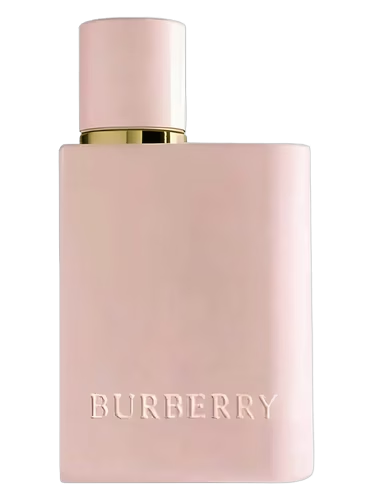
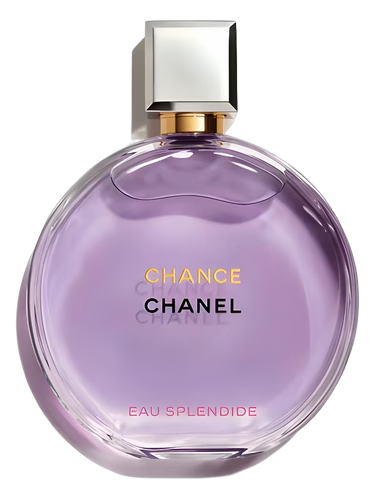
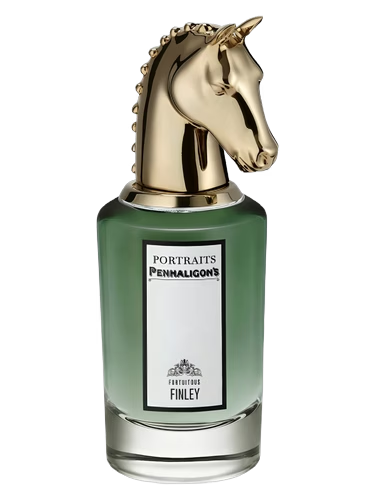
What is the Pea note in perfumery?
The Pea note is a modern fragrance element that captures the crisp, vegetal freshness of a crushed pod, offering an aqueous sweetness and natural green character.What does Pea smell like?
It features a bright, translucent green profile with delicate garden-fresh sweetness and subtle earthy undertones, distinct from sharp citrus or heavy floral notes.How is the scent of Pea or Sweet Pea captured?
Because the natural flower is "mute" and cannot be effectively extracted, perfumers use a combination of molecules like phenyl ethyl alcohol and linalool to reconstruct its airy, honey-green aroma.What are some popular perfumes with a Pea note?
Notable fragrances include Jo Malone London English Pear & Sweet Pea, B. Balenciaga, Salvatore Ferragamo Giungle di Seta, and L’Artisan Parfumeur Iris de Gris.When is the Pea note typically in season?
As a fragrance note, it is associated with spring and early summer, reflecting the natural growing season of peas which typically occurs between April and June.