Fragrance Notes Are Layers Of Scent That Are Layered To Form The Final Fragrance. Fragrance Notes Are Categorised Into Three Main Elements Based On How Long They Take To Evaporate, And How Long They Typically Last Following Application: Top Notes, Heart Notes And Base Notes.
Pansy
Pansy offers a warm, snuggly, herbal-citrus profile. It opens with bright, uplifting notes of bergamot and orange flower, creating an initial fresh lift. This is quickly enveloped by deep, comforting, and earthy undertones of oakmoss and labdanum, complemented by the aromatic, slightly sharp greenness of rosemary, resulting in a safe and soft, yet complex, fragrance.

Origin & Extraction Of Pansy
The Pansy note, derived from the Viola tricolor plant, belongs to the family of violet-scented flowers. Historically, notes related to violet and pansy were popular in the late 19th and early 20th centuries, often used to impart a delicate, powdery, and slightly melancholic floral sweetness to compositions. Although the natural oil is rarely used due to complexity in extraction, the scent profile is recreated synthetically or through accords to evoke its unique combination of green, herbaceous, and soft floral characteristics. The pansy is often associated with sentiments of remembrance and love, which added a layer of romantic meaning to the fragrances that featured it.
In modern perfumery, the Pansy note, or accords that mimic its scent, is valued for its ability to bridge different fragrance categories. It provides a soft, 'snuggly' texture and subtle green depth, making it versatile in classic powdery florals, earthy chypres, and even some masculine scents, where its green/violet-leaf-like bitterness adds complexity without overt floralcy. Its relevance continues today in niche perfumery for creating vintage-inspired or sophisticated green floral structures that require a delicate balance between bright opening notes and deeper, mossy bases.
Extraction Methods of Pansy
The extraction of pansy (Viola tricolor) essence and its bioactive compounds is primarily achieved through steam distillation or solvent extraction. Historically, traditional methods included simple water infusions, maceration in oils or animal fats (enfleurage) to capture delicate floral notes, and hand-gathering of seeds and petals for medicinal preparations. Ancient techniques often focused on creating herbal distillates or infused oils by soaking the plant material in carrier oils like olive or jojoba for several weeks to pull out its therapeutic properties.
Modern commercial production utilizes advanced steam distillation to produce pure essential oils and hydrosols, where pressurized steam passes through the blossoms and roots to release volatile aromatic molecules. For high-yield bioactive extraction, contemporary methods employ sophisticated solvent systems—such as methanol or water-acetone mixtures—to isolate specific compounds like anthocyanins and flavonoids. Additionally, innovative cellular and supercritical CO2 extraction techniques are increasingly used to capture a more complete and potent aromatic profile without the high heat required by traditional distillation, resulting in extracts used widely in luxury perfumery and dermatological skincare.
The Pansy note, with its complex profile of warm, herbal-citrus elements combined with earthy oakmoss and labdanum undertones, is highly valued for creating fragrances that are both comforting and subtly sophisticated. While often a supporting player, the Pansy note contributes a distinctive violet-leaf-like greenness and a 'snuggly' texture. One of the most famous and highly regarded fragrances that prominently features the delicate, green-powdery nuance of Pansy, alongside its close relative Violet, is **Guerlain Insolence** (2006), which emphasizes the sweet, ethereal quality of these flowers.
- The use of Pansy is particularly effective in adding a vintage, romantic sensibility to modern compositions.
- The note’s slightly earthy and herbal character makes it versatile, bridging bright citrus openings and deep woody-mossy bases seamlessly.
- Pansy is often confused with Violet Leaf or Iris, but perfumers prize it for its unique blend of sweet floralcy and green aromatic freshness.
In contemporary niche perfumery, where sophisticated green and woody florals are celebrated, the Pansy note provides necessary depth. It lends a smooth, comforting aura to scents, helping them feel grounded rather than purely ethereal. A notable example of a fragrance utilizing this gentle, slightly melancholy floral note to great effect is **Comme des Garçons Series 3 Incense: Kyoto** (2002), where the subtle floralcy blends into the incense and woods to create a contemplative, complex warmth. Another fragrance often cited for its green, floral interpretation where Pansy-like notes fit perfectly is **Dior Fahrenheit** (1988), particularly in its earlier formulations, where the powerful violet leaf accord carries a similar green-herbal complexity.
The incorporation of Pansy also appears in fragrances seeking a classic, powdery elegance. Its presence ensures the composition avoids becoming overly sharp, instead delivering a soft, warm finish. The delicate nature of the Pansy note means it integrates beautifully into multi-faceted florals and chypres. Although sometimes subtle, the comforting, slightly herbal green touch of Pansy is key to the texture and enduring appeal of scents like **Balenciaga Paris** (2010), which showcases a shimmering, luminous floral profile built upon a sophisticated violet/pansy core.
Sustainability Of Pansy
Sustainability of Pansies
- Utilizing organic fertilizers such as manure, compost, and slow-release organic blends to provide balanced nutrition while improving soil structure and water-holding capacity
- Implementing natural pest and disease control methods, including the use of insecticidal soaps, neem oil, and the prompt removal of diseased material to reduce chemical reliance
- Adopting water-efficient practices such as mulching with organic materials like shredded leaves or straw to regulate soil temperature and minimize evaporation
- Promoting biodiversity by cultivating hardy, resilient varieties that can survive low temperatures and provide early-season pollen for pollinators in early spring
- Encouraging circular garden practices by repurposing old plant material as compost and using pine boughs or evergreen branches as sustainable winter protection
Trivia
The name pansy is derived from the French word pensee, meaning thought or remembrance, and according to legend, the flowers were once all white until they were pierced by Cupid’s arrow, which gave them their vibrant purple and yellow hues.
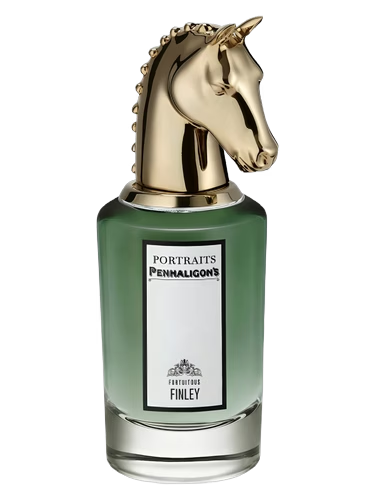
Most Popular Scents Using Pansy


What is Pansy?
Pansy is a fragrance note derived from the Viola tricolor plant, historically used to impart a delicate, powdery floral sweetness to perfumes and associated with remembrance and love.What does Pansy smell like?
It offers a warm, snuggly, herbal-citrus profile with bright openings of bergamot and orange flower, transitioning into earthy oakmoss and green rosemary.How is Pansy essence extracted?
The essence is primarily obtained through modern steam distillation or solvent extraction, though historical methods included oil maceration and enfleurage.What are some top perfumes featuring Pansy?
Notable fragrances include Lush Pansy, Guerlain Insolence, Annick Goutal La Violette, and Penhaligon's Violetta.When are Pansies in season?
Pansies are cool-weather specialists that typically bloom in spring and fall, though they can provide essential color through the winter in milder climates.