Fragrance Notes Are Layers Of Scent That Are Layered To Form The Final Fragrance. Fragrance Notes Are Categorised Into Three Main Elements Based On How Long They Take To Evaporate, And How Long They Typically Last Following Application: Top Notes, Heart Notes And Base Notes.
Orchid
Orchid accords in perfumery are typically soft, creamy, and slightly sweet, characterized by a delicate blend of floral, vanilla-like, and powdery nuances. The note is highly versatile, often constructed to lean fruity, exotic, or spicy, offering a sophisticated, rich, and sometimes mysterious floral depth.

Origin & Extraction Of Orchid
The history of the Orchid note in perfumery is largely tied to modern fragrance chemistry, as very few of the thousands of orchid species produce an essential oil that can be extracted naturally for commercial use. While many orchids are known by growers to possess unique and strong scents—which evolved solely to attract pollinators—the note used in fine fragrance is almost always a carefully constructed "accord." Before the late 20th century, the note was rare and often abstract, derived from blending ingredients like vanilla (which comes from the fruit of a specific orchid, *Vanilla planifolia*), white florals, and synthetics to suggest the flower's delicate, creamy, and sometimes powdery aroma.
The prominence of the Orchid note surged in the 21st century when perfumers began creating complex, opulent, and fantasy floral accords, moving beyond traditional floral categories. This note, capable of leaning fruity, spicy, or dark, gained iconic status with the launch of Tom Ford's *Black Orchid* in 2006. This fragrance famously utilized a rich, deep, and mysterious interpretation of the note, cementing the orchid as a symbol of luxury and sophistication and securing its role as a versatile, statement-making floral in contemporary niche and designer perfumery.
Extraction Methods of Orchid
Historically, capturing the aromatic essence of orchids was a complex challenge due to the delicate nature of the flowers and the low yield of volatile oils. Traditional techniques primarily involved solvent extraction and enfleurage, where orchid blossoms were placed on layers of purified fat to absorb their scent over several days. In some cultures, manual methods such as macerating the plant material in solvents like alcohol or crushing the orchid and mixing it with honey were used to create fragrant pastes and medicinal preparations.
Modern extraction methods have evolved to be more precise and efficient, utilizing technologies like steam distillation and supercritical CO2 extraction to capture a broader range of aromatic and bioactive molecules without degrading them. Recent innovations include cellular extraction and the use of specialized solvents to create high-purity orchid extracts for perfumery and skincare. In laboratory settings, advanced techniques such as physical and chemical DNA extraction, involving cell wall rupture through grinding with liquid nitrogen or dry ice, are employed to study the plant's genetic properties for pharmaceutical and cosmetic applications.
The most iconic use of the orchid note in modern perfumery is undoubtedly in Tom Ford’s Black Orchid. Launched in 2006, this fragrance is celebrated for its deep, dark, and sensual character, elevating the orchid from a delicate floral into a mysterious and luxurious statement. The orchid accord in Black Orchid is dense and rich, blended with black truffle, incense, vanilla, and dark chocolate, making it a benchmark for opulent and confident nightwear scents.
Tom Ford further explored the versatility of the note with Velvet Orchid, which offers a smoother, warmer, and more luminous interpretation compared to its predecessor. While still sophisticated and rich, the orchid accord here is blended with golden rum, honey, and ylang-ylang, resulting in a slightly sweeter, creamier, and more approachable scent. This variation showcases the orchid's ability to anchor a lavish floral composition that balances exotic floral elements with gourmand warmth.
Beyond the Tom Ford line, the orchid note has been used to create bright, feminine floral scents. Gucci Flora Gorgeous Orchid Eau de Parfum utilizes the note to provide a sweet, uplifting, and slightly fruity character, often paired with vanilla. Similarly, Viktor & Rolf’s Flowerbomb Ruby Orchid offers a variation that injects the characteristic sweetness of orchid into a vibrant, powerful floral-gourmand composition, proving that the note is essential for adding sophisticated depth and richness across various fragrance genres.
Sustainability Of Orchid
Sustainability of Orchid
- Restoring and revitalizing natural orchid habitats through rainforest restoration projects, such as the rejuvenation of over 20,000 orchids in the Tianzi Biodiversity Reserve in Yunnan, China
- Using laboratory-created accords to replicate orchid scents, as orchids often do not yield natural fragrance oil, reducing the need for intensive wild harvesting
- Implementing circular economy models that upcycle floral waste into new products, providing sustainable business opportunities for women in rural communities
- Adopting traceable and ethically-sourced ingredient standards to ensure biodiversity protection and fair trade practices across the supply chain
- Reducing environmental impact through the use of refillable glass bottles, recycled plastic packaging, and recyclable pump components
Trivia
The name orchid is derived from the Greek word orchis, meaning testicle, a reference to the shape of the plant's twin tubers.
Most Popular Scents Using Orchid
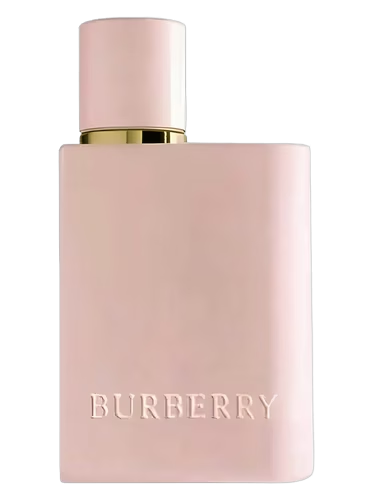
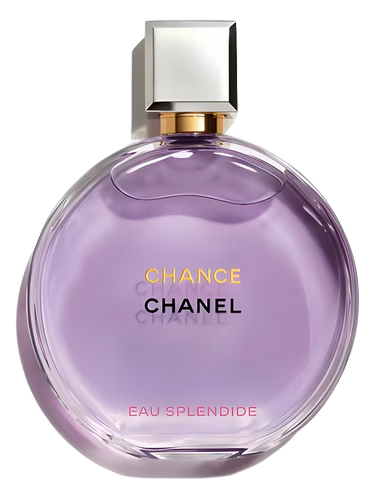
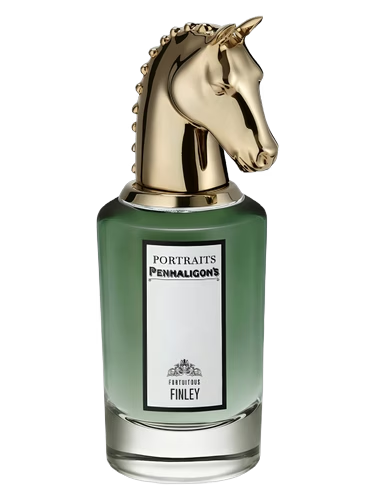
What is the Orchid note in perfumery?
The Orchid note is primarily a "fantasy" accord created by perfumers using a blend of vanilla, white florals, and synthetic molecules, as most natural orchids do not yield extractable essential oils.What does Orchid smell like?
It typically offers a soft, creamy, and slightly sweet aroma with powdery, vanilla-like nuances, though it can be constructed to lean fruity, spicy, or mysteriously dark.How is the scent of Orchid captured?
Since traditional extraction is often impossible, modern perfumers use headspace technology to analyze and replicate the flower's scent, or they create accords from other natural and synthetic materials.What are some famous perfumes featuring the Orchid note?
Iconic examples include Tom Ford Black Orchid, Gucci Flora Gorgeous Orchid, Viktor & Rolf Flowerbomb Ruby Orchid, and Dior J'Adore.Is there a connection between Orchid and Vanilla?
Yes, vanilla is actually derived from the seed pods of a specific orchid species, Vanilla planifolia, making it the only commercially significant natural aromatic product from the orchid family.When do Orchids typically bloom?
Orchid seasonality varies by species, but many common varieties bloom in the fall and spring, while others like Cymbidiums bloom in winter or even year-round in consistent environments.