Fragrance Notes Are Layers Of Scent That Are Layered To Form The Final Fragrance. Fragrance Notes Are Categorised Into Three Main Elements Based On How Long They Take To Evaporate, And How Long They Typically Last Following Application: Top Notes, Heart Notes And Base Notes.
Orchard Blossom
Orchard Blossom offers a delicate, luminous floral note, capturing the sweet freshness of opening spring buds. It blends honeyed, tender floral facets with a subtle, juicy fruit nuance (like apple) and a hint of soft, green warmth, creating an airy, romantic, and uplifting aroma ideal for feminine compositions.

Origin & Extraction Of Orchard Blossom
The Orchard Blossom note, representing the light, sweet scent of flowering fruit trees, is considered a modern addition to the perfumer's palette, lacking the centuries-old history of classic notes like Rose or Bergamot. Its relevance grew significantly in the late 20th and early 21st centuries, coinciding with the rise of the fruity-floral category. Perfumers began seeking delicate, luminous, and natural-smelling accords to evoke specific seasons and settings, moving beyond traditional heavy florals. This note allows for the incorporation of a tender, slightly juicy fruit nuance (like apple or pear blossom) without being overtly gourmand, providing a sophisticated bridge between fresh citrus top notes and warmer, heart notes.
In contemporary perfumery, Orchard Blossom is primarily used to impart an airy, romantic, and uplifting quality, essential in spring and summer compositions. It is widely employed by designer and niche houses to create cheerful, universally appealing scents that suggest cleanliness and nature. Rather than being a dominant, singular note, it often functions as a structural element to enhance other ingredients, offering a subtle green warmth and helping softer florals achieve better diffusion and longevity in modern fragrance structures.
Extraction Methods of Orchard Blossom
Orchard blossom is not a single extractable natural material; rather, it is a perfumer's construction known as an accord. Historically, attempts to capture the scent of fruit tree blossoms like apple, pear, and cherry involved traditional methods such as enfleurage, where petals were placed on fats to absorb their aroma, or simple maceration in solvents. However, these methods often failed to capture the ethereal and airy quality of the living bloom, often resulting in scents that were too dense or chemically unstable.
In modern perfumery, orchard blossom is created as a synthetic reconstruction using a blend of aromatic compounds to evoke the "collective exhalation" of Rosaceae trees. The latest methods involve using Headspace technology to analyze the volatile molecules emitted by living flowers in their natural environment. This data allows perfumers to use specific molecules like linalool and alpha-terpineol for floral lift, benzaldehyde for the characteristic almond-kernel undertone of stone fruits, and anisaldehyde for the hawthorn-like sweetness of apple blossoms. These advanced chemical compositions allow for a transparent, "pre-fruit" scent that remains stable and consistent in commercial fragrances.
The Orchard Blossom note, with its delicate, luminous, and slightly fruity-green profile, is a staple in modern feminine compositions designed to evoke the essence of spring. While not a classical note of historical perfumery, its popularity exploded with the rise of fruity-floral fragrances. It provides an airy, romantic quality that softens heavier floral bases and adds a sparkling, natural lift to the opening. This note is particularly versatile, pairing well with white musks and tender wood notes to ensure the springtime freshness is both long-lasting and sophisticated.
- A prominent example of a fragrance capitalizing on this luminous note is **DKNY Be Delicious Fresh Blossom**, where the orchard scent blends seamlessly with apple and various florals to create an intensely crisp and cheerful aroma.
- The use of this note is also central to certain limited-edition seasonal releases, such as the various flankers of the **Jo Malone London** line, which frequently use a delicate blossom accord to highlight specific fruit notes like pear or nectarine.
- Niche houses like **Aeropostale** have also explored its potential, using it to create simple, uplifting body mists that focus purely on the clean, sweet, and uncomplicated scent of flowering fruit trees.
In contemporary perfumery, the Orchard Blossom note is rarely used in isolation but rather as a supporting element to enrich other core ingredients. It functions perfectly to bridge the gap between bright citrus openings and deeper floral or gourmand hearts, injecting a subtle, watery juiciness without becoming overtly sweet. This makes it an ideal choice for "everyday" scents that aim for sophistication and universal appeal, such as several offerings from the **Marc Jacobs Daisy** collection, which often feature light, ethereal floral blends reminiscent of an open, sunlit garden.
- Blooming typically begins in mid-February and runs through mid-May, depending on the fruit variety and geographic region
- Almond, plum, and apricot trees are often the first to bloom in late winter and early spring, typically between February and March
- Peach, pear, and cherry blossoms generally reach their peak in April, with citrus blossoms following slightly later into the month
- Apple blossoms are among the latest to appear, often blooming from late April through mid-May
- The season is highly sensitive to weather, with mild, sunny days optimizing the display and late frosts or extreme heat potentially shortening the bloom window
Sustainability Of Orchard Blossom
Sustainability of Orchard Blossom
- Implementing regenerative agricultural practices like crop rotation and planting cover crops to enhance soil fertility and naturally reduce pest pressure
- Adopting precision water management through extensive drip irrigation systems that deliver water directly to root zones to minimize waste and energy consumption
- Executing Integrated Pest Management (IPM) strategies, including the use of beneficial insects and pheromone disruption, to reduce reliance on chemical interventions
- Supporting biodiversity and local ecosystems through partnerships with organizations like The Wildlife Trusts and maintaining native open spaces with forested buffers
- Promoting a circular economy by composting orchard trimmings and cider pulp into nutrient-rich soil amendments
- Reducing environmental impact by transitioning to cleaner energy sources, such as using propane instead of diesel for frost protection and solar power for remote sensing equipment
- Committing to zero-waste initiatives by upcycling fruit by-products and utilizing eco-friendly, 100% cotton materials in hospitality operations
Trivia
Orchard blossoms are considered an ephemeral fantasy note in perfumery because they produce so little natural oil that their delicate scent must be captured through enfleurage or, more commonly, recreated by perfumers as an olfactory interpretation of spring.
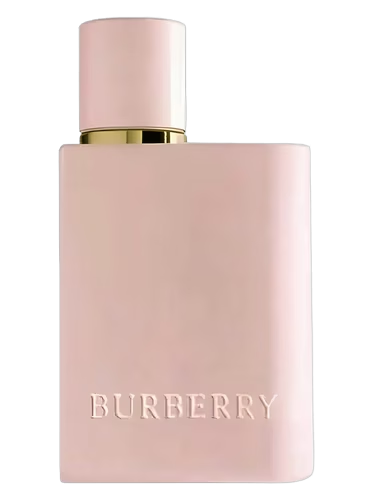
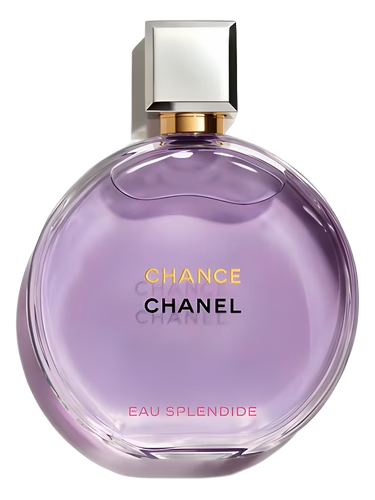
Most Popular Scents Using Orchard Blossom

What is Orchard Blossom?
Orchard Blossom is a perfumer's accord designed to evoke the collective scent of flowering fruit trees like apple, pear, and cherry, as these delicate blooms do not produce enough natural oil for traditional extraction.What does Orchard Blossom smell like?
It offers a delicate, luminous floral aroma with honeyed freshness, subtle juicy fruit nuances, and a hint of soft green warmth, creating an airy and romantic profile.How is Orchard Blossom essence created?
Since it is a fantasy note, it is typically reconstructed using synthetic aroma chemicals or Headspace technology to analyze and replicate the volatile molecules emitted by living flowers.What are some top perfumes featuring Orchard Blossom?
Notable fragrances include DKNY Be Delicious Fresh Blossom, Bronnley Orchard Blossom, Marc Jacobs Daisy Eau So Fresh Daze, and Jo Malone London seasonal releases.When is Orchard Blossom in season?
The natural blooming period for these trees generally spans from mid-February through mid-May, depending on the specific fruit variety and geographic region.