Fragrance Notes Are Layers Of Scent That Are Layered To Form The Final Fragrance. Fragrance Notes Are Categorised Into Three Main Elements Based On How Long They Take To Evaporate, And How Long They Typically Last Following Application: Top Notes, Heart Notes And Base Notes.
Orange Flower Water
Orange Flower Water offers a typical floral, citrus, and warm profile. It has a characteristic bitter green citrus character, with delicate fruity nuances, a hint of indolic tonality (suggesting richness/narcotic floralcy), and a gentle, sweet honey undertone. It is refreshing yet complex.

Origin & Extraction Of Orange Flower Water
Orange Flower Water, a delicate byproduct of the distillation of bitter orange blossoms (the process that also yields Neroli oil), has a history deeply intertwined with Mediterranean culture and early perfumery. While the more concentrated Neroli oil and Orange Blossom Absolute were prized for their richness, Orange Flower Water was historically utilized in therapeutic remedies, cuisine, and as a lighter, refreshing fragrant water. Its use in perfumery dates back centuries, particularly securing its foundational role within the original Eau de Cologne structure, developed in the 17th and 18th centuries, where it provided a purifying, slightly narcotic, and sophisticated floral-citrus lift.
In modern perfumery, Orange Flower Water continues to be valued for its ability to bridge sharp citrus top notes with warmer floral and amber bases, offering transparency and luminosity without the heaviness of the absolute. It is frequently employed in sheer, aquatic, and light floral compositions, serving as a clean, uplifting interpretation of the bitter orange tree's essence. This note's gentle complexity—combining bitter green facets, delicate floralcy, and a sweet honey undertone—makes it a versatile ingredient, often used by both classic houses and contemporary niche brands to enhance brightness and complexity in a fragrance's heart and opening.
Extraction Methods of Orange Flower Water
The primary method for extracting orange flower water, also known as a hydrosol, is hydrodistillation or steam distillation of the blossoms from the bitter orange tree (Citrus aurantium). In this process, fresh or dried flowers are placed in a still with water and heated; as the steam rises through the blossoms, it captures volatile aromatic compounds. This vapor is then cooled in a condenser, resulting in a liquid that separates into two parts: the precious neroli essential oil which floats on top, and the fragrant orange flower water beneath.
Historically, the artisanal production of orange flower water has been a cherished ritual for thousands of years, particularly in the Mediterranean and Middle East. Traditional techniques involve hand-plucking open blossoms early in the morning when their fragrance is most potent, followed by slow distillation in copper stills over low heat to preserve the delicate floral notes. Beyond distillation, historical "folk methods" for domestic use include hot infusions where petals are steeped in boiling water like tea, or cool maceration where crushed petals are soaked in cold water overnight. Modern commercial production has evolved to include large-scale mechanized distillation and advanced filtration to ensure purity and shelf stability, while some contemporary producers also utilize solvent extraction with alcohol or glycerin to create longer-lasting floral extracts for culinary and cosmetic applications.
Orange Flower Water, prized for its delicate floral-citrus profile, holds a revered place in classic and contemporary perfumery, offering a lighter, more ethereal take on Neroli and Orange Blossom. Its characteristic bitter green citrus character and honeyed sweetness make it ideal for crafting refreshing yet complex fragrances. One iconic example where this note is central is in the creation of clean, uplifting colognes, demonstrating its foundational role in traditional compositions.
- Classic scents like the original Eau de Colognes often feature Orange Flower Water prominently for its purifying, bright, and slightly narcotic floral quality.
In modern perfumery, Orange Flower Water is often used to impart a luminous, sheer floralcy, moving beyond simple freshness into richer white floral territory without becoming too heavy. It can provide a complex bridge between the sharp opening of citrus notes and the warm, sensual dry-down of amber and vanilla. This versatility is showcased in modern floral and oriental compositions, adding a layer of sophisticated clean sweetness.
- A famous contemporary usage of this note is found in fragrances like **Prada Infusion de Fleur d'Oranger** and **Tom Ford Neroli Portofino Acqua**, where it enhances the transparent and bright facets of the bitter orange tree essence.
Beyond traditional fresh scents, Orange Flower Water is increasingly appearing in gourmand and niche fragrances, lending a slightly sweet, delicate lift to otherwise rich compositions. Its gentle honey undertone provides depth and warmth, particularly when paired with notes like almond or cardamom. This ensures the fragrance maintains a sparkling, invigorating quality even as it settles into the skin, making it a timeless ingredient favored by both historic houses and avant-garde perfumers alike, such as in the DNA of **Serge Lutens Fleurs d'Oranger**.
Sustainability Of Orange Flower Water
Sustainability of Orange Flower Water
- Adopting water-efficient technologies such as widespread drip irrigation systems to combat severe drought conditions in primary growing regions like Morocco
- Transitioning to certified organic farming practices that eliminate chemical inputs like synthetic fertilizers and pesticides to protect soil health and groundwater
- Promoting fair labor practices through Fair For Life and UEBT certifications, ensuring stable employment and management opportunities for women in harvesting communities
- Supporting a circular economy by producing orange flower water as a valuable co-product of neroli essential oil distillation, ensuring maximum utilization of the hand-harvested blossoms
- Implementing climate-adaptive agricultural strategies, including the use of frost-protection towers and selecting crops with low summer water requirements to ensure long-term crop resilience
Trivia
Historically, orange flower water was so highly regarded for its calming properties that it was used as a bath scent for Queen Marie Antoinette and as a common medicinal remedy to soothe children's stomach aches and insomnia.
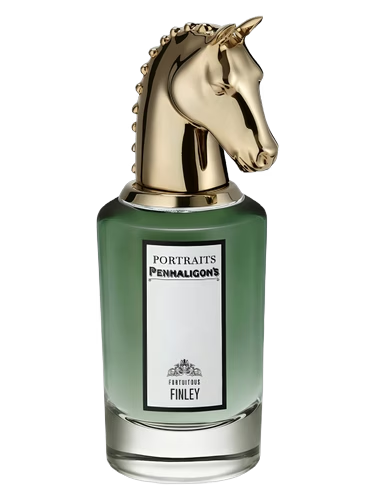
Most Popular Scents Using Orange Flower Water


What is Orange Flower Water?
Orange Flower Water is a delicate byproduct of the distillation of bitter orange blossoms, historically used in therapeutic remedies, cuisine, and as a foundational ingredient in traditional Eau de Cologne.What does Orange Flower Water smell like?
It offers a floral, citrus, and warm profile with a characteristic bitter green character, delicate fruity nuances, a hint of indolic tonality, and a gentle, sweet honey undertone.How is Orange Flower Water extracted?
It is primarily produced through hydrodistillation or steam distillation of the blossoms from the bitter orange tree, where the fragrant water is captured alongside neroli essential oil.What are some top perfumes featuring Orange Flower Water?
Popular fragrances include Jo Malone Orange Blossom, Dolce & Gabbana Devotion, Kilian Love Don't Be Shy, YSL Libre, and Prada Les Infusions Fleur d'Oranger.When is Orange Flower Water in season?
Production is strictly tied to the annual flowering cycle of the bitter orange tree, which typically reaches peak bloom between late February and May.