Fragrance Notes Are Layers Of Scent That Are Layered To Form The Final Fragrance. Fragrance Notes Are Categorised Into Three Main Elements Based On How Long They Take To Evaporate, And How Long They Typically Last Following Application: Top Notes, Heart Notes And Base Notes.
Okra Seeds
Okra Seeds offer a unique, complex aroma, sometimes described as fatty, nutty, and subtly earthy, reminiscent of vegetal musk. When used as an absolute (Ambrette Seed), it provides a soft, warm, slightly sweet, and powdery scent with persistent musky and floral-iris undertones, prized for its excellent fixation qualities.

Origin & Extraction Of Okra Seeds
Okra Seeds, more commonly known in perfumery as Ambrette Seed (derived from the Abelmoschus moschatus plant, a relative of okra), hold a significant place in fragrance history, particularly as a crucial ingredient before the rise of synthetic musks. For centuries, Ambrette Seed was prized for its unique, non-animal-derived musk odor. It offered perfumers a subtle, warm, and sophisticated base note that was soft, slightly sweet, and powdery, mimicking the rare and costly natural musk from animals. Its excellent fixative properties meant it could anchor volatile top notes and significantly extend the life and depth of a perfume composition.
In modern perfumery, Ambrette Seed absolute remains highly valued, especially in natural and high-end niche fragrances, as it provides a clean, refined, and ethical vegetal musk alternative. While synthetic musks largely replaced it due to cost and availability in mass-market fragrances, the natural Ambrette Seed is still sought after for its delicate floral-iris and persistent musky undertones that synthetics often fail to replicate fully. It is used to add warmth, sensuality, and lasting sophistication to contemporary scent profiles.
Historically, the extraction of okra seeds was a manual post-harvest process centered on seed preservation and cultivation. Matured pods were sun-dried until brittle, then hand-threshed or twisted open to release the seeds. For traditional oil or medicinal use, seeds were typically dried, pulverized using a mortar and pestle, and subjected to simple maceration or infusion in water or oils. In some cultures, seeds were roasted or boiled to create coffee substitutes and herbal decoctions.
Modern commercial and scientific extraction methods have evolved to maximize the yield of specific bioactive compounds like okra seed oil and polyphenols. Current industry standards for oil production utilize mechanical cold pressing to maintain oil quality or solvent extraction (often using hexane or ethanol) for higher yields. Advanced techniques now include Microwave-Assisted Extraction (MAE) and Ultrasound-Assisted Extraction (UAE), which significantly reduce processing time and energy. Furthermore, cutting-edge methods such as Pressurized Hot Water Extraction (PHWE) and supercritical CO2 extraction are increasingly employed to capture high-purity antioxidants and fatty acids without the use of harsh chemical solvents.
Okra Seeds, recognized in fine perfumery as Ambrette Seed, is highly valued for providing a natural, clean, and sophisticated vegetal musk that serves as an excellent fixative. Its soft, warm, slightly sweet, and powdery scent, often featuring floral-iris nuances, makes it essential in luxury and niche compositions where synthetic musks are avoided or a refined depth is sought. This note anchors volatile top notes, extending the overall longevity and adding a subtle, sensual warmth to the dry down.
- One of the most celebrated fragrances to showcase the elegance of Ambrette Seed is **Chanel No 19 Poudré**, where it contributes to the delicate, powdery, and musky dry down, complementing the iris and green notes.
- Another prominent example is **Dior Homme (2005)**, which utilizes the iris and ambrette combination to create a sophisticated, cosmetic, and slightly sweet leather accord, setting a benchmark for modern masculine fragrances.
In contemporary niche perfumery, Ambrette Seed is frequently highlighted as a star ingredient, emphasizing its purity and clean musk profile. Designers use it to create 'skin scents'—fragrances that smell inherently warm and personal rather than overtly perfumed—due to its ability to seamlessly blend with natural skin chemistry. Its versatility allows it to bridge sharp citrus openings with creamy, woody bases effectively.
- The luxurious **Acqua di Parma Iris Nobile** features Ambrette Seed to enhance the powdery texture of the iris, adding a soft, lasting muskiness to the floral composition.
- Similarly, **Narciso Rodriguez For Her** often features Ambrette-derived molecules, contributing to the signature soft, warm, and highly sensual musk base that characterizes the line.
Ambrette Seed's connection to animal musk makes it a valuable, ethical alternative for perfumers aiming for depth and sensuality without using animal-derived ingredients. Because of its expense and high quality, its presence is a hallmark of sophisticated, high-concentration formulas. It ensures the fragrance possesses an exquisite, lasting trail (sillage) that feels both intimate and enveloping, making it favored in subtle yet powerful compositions.
- **Le Labo Ambrette 9** centers the entire fragrance around the Ambrette Seed, showcasing its airy, pure, and clean musky character with hints of fruit and woods, demonstrating the note's ability to stand alone as the primary focus.
Sustainability Of Okra Seeds
Sustainability of Okra Seeds
- Promoting self-sustaining agricultural cycles by encouraging gardeners and farmers to save and replant their own seeds
- Enhancing soil health and reducing erosion through the integration of cover crops and organic mulches like hay and compost
- Supporting climate resilience by selecting and breeding varieties adapted to local microclimates and specific environmental stressors
- Reducing the carbon footprint and environmental impact of commercial agriculture by lowering the need for synthetic nitrogen fertilizers
- Improving global food security and farmer livelihoods by establishing decentralized seed hubs and village-based agro-dealer networks
- Advancing a circular economy by utilizing all parts of the plant, including stems for paper pulp and seeds for nutrient-dense food products
Trivia
During the American Civil War, roasted okra seeds were used as a caffeine-free coffee substitute because their flavor profile—especially when roasted at 160°C—is remarkably similar to Java Arabica coffee.
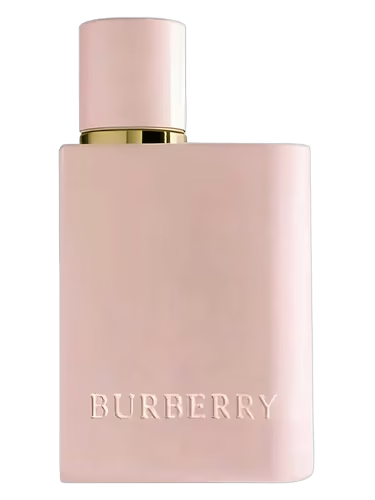
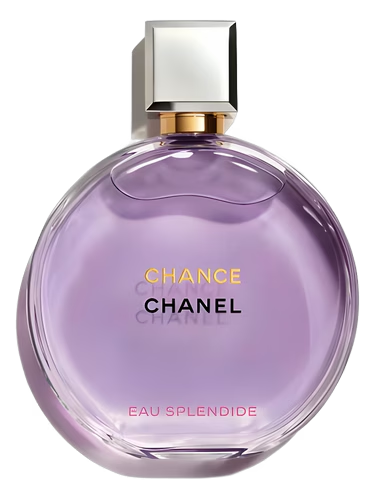
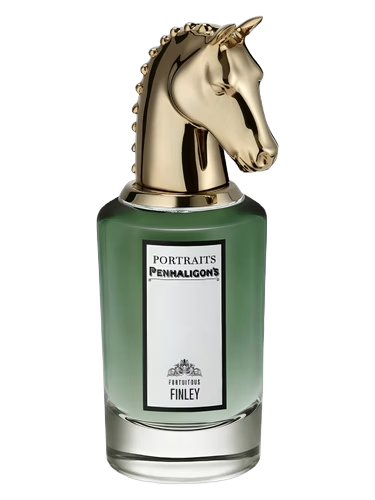
Most Popular Scents Using Okra Seeds
What are Okra Seeds in perfumery?
Commonly known as Ambrette Seed, it is a natural vegetal musk derived from the Abelmoschus moschatus plant, historically used as an ethical alternative to animal-derived musks.What do Okra Seeds smell like?
They offer a unique, complex aroma that is soft, warm, slightly sweet, and powdery, with persistent musky and floral-iris undertones and a subtly earthy, nutty quality.How is Okra Seed essence extracted?
In modern perfumery, extraction is typically achieved through mechanical cold pressing or solvent extraction, while advanced methods like supercritical CO2 extraction capture high-purity aromatics.What are some top perfumes featuring Okra Seeds (Ambrette)?
Notable fragrances include Le Labo Ambrette 9, Chanel No 19 Poudré, Dior Homme (2005), and Acqua di Parma Iris Nobile.When are Okra Seeds in season?
Okra is a warm-season annual that thrives in hot, humid weather, with peak production occurring throughout the summer months and pods ready for harvest 50 to 70 days after planting.