Fragrance Notes Are Layers Of Scent That Are Layered To Form The Final Fragrance. Fragrance Notes Are Categorised Into Three Main Elements Based On How Long They Take To Evaporate, And How Long They Typically Last Following Application: Top Notes, Heart Notes And Base Notes.
Nutty Notes
Nutty Notes in perfumery offer a warm, comforting, and creamy gourmand texture. They range from the sweet, marzipan-like nuance of almond and hazelnut to the earthy, dry facets of walnut and pecan. These rich, edible accords add depth, warmth, and a sophisticated, enveloping sweetness, often anchoring oriental and woody compositions.

Origin & Extraction Of Nutty Notes
Nutty Notes, while present subtly in natural extracts for centuries, gained prominence in modern perfumery with the rise of the gourmand fragrance family in the late 20th and early 21st centuries. Historically, materials like tonka bean provided hints of almond and coumarin, but the specific, photorealistic capture of notes like hazelnut, pecan, and walnut required advances in aroma chemistry. These notes shifted from being accidental background facets to deliberate, key components, particularly as perfumers sought to evoke comforting, edible textures in scents.
The contemporary relevance of Nutty Notes lies in their ability to add depth, warmth, and a sophisticated, non-cloying sweetness to compositions. Almond, especially, has a long history in perfumery through ingredients like benzoin and heliotrope, which convey a marzipan-like sweetness. More recent innovations allow for the inclusion of earthy, roasted nut characteristics, which serve to anchor volatile oriental and woody structures, giving them an enveloping, creamy texture that appeals to the modern consumer's desire for comforting, wearable scents.
Extraction Methods of Nutty Notes
Historically, nutty notes in perfumery were often captured through traditional maceration and infusion, where nuts like walnuts or almonds were soaked in solvents or carrier oils at room temperature for extended periods to draw out their aromatic oils and fat-soluble volatiles. For more robust profiles, roasting was employed to trigger Maillard reactions and caramelization, transforming the raw chemical composition of the kernels into the familiar warm, toasty scents of hazelnut and praline. These roasted materials were then processed into absolutes using volatile solvent extraction, though this method often faced challenges with high lipid content trapping the desired scent molecules.
Modern extraction has evolved to include advanced "green" technologies such as supercritical CO2 extraction, which allows for a high-purity capture of delicate aromatic compounds without the use of harsh chemical solvents. This technique is particularly effective for oily botanical materials, as it can be tuned to selectively extract volatile organic compounds (VOCs) while leaving behind heavy triglycerides that can cause cloudiness or rancidity. Additionally, latest developments include ultrasonic-assisted extraction (UAE) and microwave-assisted extraction, which use sound waves or electromagnetic radiation to rupture cell walls more efficiently, significantly reducing extraction times and energy consumption while preserving the vibrant, nutty profile.
Nutty Notes, especially almond and hazelnut, have become central to the modern gourmand category, offering a comforting and edible warmth. The sweet, marzipan-like quality of almond is famously highlighted in compositions like **Jany** by Sora Dora, which uses a rich texture to create an enveloping sweetness that bridges the gap between floral and oriental accords. This trend emphasizes cozy, sophisticated sweetness, moving beyond simple sugary scents to incorporate deep, roasted, and creamy nuances.
- The subtle, earthy aspect of nutty notes is essential for grounding fragrances, as seen in **Santal Pao Rosa** by Guerlain, where the nutty facet supports and smooths out the woody and floral structure, contributing to a velvety finish.
In masculine and contemporary fragrances, nutty notes provide an unexpected, modern twist. They are often blended with spices and woods to add complexity and texture. For example, **Spicebomb Night Vision Eau de Parfum** by Viktor&Rolf leverages a dark, warm nutty accord to enhance the evening character of the scent, giving it a sophisticated, addictive depth that is both comforting and mysterious. This versatility allows nutty notes to appear in various genres, from fresh aquatics to rich orientals.
- Another emerging application is in high-end niche perfumery, where notes like hazelnut and pecan are used to achieve photorealistic and luxurious gourmand effects. Fragrances such as **Oud Candy** by BORNTOSTANDOUT® use nutty and creamy accords to temper the intensity of notes like oud, resulting in a unique, balanced, and highly diffusive sweet composition.
The popularity of nutty notes ensures their continued use in mainstream and niche releases. They often serve as key anchors in oriental and woody fragrances, adding longevity and a creamy depth that appeals to consumers seeking sophisticated comfort. Whether used for the bright, sweet facet of almond or the deep, earthy richness of walnut, nutty notes remain vital for delivering that rich, edible, and enveloping signature gourmand experience.
Sustainability Of Nutty Notes
Sustainability of Nutty Notes
- Promoting water conservation through the implementation of micro-irrigation systems in nut orchards to reduce water usage by up to 33%
- Supporting zero-waste operations by upcycling side-streams, such as composting coffee grounds and repurposing nut by-products into organic fertilizers or animal feed
- Reducing the carbon footprint of production through the adoption of 100% recyclable and reusable packaging materials like glass jars, tins, and aluminum capsules
- Fostering socio-economic resilience by sourcing from cooperatives and farms that prioritize fair trade, ethical labor standards, and community empowerment
- Advancing biodiversity and soil health by supporting organic and regenerative agriculture practices, including reforestation and the cultivation of drought-resistant crops like millet
- Implementing climate-positive business practices, including annual tree planting activities and the transition to renewable energy sources to achieve carbon neutrality
Trivia
Filbertone, the specific molecule that gives hazelnuts their characteristic aroma, is so incredibly potent that the human nose can detect it at concentrations of less than one part per billion.
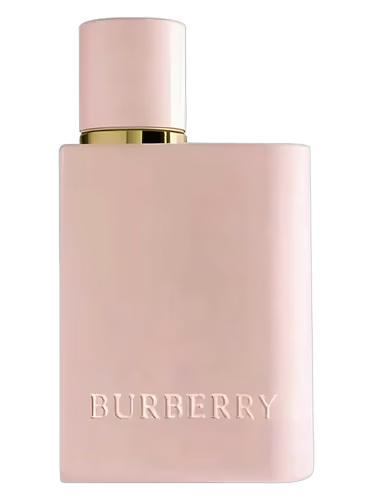
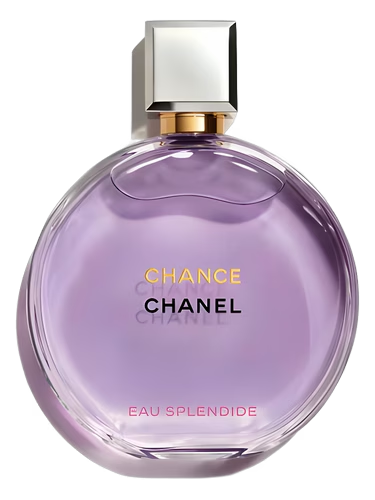
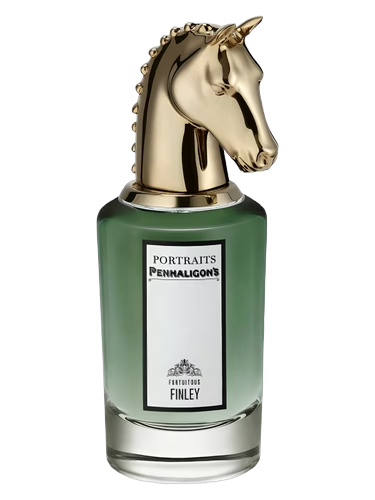
Most Popular Scents Using Nutty Notes
What are Nutty Notes in perfumery?
Nutty Notes are an olfactory category that encompasses the scents of various tree nuts like almond, hazelnut, walnut, and pistachio, offering warm, creamy, and gourmand textures.What do Nutty Notes smell like?
They range from sweet and marzipan-like to earthy, toasted, and slightly bitter, providing a comforting and sophisticated depth that is less sugary than traditional vanilla.How are Nutty Notes extracted?
While historically captured through maceration, modern perfumery primarily uses synthetic molecules like filbertone for hazelnut or benzaldehyde for almond, as well as advanced supercritical CO2 extraction for natural botanical materials.What are some top perfumes featuring Nutty Notes?
Popular fragrances include Glossier You Rêve, Maison Francis Kurkdjian Baccarat Rouge 540, D.S. & Durga Pistachio, and Maison Margiela By The Fireplace.When are Nutty Note fragrances best worn?
These notes are traditionally associated with late autumn and winter, as their dense, toasted, and enveloping qualities provide a sense of warmth ideal for colder weather.