Fragrance Notes Are Layers Of Scent That Are Layered To Form The Final Fragrance. Fragrance Notes Are Categorised Into Three Main Elements Based On How Long They Take To Evaporate, And How Long They Typically Last Following Application: Top Notes, Heart Notes And Base Notes.
Night Blooming Jasmine
Night Blooming Jasmine (Cestrum Nocturnum) offers a powerful, intoxicating, and intensely sweet floral aroma. It possesses a distinctive narcotic quality, blending creamy, white flower richness with indolic, slightly heady, and green nuances. Its fragrance is deeply sensual, luxurious, and highly diffusive, often used to create exotic and opulent nocturnal compositions.

Origin & Extraction Of Night Blooming Jasmine
Night Blooming Jasmine, derived from the Cestrum Nocturnum plant, has long been prized for its potent, nocturnal fragrance. Unlike common jasmine varieties, its intense, sweet, and slightly narcotic scent, which becomes most pronounced after dusk, has made it a symbol of deep sensuality and evening opulence. Historically, capturing the volatile and complex aroma of night-blooming flowers proved difficult for perfumers. Early attempts to utilize such intense white florals often relied on traditional, labor-intensive extraction methods like enfleurage or, later, on sophisticated synthetic molecules to replicate the distinctive heady, indolic character of the living blossom.
While classic perfumery, particularly from the 18th and 19th centuries, was dominated by other jasmine and white floral notes, the specific profile of Night Blooming Jasmine has gained dedicated recognition in both vintage and modern compositions. Its deep, tenacious sweetness makes it a powerful heart or base note, offering longevity and luxurious depth. Today, the note is favored in contemporary fragrances, often featured in oriental and modern white floral perfumes where it is paired with warmer elements like woods and spices to create an intoxicating and unforgettable nocturnal sillage, showcasing its evolution from a natural curiosity to a sophisticated aromatic tool.
Extraction Methods of Night Blooming Jasmine
Historically, night blooming jasmine (Jasminum sambac or Cestrum nocturnum) was primarily extracted using enfleurage, an ancient and labor-intensive technique. This process involved placing freshly hand-picked blossoms, harvested at night when their scent is most potent, onto layers of animal fat. The fat would absorb the delicate aromatic volatiles over several days, with spent flowers being replaced by fresh ones until the fat was saturated. The resulting pomade was then washed with alcohol to separate the fragrant oils, and the alcohol was evaporated to leave behind a pure absolute.
In modern commercial production, solvent extraction has become the standard method due to the extreme heat sensitivity of jasmine's aromatic compounds, which makes traditional steam distillation less effective as it often degrades the floral profile. During solvent extraction, the delicate petals are immersed in a volatile solvent like hexane or ethanol to create a waxy "concrete," which is subsequently processed with alcohol to produce the final absolute. Recent advancements have introduced Supercritical CO2 extraction, a cleaner and more efficient technology that uses pressurized carbon dioxide as a solvent. This method operates at lower temperatures, effectively preserving the complex, musky, and powdery nuances of the flower while ensuring a product free from chemical residues.
The intoxicating aroma of Night Blooming Jasmine (Cestrum Nocturnum) lends itself perfectly to opulent, romantic, and nocturnal fragrances. Historically, the deep, sensual, and slightly indolic qualities of this note have been challenging to capture naturally, often requiring sophisticated synthetic recreation or costly enfleurage techniques. However, when successfully utilized, this note provides an unmistakable creamy, powerful white floral heart. A classic example where the jasmine profile is prominent is the vintage **Jovan Night Blooming Jasmine Spray Cologne**, which capitalized on the flower’s intense, tenacious sweetness for a potent, sensual scent profile.
- The use of Night Blooming Jasmine adds a layer of depth and mystique, often featured in fragrances designed to be worn in the evening, evoking the image of a moonlit garden.
In modern perfumery, while often simply categorized under "Jasmine," the specific reference to Night Blooming Jasmine highlights a particularly rich and heady floral facet. Modern interpretations often pair it with gourmand or woodier notes to temper its narcotic sweetness and enhance its luxurious appeal. For instance, **Gucci Bloom Ambrosia di Fiori** features a strong jasmine and tuberose core that carries a heavy, almost intoxicating floral intensity reminiscent of night-blooming varieties.
- The note also appears in various artisan and niche blends seeking authenticity, such as the concentrated natural perfumes by Wild Veil, showcasing the pure, raw essence of *Cestrum Nocturnum* soliflores for a deeply authentic experience.
The note is also prominently featured in dedicated soliflore scents that aim to capture the flower's essence precisely. An example of a high-end fragrance focusing on this intense white floral profile is **Floris London Night Scented Jasmine Eau de Toilette**, which was originally created in 1806 and combines the intense floral note with brighter citrus and green touches. This demonstrates the note's timeless appeal, evolving from classic cologne structures to modern oriental and white floral compositions, always retaining its signature sweet, narcotic power.
Sustainability Of Night Blooming Jasmine
Sustainability of Night Blooming Jasmine
- Promoting eco-friendly production through traditional steam distillation methods that avoid harmful chemicals and excessive energy consumption
- Sourcing natural and ethically harvested ingredients to ensure the long-term viability of plant populations and minimize environmental impact
- Adopting minimalist and recyclable packaging designs to reduce waste and the carbon footprint associated with manufacturing and transport
- Developing long-lasting and rechargeable fragrance delivery systems, such as pouches that can be refreshed for up to five years to extend product usability
- Reviving organic and ecological cultivation practices based on traditional agricultural wisdom to enhance biodiversity and soil health
Trivia
Despite its name, night-blooming jasmine is not a true jasmine but actually a member of the nightshade family, making it a close relative of tomatoes, potatoes, and peppers.
Most Popular Scents Using Night Blooming Jasmine
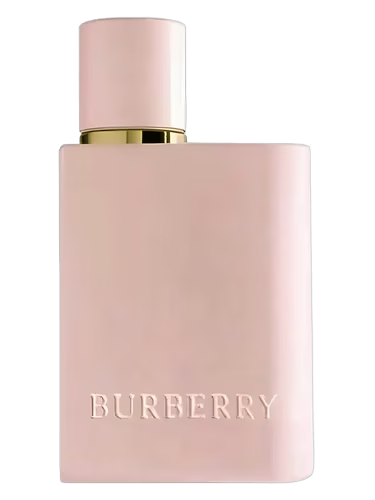
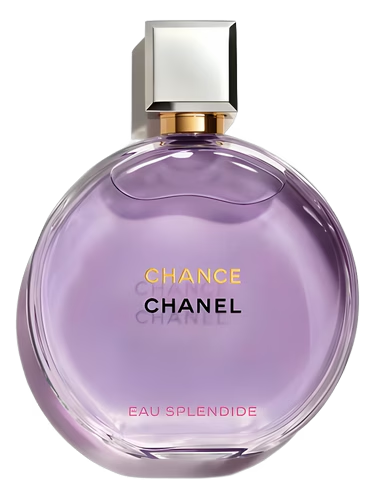
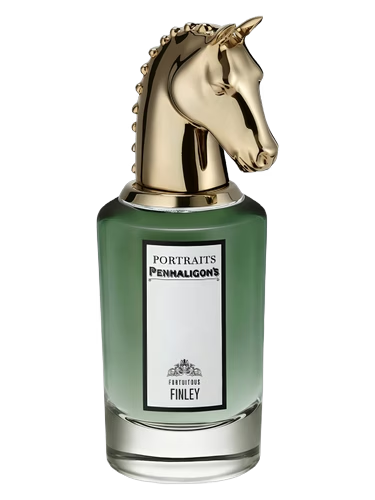
What is Night Blooming Jasmine?
Night Blooming Jasmine, or Cestrum nocturnum, is a tropical evergreen shrub in the nightshade family, prized in perfumery for its powerful floral scent that intensifies after sunset.What does Night Blooming Jasmine smell like?
It offers an intoxicating, intensely sweet, and creamy white floral aroma with narcotic, indolic, and slightly green nuances, often described as more potent than true jasmine.How is Night Blooming Jasmine essence extracted?
Historically extracted through labor-intensive enfleurage, modern production typically uses solvent extraction or supercritical CO2 extraction to preserve its heat-sensitive aromatic compounds.What are some top perfumes featuring Night Blooming Jasmine?
Notable fragrances include Floris London Night Scented Jasmine, Gucci Bloom Ambrosia di Fiori, Serge Lutens Fils de Joie, and the vintage Jovan Night Blooming Jasmine.When is Night Blooming Jasmine in season?
The plant typically follows a warm-weather blooming cycle from late spring through summer and into early fall, often flowering in repeated flushes during these months.