Fragrance Notes Are Layers Of Scent That Are Layered To Form The Final Fragrance. Fragrance Notes Are Categorised Into Three Main Elements Based On How Long They Take To Evaporate, And How Long They Typically Last Following Application: Top Notes, Heart Notes And Base Notes.
Nigella
Nigella seeds oil, particularly after aging, offers a unique fruity-woody musky fragrance. It is often compared to ambrette seeds oil, featuring nuances of cognac and wild strawberries. This profile lends a pleasant, refined, and complex musky warmth to compositions, distinct from typical floral or spice notes.

Origin & Extraction Of Nigella
Nigella (black cumin/kalonji) has a long history of use in traditional cultures, particularly in the Middle East and South Asia, where the seeds were prized for their culinary, medicinal, and aromatic properties dating back thousands of years. However, its significant application in Western fine perfumery is a relatively modern phenomenon. Historically, classic perfumery relied on foundational notes like those used in the traditional 18th-century Eau de Cologne, such as bergamot and lemon, or central floral and resinous ingredients.
The Nigella note gained traction in contemporary and niche perfumery as perfumers began seeking unique, complex materials that could offer unconventional depth. It is valued for its unique profile—often compared to ambrette seed oil—providing a sophisticated, fruity-woody musk with nuances of spice and warmth. This complex character allows it to serve as a versatile, plant-based musk alternative, lending refined texture and persistence, and bridging spice, wood, and musk accords in modern, artisanal compositions.
Extraction Methods of Nigella
The primary and most esteemed method for extracting Nigella sativa (black seed) oil is mechanical cold pressing. This traditional process involves slowly crushing the seeds under high pressure—often using a screw press—while strictly maintaining temperatures below 120°F (49°C) to prevent the oxidation and degradation of sensitive active compounds like thymoquinone. Historically, "folklore methods" were common in the Middle East and surrounding regions, involving a multi-step sequence where seeds were crushed, roasted, and then manually pressed; however, modern research indicates that the heat used in these traditional practices can break down volatile components and increase saturated fatty acid levels.
Recent advancements have introduced sophisticated techniques to maximize yield and purity for pharmaceutical and cosmetic applications. Supercritical fluid extraction (SFE) using liquid carbon dioxide is a leading modern innovation, allowing for precise control over temperature and pressure to capture a high concentration of bioactive molecules without chemical residues. Other contemporary methods include ultrasound-assisted and microwave-assisted extraction, which utilize mechanical vibrations or electromagnetic waves to rupture seed cells more efficiently. For specialized research or industrial uses, Soxhlet extraction with solvents like hexane or chloroform remains a standard for achieving maximum lipid yield, though it is often followed by refining processes that can strip away the oil's natural aroma and color.
Nigella, often referred to as black cumin or kalonji, is a unique ingredient in contemporary perfumery, typically derived from its seeds. Due to its complex profile—which ranges from fruity-woody musk to subtle hints of spice and cognac—it offers an interesting alternative to traditional animalic or botanical musks. It lends a refined and persistent warmth, often utilized in niche compositions to add depth and an unexpected textural element that is both ancient and modern.
- A notable use of the Nigella note is in the fragrance **Noir Épices** by Frédéric Malle, which showcases the seed's warm, slightly spicy, and aromatic facets. Here, it supports a vibrant blend of nutmeg, clove, and pepper, adding a mysterious, dark complexity to the central spice accord, ensuring a long-lasting and sophisticated drydown.
- The woody-musky character of Nigella oil is frequently sought after in compositions aiming for an ambrette-like effect, providing a plant-based muskiness. This characteristic makes it valuable for clean, yet warm, skin-scents that avoid synthetic musk fatigue.
While Nigella is not a foundational element like rose or jasmine, its increasing use in high-end artisanal perfumery reflects a trend toward unique, less conventional materials that bridge the gap between spice, wood, and musk. Its ability to introduce nuances of wild strawberries or cognac, as mentioned in its profile, allows perfumers to craft gourmand-adjacent notes without being overly sweet, contributing a dry, elegant sophistication.
The subtle presence of Nigella can often be found supporting leather or oud accords, where its slightly savory, dry warmth enhances the texture of heavier base notes. Its complexity ensures that fragrances featuring it, whether explicitly named or part of a proprietary 'spice' or 'exotic wood' blend, possess an immediate intrigue and a long, captivating trail.
Sustainability Of Nigella
Sustainability of Nigella
- Adopting organic farming practices and soil amendments like farmyard manure and vermicompost to reduce reliance on synthetic fertilizers and prevent groundwater contamination
- Utilizing the screw press extraction method as an ecological and non-toxic alternative to chemical solvents, reducing energy consumption and investment costs for small-scale producers
- Promoting a circular economy by upcycling extraction byproducts into chemical-free animal feed or organic fertilizers
- Implementing blockchain technology to ensure complete transparency, traceability, and verification of ethical and sustainable production practices from seed to consumer
- Establishing strategic partnerships and blockchain academies to develop innovative solutions for carbon tracking and agricultural efficiency
- Conservation of genetic diversity through the identification and selection of elite genotypes to support sustainable healthcare and pharmacological research
Trivia
Nigella seeds have been used for over 3,000 years and are so revered in Islamic tradition that the Prophet Muhammad reportedly claimed they could heal every disease except death.
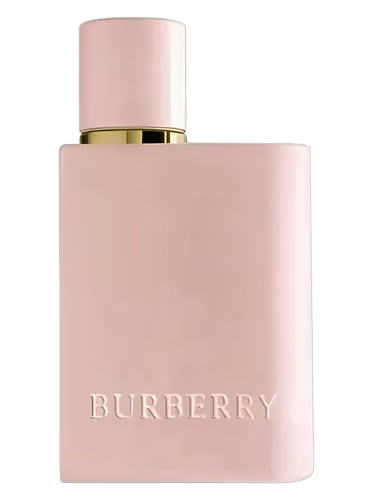
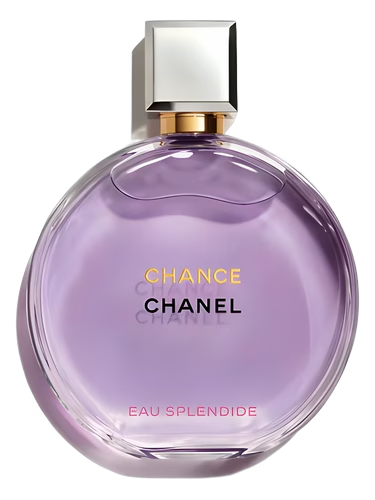
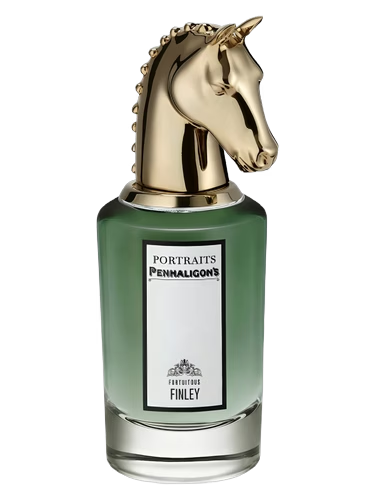
Most Popular Scents Using Nigella
What is Nigella?
Nigella, also known as black cumin or kalonji, is a flowering plant native to Southern Europe, North Africa, and Southwest Asia, whose seeds are used in niche perfumery for their unique aromatic profile.What does Nigella smell like?
It features a complex fruity-woody musky scent with distinct nuances of cognac and wild strawberries, providing a refined and warm alternative to traditional botanical musks.How is Nigella essence extracted?
The essence is primarily extracted through mechanical cold pressing of the seeds, a process that preserves delicate aromatic compounds by avoiding high heat.What are some top perfumes featuring Nigella?
Prominent fragrances include Frederic Malle Noir Epices, Alkemia Perfumes The Raven, and Maison Magistral Noir de Nigelle L'Intense.When is Nigella in season?
It follows a seasonal cycle starting with spring blooms, followed by the development of seed capsules in mid-to-late summer that mature and dry into the winter.