Fragrance Notes Are Layers Of Scent That Are Layered To Form The Final Fragrance. Fragrance Notes Are Categorised Into Three Main Elements Based On How Long They Take To Evaporate, And How Long They Typically Last Following Application: Top Notes, Heart Notes And Base Notes.
Nerium Oleander
Aromatic, fresh, soft, and light, the floral note of Nerium Oleander is akin to a warm spring day. It features talcum-esque facets for a clean smoothness, complemented by hints of pollen sweetness and alluring spices. (233 characters)

Origin & Extraction Of Nerium Oleander
The Nerium Oleander note's history in perfumery is complex due to the plant's natural toxicity, meaning its use is almost exclusively through synthetic accords rather than natural extracts. As a result, its relevance in classic perfumery is subtle; it is not a foundational note like rose or jasmine. However, the conceptual scent—aromatic, fresh, soft, and slightly spicy—has been utilized to evoke the atmosphere of Mediterranean gardens, where the flower grows abundantly. Early perfumers who incorporated this idea were aiming for airy, clean white florals that lacked the heavy indole often associated with other blooms.
In modern perfumery, the Oleander note has seen a resurgence, particularly in niche and artisan fragrance houses looking for distinctive, non-traditional white floral profiles. It is valued for its unique talcum-esque smoothness and subtle pollen sweetness, which lend a sophisticated cleanliness to compositions. Rather than being a primary theme in mainstream scents, Nerium Oleander acts as a sophisticated modifier, blending with green elements and musks to create luminous, subtle, and gently spiced floral compositions.
Extraction Methods of Nerium Oleander
Historically, the aromatic and medicinal compounds of Nerium oleander have been obtained through traditional aqueous and solvent-based methods. Common traditional techniques include infusion (steeping in hot water) and decoction (boiling plant material), which were often used to create herbal preparations. Maceration, the process of soaking leaves or flowers in solvents like water, alcohol, or oils for extended periods, has long been a staple for capturing its potent phytochemicals, including cardiac glycosides like oleandrin.
Modern extraction methods have become significantly more advanced to improve yield and purity for research and pharmaceutical applications. Steam distillation remains a standard for collecting volatile oils, while modern solvent extraction utilizes specialized systems with methanol, acetone, or hexane followed by rotavapor evaporation to concentrate bioactive components. Recent innovations include supercritical CO2 extraction, which offers a clean, solvent-free alternative to isolate specific molecules, and the use of natural plant juices or oils as extraction media. Furthermore, advanced purification steps such as liquid-liquid partitioning and column chromatography are now routinely employed to isolate pure compounds for therapeutic study.
Nerium Oleander, while toxic in its natural form, is rendered into a soft, light, and aromatically fresh floral note in perfumery, often used to capture the essence of a warm Mediterranean garden. It is generally not a headlining note in blockbuster perfumes but is sought after in niche and artisan creations for its unique, talcum-esque smoothness and subtle pollen sweetness. Perfumers use it to add a sophisticated, slightly melancholic, or airy floral touch that differentiates a composition from more common white floral bouquets like jasmine or tuberose.
- A notable use of the Oleander accord is found in the classic **L'Eau d'Issey** by Issey Miyake, although often described simply as a white flower note. It contributes to the fragrance's signature clean, fresh, and slightly dewy aquatic floral heart, providing a smooth and spacious floral structure that avoids heaviness.
In contemporary perfumery, the Nerium Oleander note has been highlighted in fragrances aiming for a realistic, slightly spicy, and clean floral representation. Its inclusion often serves to bridge the fresh opening with a soft, warm base, creating a sense of natural diffusion. Because of its complex profile, it blends well with green notes, subtle spices, and musks, helping to extend the longevity of the lighter floral aspects in the drydown.
- Another fragrance that features this unique floral dimension is **Oleander** by Ineke, a composition entirely dedicated to showcasing the full complexity of the note. This fragrance often pairs the soft floral facets with brighter, greener elements and a smooth, amber base, allowing the warm, slightly spicy character of the flower to be the focus.
The Nerium Oleander note remains a sophisticated choice for perfumers seeking a distinctive, non-indolic white floral. Its history in perfumery is linked less to grand historical classics and more to modern compositions that prioritize clarity and refinement. The resulting scent profile is one of elegant cleanliness, making it an excellent choice for luminous, subtle, and gently spiced floral perfumes that offer an abstract interpretation of a spring bloom, such as **Kenzo Flower by Kenzo** (in its underlying powdery floral structure, though not explicitly listed as Oleander, the effect is often cited).
Sustainability Of Nerium Oleander
Sustainability of Nerium Oleander
- Utilizing the plant as a cost-effective and natural tool for biomonitoring and remediating air, soil, and water contaminated with heavy metals like lead, cadmium, and zinc
- Promoting land restoration and desertification reversal by leveraging its extreme drought tolerance and ability to thrive in poor, saline, or degraded soils with minimal irrigation
- Implementing sustainable agricultural practices by using oleander as windbreaks to conserve soil moisture and protect sensitive crops from wind and dust erosion
- Advancing green chemistry through the use of flower extracts as eco-friendly reducing agents for the sustainable synthesis of metal nanoparticles
- Supporting integrated pest management by developing natural biopesticides from its toxic bioactive compounds to reduce dependence on synthetic chemicals
- Exploring the development of less toxic cultivars and bioenergy applications to enhance its safe integration into agroforestry and rural renewable energy systems
Trivia
Every part of the oleander plant is so potent that it is said Alexander the Great lost several soldiers simply because they ate meat cooked on skewers made from the plant's toxic wood.
Most Popular Scents Using Nerium Oleander
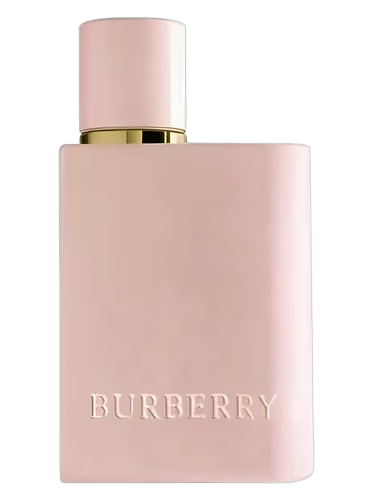
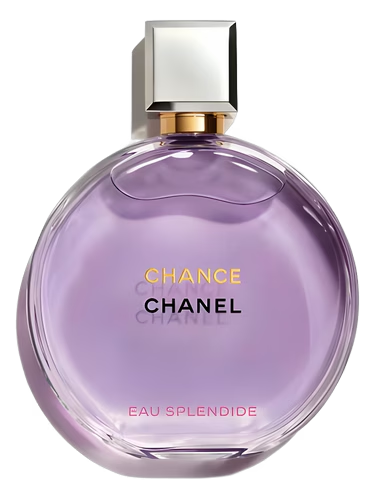
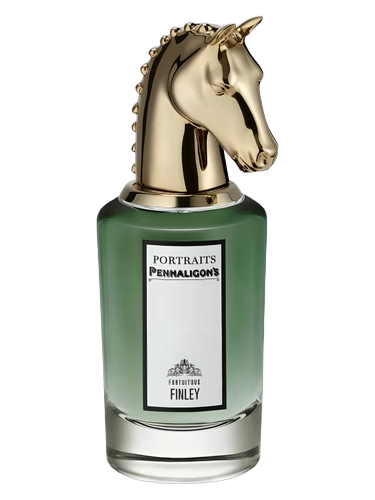
What is Nerium Oleander?
Nerium Oleander is a Mediterranean evergreen shrub valued in perfumery for its soft, aromatic floral profile, though it is usually recreated through synthetic accords due to the plant's natural toxicity.What does Nerium Oleander smell like?
It features an aromatic, fresh, and light floral scent with talcum-esque facets for a clean smoothness, complemented by hints of pollen sweetness and alluring spices.Is Nerium Oleander used as a natural extract in perfume?
Due to the plant's extreme toxicity, its scent in perfumery is almost exclusively achieved through synthetic accords rather than natural botanical extracts.What are some top perfumes featuring Nerium Oleander?
Notable fragrances containing this note include Lili Bermuda Oleander, Hermès Un Jardin en Méditerranée, Amouage Epic Woman, and Sixteen92 Nerium Oleander.When is Nerium Oleander in season?
The plant has an exceptionally long blooming period from late spring through early fall, with peak flowering typically occurring during the hot summer months between April and September.