Fragrance Notes Are Layers Of Scent That Are Layered To Form The Final Fragrance. Fragrance Notes Are Categorised Into Three Main Elements Based On How Long They Take To Evaporate, And How Long They Typically Last Following Application: Top Notes, Heart Notes And Base Notes.
Nasturtium
Nasturtium offers a delicate yet distinct floral note, combining a bright, sweet greenness with subtle spicy nuances. This invigorating aroma is characterized by its slightly peppery undertones and fresh, vegetal facets, adding a unique, earthy complexity and a luminous, vibrant lift to floral and green compositions.

Origin & Extraction Of Nasturtium
Nasturtium (Tropaeolum majus), a plant native to the Andes, has a history primarily rooted in horticulture, cuisine, and traditional medicine before its recent adoption in fine perfumery. While foundational notes like Rose and Jasmine have centuries-old legacies in fragrance, Nasturtium's distinct aroma—combining bright greenness with a peppery, slightly vegetal spice—made it a sophisticated, yet unconventional, addition. Its introduction to the perfumer's palette reflects a trend toward photorealistic and green compositions that emerged in the mid-to-late 20th century, moving beyond heavy florals to capture the vibrant, complex scents of a full garden.
Nasturtium gained particular relevance in perfumery through the emergence of the 'green chypre' and modern fresh categories. It is valued for its ability to add a sharp, luminous quality and an earthy complexity, often used to bridge sparkling citrus openings with deeper floral or herbaceous hearts. Its notable appearance in classics like Sisley's Eau de Campagne (1974) solidified its role as a key ingredient for conveying an authentic, lively, and slightly spicy greenness, appealing to contemporary tastes that favor dynamic, natural, and transparent fragrance structures.
Extraction Methods of Nasturtium
Historically, nasturtium aromatic compounds and medicinal properties have been captured through traditional herbal techniques such as maceration, infusions, and the creation of tinctures. In these methods, fresh or slightly dried leaves, flowers, or seeds are soaked in solvents like alcohol, vegetable glycerin, or carrier oils for several weeks, allowing the plant's volatile compounds to gradually seep into the liquid. These artisanal methods remain popular in natural apothecary for creating skin-soothing salves and therapeutic oils.
In modern production and scientific research, the essential oil of garden nasturtium is primarily isolated using advanced distillation techniques. While traditional steam distillation and hydrodistillation are used to break open the oil glands (trichomes) and capture volatile components, recent innovations have introduced microwave-assisted distillation (MAD) and microwave hydrodiffusion and gravity (MHG). These contemporary methods are valued for their ability to efficiently extract chemical components like benzyl isothiocyanate while maintaining the integrity of the plant's delicate aromatic profile.
The Nasturtium note, valued for its bright, peppery, and green-vegetal facets, is typically employed in sophisticated floral compositions to add an invigorating, luminous lift. While not as universally common as rose or jasmine, Nasturtium’s unique aroma provides a distinctive structure, moving beyond simple sweetness to inject an herbaceous, slightly spicy freshness. This makes it particularly appealing to modern niche houses seeking unconventional green notes, such as those found in the works of perfumers focusing on natural or garden-inspired scents.
- A notable use of Nasturtium can be found in the classic fragrance, Eau de Campagne by Sisley. Launched in 1974, this scent captures the essence of a refreshing country garden, where the Nasturtium note contributes to the signature sharp greenness and lively, herbaceous quality that defines this iconic 'green chypre' scent.
In contemporary perfumery, Nasturtium continues to appear in refined compositions that celebrate its fresh complexity. For instance, the note is often utilized to enhance aquatic and green florals, lending a crisp, slightly cool spice that prevents the overall aroma from becoming overly sweet or heavy. Its inclusion helps to create a sense of natural vibrancy and freshness, appealing to those who favor dynamic, outdoor-inspired fragrances.
- Another prominent example featuring Nasturtium is A Scent by Issey Miyake. Here, Nasturtium works alongside jasmine and hyacinth to deliver a clean, sharp, and intensely green floral bouquet, emphasizing the note's ability to create a crystalline freshness that is both modern and memorable.
Nasturtium’s presence in a perfume suggests a fragrance crafted with meticulous attention to detail and an interest in authentic botanical elements. The subtle peppery hint of the note acts as a bridge between the bright citrus opening and the heart of the composition, giving depth to traditional florals or providing an unexpected twist to light, summer-focused colognes, demonstrating its quiet versatility in both classic and avant-garde designs.
- Lastly, Nasturtium is sometimes featured in fragrances like Un Jardin Sur Le Nil from Hermès, where it contributes to the overall impression of a dewy, green, and watery landscape. While not a central star, its vegetal and spicy nuances blend into the rich tapestry of green and exotic notes, showcasing its ability to provide textural complexity and realism.
- Nasturtiums are cool-season plants that typically exhibit a long flowering period from spring through autumn, often reaching their peak bloom in mid-to-late spring or early summer depending on the climate.
- While predominantly grown as annuals that flourish in the moderate temperatures of spring and early summer, they can bloom and seed year-round in tropical and frost-free Mediterranean climates (Zones 9-11).
- The foliage begins its growth cycle in early spring, with flowers typically appearing about six weeks after planting and continuing until the first severe frosts of autumn.
- The plant is highly sensitive to extreme heat, which often causes it to fade or stop blooming by late June in warmer regions, though it may survive into a second blooming phase in the fall if provided with partial shade.
- Harvesting of edible leaves and flowers occurs continuously throughout the growing season, while seed pods generally develop and reach maturity about four months after seeding.
Sustainability Of Nasturtium
Sustainability of Nasturtium
- Promoting organic gardening by serving as a natural trap crop that attracts aphids and other pests away from food crops, reducing the need for chemical pesticides
- Enhancing biodiversity by attracting essential pollinators like bees, butterflies, and hoverflies to the garden ecosystem
- Supporting soil health and water conservation by acting as a living mulch that provides ground cover, suppresses weeds, and reduces moisture evaporation
- Encouraging a circular economy through easy seed saving practices, allowing gardeners to harvest and replant seeds year after year without external purchases
- Improving soil fertility naturally by functioning as a green manure that adds nutrients back into the earth when left to decompose at the end of the season
Trivia
The name nasturtium literally translates from Latin as nose-twist, a reference to its pungent, peppery aroma that was said to make one's nose wrinkle or twitch upon smelling it.
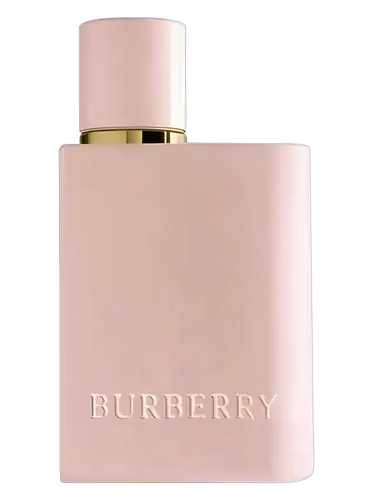
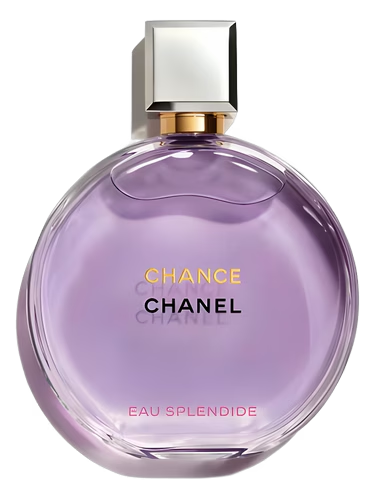
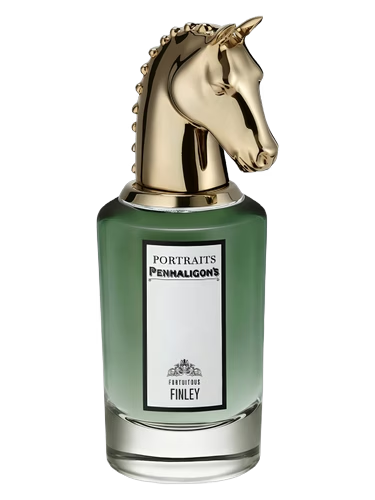
Most Popular Scents Using Nasturtium
What is Nasturtium?
Nasturtium is a South American plant known for its vibrant flowers and shield-shaped leaves, used in perfumery to provide a unique, peppery green floral character.What does Nasturtium smell like?
It offers a delicate, invigorating aroma that combines bright, sweet greenness with subtle spicy, peppery undertones and fresh vegetal facets.How is Nasturtium essence extracted?
In modern perfumery, the essential oil is primarily isolated using advanced distillation techniques like microwave-assisted distillation to preserve its delicate aromatic profile.What are some top perfumes featuring Nasturtium?
Notable fragrances including this note are Jo Malone London Nasturtium & Clover, Sisley Eau de Campagne, and A Scent by Issey Miyake.When is Nasturtium in season?
Nasturtiums are cool-season plants that typically flower from spring through autumn, reaching their peak bloom in mid-to-late spring or early summer.