Fragrance Notes Are Layers Of Scent That Are Layered To Form The Final Fragrance. Fragrance Notes Are Categorised Into Three Main Elements Based On How Long They Take To Evaporate, And How Long They Typically Last Following Application: Top Notes, Heart Notes And Base Notes.
Nashi Pear
Nashi Pear offers a unique, crisp, watery, and subtly sweet fruit profile in perfumery, distinct from Western pears. It features nuances of apple and delicate white florals, lending a sparkling, refreshing quality. Its scent is clean, light, and juicy, providing an ethereal, elegant lift to top and heart notes in modern compositions.

Origin & Extraction Of Nashi Pear
The Nashi Pear, often known as the Asian Pear, is native to East Asia (China, Japan, and Korea). While the fruit has a long history in cultivation, its specific inclusion as a distinct note in fine perfumery is a relatively modern phenomenon. Traditional perfumery relied on heavier, more conventional fruit or floral extracts. Nashi Pear, with its crisp, watery, and subtly sweet profile—often reminiscent of both pear and apple—became attractive to perfumers seeking lighter, more transparent, and naturalistic fruit notes, moving away from the heavier, syrupy fruit accords of the past.
The rise of Nashi Pear as a recognized fragrance note coincides with the 21st-century trend toward airy, delicate, and 'clean' compositions, particularly in the niche and high-end designer markets. Perfumers utilize it to lend a sparkling, ephemeral quality and a modern, juicy freshness to the opening or heart of a scent, providing an elegant alternative to Western pear notes. Because the natural extraction of such a watery scent is often complex, the note is frequently recreated using sophisticated synthetic accords to ensure longevity and clarity, making it a staple in contemporary light floral and fresh-fruity compositions.
Extraction Methods of Nashi Pear
The extraction of aromatic compounds and medicinal essences from Nashi pear (Asian pear) primarily involves juicing and thermal concentration. Historically, traditional methods focused on boiling sliced pears over medium-low heat for extended periods to create a thick "wild pear extract," which was then manually squeezed through fabric bags to capture the liquid. This decoction process was often used in traditional medicine and royal recovery rituals to preserve the fruit's bioactive enzymes and sugars.
Modern commercial and laboratory methods utilize advanced mechanical and chemical processes to enhance yield and purity. These include cold-pressing with slow juicers to obtain fresh juice and pomace, followed by hot air drying or freeze-drying to create concentrated powders. For pharmaceutical and cosmetic applications, such as the extraction of skin-whitening arbutin from the peel and branches, advanced techniques like ultrasonic homogenization and supercritical fluid extraction (SFE) are employed. These modern methods use controlled pressure, temperature, and solvents like water-methanol mixtures to isolate specific phenolic compounds and antioxidants more efficiently than traditional boiling.
The Nashi Pear note, recognized for its crisp, watery, and delicate sweetness, has become a signature element in modern, high-end perfumery, offering a more ethereal alternative to traditional European pear notes. One of the most notable uses of this note is in fragrances from Jo Malone, where it contributes a luminous, clean freshness. In these compositions, Nashi Pear often provides a sparkling opening that seamlessly transitions into floral hearts, preventing the scent from becoming overly heavy or saccharine.
A designer fragrance that famously utilized the Nashi Pear note to great effect is Jimmy Choo Illicit Flower, where its refreshing, slightly green facets enhance the brightness of notes like apricot and mandarin, providing a youthful and vibrant energy to the floral bouquet. The Nashi Pear’s clean, almost apple-like texture is also highly valued in aquatic or sheer floral compositions, as seen in various limited-edition seasonal releases from major houses that aim for a transparent, sophisticated freshness suited for spring and summer wear.
Beyond mainstream designer releases, Nashi Pear is also prominent in niche perfumery, where its complexity allows it to interact uniquely with woods and musks. For instance, in scents like Nest Wisteria Blue or select lines from Diptyque, the note is deployed to soften and lift the overall composition, adding a dewy, naturalistic touch without overpowering the base notes. Its subtle character makes it an excellent bridging note between sharp citrus openings and creamy, deep dry-downs, ensuring the fragrance maintains an elegant, airy presence throughout its wear time.
Sustainability Of Nashi Pear
Sustainability of Nashi Pear
- Promoting disease resistance and reducing chemical reliance by hybridizing Asian and European pear varieties to combat threats like fire blight
- Implementing integrated pest management and early disease detection to minimize the use of topical treatments and chemical "thinners"
- Supporting watershed health and biodiversity through specialized certifications, such as the Salmon-Safe assessment, which evaluates whole-farm impacts
- Adopting organic farming standards and regenerative soil management, including the use of deep hardwood chip mulch to enhance tree resilience and water retention
- Reducing environmental waste by utilizing recyclable field packaging and net protectors to prevent fruit bruising during transport
- Enhancing pollination efficiency and ecosystem health by maintaining diverse bee populations and strategically planting compatible pollinizer varieties
Trivia
Nashi pear has been cultivated in East Asia for over 3,000 years and is a traditional symbol of autumn in Japanese culture, yet the fragrance note is always a synthetic accord because the fruit contains too much water to yield a usable essential oil.
Most Popular Scents Using Nashi Pear
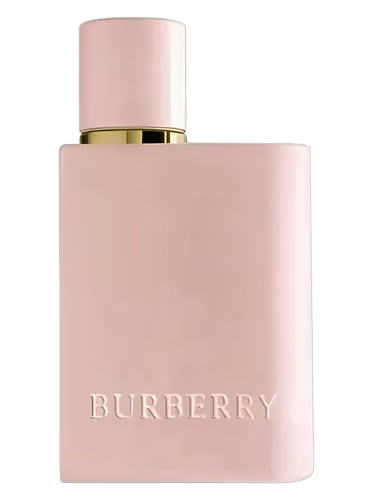
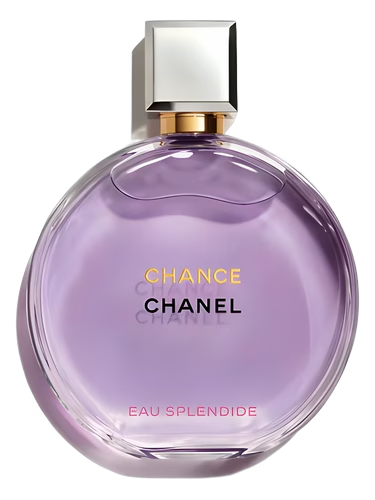
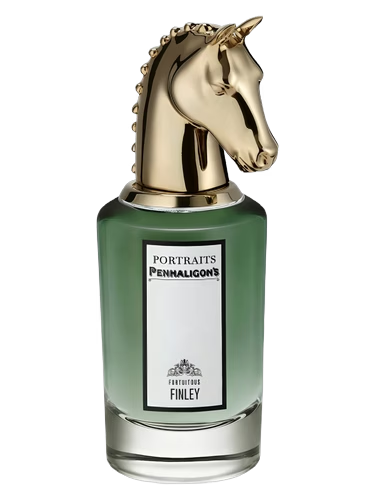
What is Nashi Pear?
Nashi Pear, also known as the Asian Pear, is a fruit native to East Asia that has become a popular modern fragrance note prized for its transparent and clean profile.What does Nashi Pear smell like?
It offers a crisp, watery, and subtly sweet aroma with nuances of apple and delicate white florals, providing a refreshing and elegant lift to perfumes.How is Nashi Pear essence extracted?
In perfumery, Nashi Pear is almost always a synthetic accord because the natural fruit contains too much water to yield a usable essential oil through traditional extraction.What are some top perfumes featuring Nashi Pear?
Notable fragrances include Jo Malone English Pear & Freesia, Jo Malone Nashi Blossom, Bvlgari Omnia Crystalline, and Givenchy Irresistible.When is Nashi Pear in season?
The trees typically bloom in April, with the fruit reaching its peak harvest window between August and November in the Northern Hemisphere.