Fragrance Notes Are Layers Of Scent That Are Layered To Form The Final Fragrance. Fragrance Notes Are Categorised Into Three Main Elements Based On How Long They Take To Evaporate, And How Long They Typically Last Following Application: Top Notes, Heart Notes And Base Notes.
Nard
Nard (Spikenard) offers a profound, earthy, and woody aroma, evoking damp soil and forest floor. This complex scent provides a rich, deep, and grounding quality in perfumery. It is often used to add complexity, depth, and calming herbaceous undertones to compositions, blending well with various oils.

Origin & Extraction Of Nard
Nard, also known as Spikenard or Jatamansi, has a millenary history as a balsamic ointment and perfume, particularly spread throughout the Middle East and considered an item of immense value in ancient times. Given its deep, earthy, and grounding aroma, it was often used for medicinal, liturgical, and ceremonial purposes. Most famously, in the time of Jesus, it was a precious, high-value oil used for anointing, demonstrating its historical status as a sacred and luxurious aromatic substance.
While traditional perfumery was historically dominated by notes crucial to the classic Eau de Cologne structure, Nard’s ancient legacy has secured its place in modern fine fragrance, particularly in niche and artisanal perfumery. Today, it is valued for its rich, complex scent that evokes damp soil and herbaceous depth, offering a powerful, enduring base note. Contemporary houses use Nard to introduce an exotic, spiritual, and meditative dimension to compositions, allowing for refined oriental and earthy themes that bridge historical and modern aromatic sensibilities.
Extraction Methods of Nard
The primary and most common method for extracting nard (spikenard) essential oil is steam distillation of the plant's dried and crushed rhizomes. Historically, traditional methods like maceration and hydrodistillation—where the roots are boiled directly in water—were used, though these often provided less control over heat and could result in "burnt" or off-notes in the final fragrance. Another ancient technique included enfleurage, where petals or plant materials were placed on fat to absorb their scent, followed by alcohol extraction.
Modern commercial production favors steam distillation in stainless steel chambers to better preserve the delicate, grounding aromatic compounds like jatamansone and various sesquiterpenes. Advanced "green" extraction techniques have recently emerged, such as microwave-assisted extraction (MAE), which uses radiation to more efficiently recover secondary metabolites. Other contemporary developments include supercritical CO2 extraction and the use of natural deep eutectic solvents (NADES) to enhance yield and sustainability while maintaining the oil's complex, resinous profile.
Nard, also known as Spikenard or Jatamansi, is a deep, earthy, and grounding note frequently utilized in niche and artisanal perfumery to convey ancient, spiritual, and exotic depth. Unlike brighter florals or citruses, Nard provides a profound woody and herbaceous quality, evoking damp soil and forest floor. Its complexity and richness make it a powerful base or heart note, offering significant longevity and a calming, almost meditative presence in a composition. Contemporary houses often employ Nard to introduce an intense, naturalistic earthy dimension to their creations, moving beyond traditional oriental bases.
In modern perfumery, Nard has been featured prominently by luxury houses exploring powerful oriental and earthy themes. For example, ALEXANDRE.J Majestic Nard Eau De Parfum utilizes the note to craft an intense and refined fragrance. Here, the Nard is paired with spices like pink pepper and saffron, and woods such as sandalwood, anchoring the fragrance with a rich, enduring complexity that speaks to its historical use as a precious and sacred oil.
The spiritual and ancient connotations of Nard also make it a favored ingredient in independent and conceptual fragrance lines. A notable example is the work of Adi Ale Van, who features the note in creations like Gethsemane - Elixir of Faith and Serafimi - elixir of faith. In these contexts, Nard (Jatamansi/Spikenard) is used to invoke profound, mystical atmospheres, emphasizing its historical use in religious ceremonies and traditional remedies, making the scent experience deeply evocative and memorable.
Sustainability Of Nard
Sustainability of Nard (Spikenard)
- Implementing sustainable harvesting training for local communities in the Himalayas to promote regeneration and prevent over-exploitation of wild populations
- Adopting the FairWild Standard to ensure ethical sourcing, fair wages for harvesters, and long-term biodiversity protection
- Integrating ecological and trade data to establish scientific harvest quotas that balance economic needs with species conservation
- Encouraging the transition from wild-harvesting to sustainable cultivation where possible to reduce pressure on endangered wild habitats
- Promoting consumer awareness and responsible purchasing to support ethically sourced products and decrease the market for illegally harvested plants
Trivia
In a staggering display of wealth, Roman Emperor Nero reportedly burned an entire year's supply of precious nard at the funeral of his wife, Poppaea, in 65 AD.
Most Popular Scents Using Nard
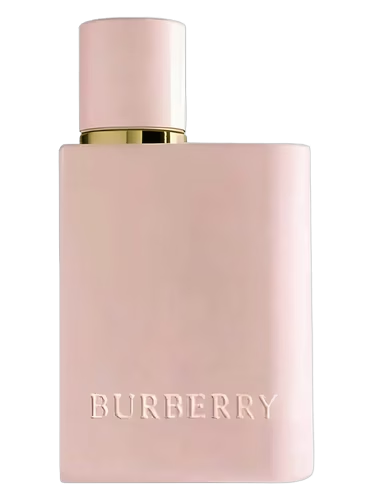
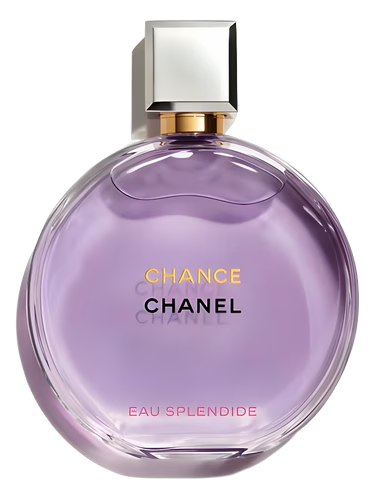
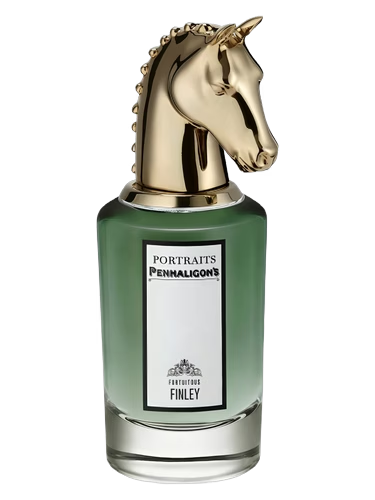
What is Nard?
Nard, also known as Spikenard or Jatamansi, is an aromatic herb from the Valerian family that grows in the Himalayas and has a millenary history as a sacred oil and balsamic perfume.What does Nard smell like?
It offers a profound, earthy, and woody aroma reminiscent of damp soil and forest floor, providing a rich, grounding, and calming quality to fragrance compositions.How is Nard essence extracted?
The essential oil is primarily obtained through steam distillation of the plant's dried and crushed rhizomes, though modern techniques like CO2 extraction are also used.What are some top perfumes featuring Nard?
Notable fragrances include Alexandre J Majestic Nard, Adi Ale Van Gethsemane - Elixir of Faith, and Laura Biagiotti Roma Fiori Bianchi.Is Nard used in traditional practices?
Yes, it has historically been used for medicinal, liturgical, and ceremonial purposes, most famously as a precious anointing oil in ancient times and religious traditions.