Fragrance Notes Are Layers Of Scent That Are Layered To Form The Final Fragrance. Fragrance Notes Are Categorised Into Three Main Elements Based On How Long They Take To Evaporate, And How Long They Typically Last Following Application: Top Notes, Heart Notes And Base Notes.
Myrtle
Myrtle offers a bright, diffusive, aromatic freshness. Its profile is characterized by mentholic and lemony notes, with terpenic undertones. High-quality varieties introduce a soft floral nuance. It functions as an invigorating top note, often used in colognes and herbal blends for a clean, clean, and subtly diffusive opening.

Origin & Extraction Of Myrtle
Myrtle (Myrtus communis) boasts a rich history, particularly within the Mediterranean region, where it has been associated with love, honor, and immortality since ancient Greek and Roman times. While its use in medicinal and ritualistic preparations dates back centuries, its consistent inclusion in European perfumery solidified with the rise of the classical Eau de Cologne structure in the 18th century. Prized for its clear, aromatic, and invigorating essence—often incorporating mentholic and lemony facets—Myrtle provided a fresh, clean, and slightly herbaceous counterpoint to the dominant citrus oils like Bergamot and Lemon, helping to ground the composition and offer greater longevity than volatile fruit zests alone.
In modern perfumery, Myrtle has experienced a resurgence, particularly within niche and designer brands aiming to capture authentic Mediterranean landscapes and sophisticated, natural green notes. Its profile is valued for providing complexity and a sharp, dynamic edge to fresh compositions. Fragrances today use Myrtle not just as a supporting herbaceous note in colognes, but as a central theme, celebrating its ability to bridge bright top notes with warmer, more enduring heart notes, often signifying a clean, refined, and outdoorsy aromatic quality in contemporary blends.
Extraction Methods of Myrtle
The primary and traditional method for extracting essential oil from myrtle (Myrtus communis) is steam distillation or hydrodistillation of the leaves, branches, and berries. Historically, these techniques have been used since the Middle Ages, involving the passage of pressurized steam through freshly harvested plant material to vaporize volatile aromatic compounds, which are then condensed and separated into pure oil and floral water. For medicinal and culinary purposes, ancient methods also included maceration and hydro-alcoholic infusion, particularly in the production of traditional myrtle liqueurs where berries are steeped in spirits.
Modern extraction has evolved to include advanced green technologies that prioritize efficiency and sustainability. Latest methods include supercritical fluid extraction (SFE) using CO2, which achieves significantly higher yields and better preserves bioactive compounds like polyphenols without the use of toxic solvents. Other contemporary techniques include microwave-assisted extraction (MAE) and ultrasound-assisted extraction (UAE), which drastically reduce extraction times and energy consumption while maintaining the oil's aromatic integrity. Additionally, mechanical cold expression is now applied to myrtle seeds—by-products of the liqueur industry—to recover specialty oils rich in fatty acids.
Myrtle, with its bright, aromatic, and slightly mentholic freshness, is a cherished note, especially in traditional Mediterranean-inspired fragrances and classical Eaux de Cologne. Its invigorating profile makes it perfect for adding a clean, green burst to the opening of a scent. A prominent and historically significant example of its use is in the Italian brand Acqua di Parma’s iconic line, specifically Acqua di Parma Blu Mediterraneo Mirto di Panarea, where it is the star ingredient, evoking the serene and aromatic landscapes of the Aeolian Islands.
- Myrtle is often paired with other citrus notes like Lemon and Bergamot to enhance the overall impression of freshness and luminosity.
Beyond the classic Italian cologne structure, Myrtle is also utilized in more contemporary and complex compositions to provide an herbaceous counterpoint to heavier notes. For instance, brands looking for an authentic, untamed green accord often turn to Myrtle to lend a distinctive natural quality. It helps ground brighter citruses while offering a sharper, more dynamic edge than traditional herbs like lavender or rosemary, making it suitable for both men's and women's fragrances that aim for a sophisticated, outdoorsy feel.
- The oil derived from Myrtle (Myrtus communis) is known for its excellent fixative properties, helping to prolong the longevity of volatile top notes.
The note also appears in certain niche and artisanal fragrances that focus on botanical realism. While perhaps not as globally famous as a note like rose or jasmine, Myrtle’s inclusion signals a dedication to high-quality, natural-smelling ingredients. One notable fragrance featuring this note is Eau d’Italie Au Pays de la Fleur d’Oranger, where Myrtle contributes to the fragrance's Mediterranean herbaceous and floral complexity, demonstrating its versatility beyond simple fresh colognes.
Sustainability Of Myrtle
Sustainability of Myrtle
- Utilizing myrtle trees as effective carbon sinks, with mature specimens capable of sequestering significant amounts of CO2 annually to help offset emissions
- Promoting the cultivation of drought-tolerant and hardy myrtle varieties that require minimal supplemental irrigation and low chemical inputs
- Implementing biosecurity monitoring protocols and research to protect native Myrtaceae species from invasive threats like myrtle rust
- Supporting urban biodiversity and pollinator health by planting myrtle in agricultural buffer zones and restoration projects to provide critical habitats
- Adopting circular economy principles by upcycling plant material into mulch and organic compost to enhance soil fertility and water retention
- Investing in indigenous ranger training programs for the monitoring and management of forest health to ensure long-term ecological resilience
Trivia
According to legend, when the first humans were cast out of Eden, they were allowed to take a single fragrant myrtle branch with them as a reminder of their carefree days in paradise.
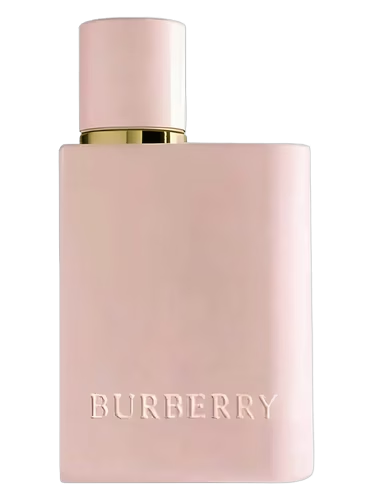
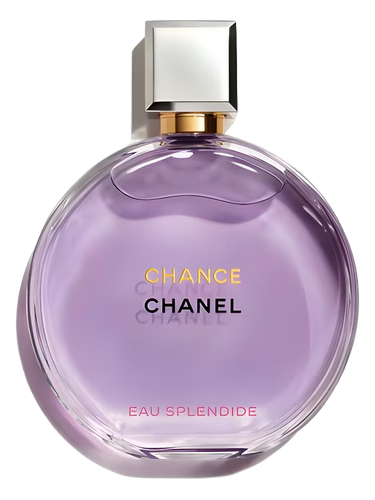
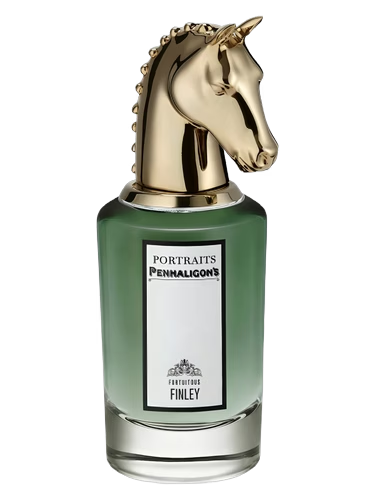
Most Popular Scents Using Myrtle
What is Myrtle?
Myrtle is an aromatic evergreen shrub native to the Mediterranean region, historically associated with love and immortality, and used in perfumery for its clear, invigorating essence.What does Myrtle smell like?
It offers a bright, diffusive freshness characterized by mentholic, lemony, and herbaceous notes with slightly sweet, spicy, and balsamic undertones.How is Myrtle essence extracted?
The essential oil is primarily obtained through steam distillation or hydrodistillation of the leaves, branches, and berries to preserve its volatile aromatic compounds.What are some top perfumes featuring Myrtle?
Notable fragrances include Acqua di Parma Mirto di Panarea, Tom Ford Neroli Portofino, Serge Lutens Ambre Sultan, and Dior Terra Bella.When is Myrtle in season?
The plant typically follows a long blooming period from May to July or September, with berries ripening in the late summer and fall.