Fragrance Notes Are Layers Of Scent That Are Layered To Form The Final Fragrance. Fragrance Notes Are Categorised Into Three Main Elements Based On How Long They Take To Evaporate, And How Long They Typically Last Following Application: Top Notes, Heart Notes And Base Notes.
Mung Bean
Mung Bean presents a subtle, starchy, and mildly sweet profile with a delicate green, earthy nuance. It often carries a light, powdery texture, lending a soft, comforting background to compositions. It can evoke the clean, vegetal freshness of wet seeds or a slightly creamy, unassuming richness.

Origin & Extraction Of Mung Bean
Mung Bean (Vigna radiata) is an ancient crop, originating in India, and its history is deeply rooted in traditional Asian cuisine and medicine, where it is known for its starchy, earthy, and mildly sweet profile. While the Mung Bean itself has a long historical timeline, its specific use as an isolated and recognizable fragrance note in perfumery is highly contemporary. Traditional perfumery rarely featured starchy vegetal notes, focusing instead on volatile citruses, heavy resins, or florals.
The relevance of Mung Bean to perfumery is driven by modern trends, particularly niche and avant-garde fragrances that seek to capture subtle, non-conventional textures like 'powdery,' 'green,' or 'creamy vegetal.' It is often utilized as an abstract or supporting note to lend a unique, soft, and comforting depth, simulating the clean, unassuming richness or delicate green freshness of wet seeds, rather than functioning as a historical staple like notes used in the classic Eau de Cologne structure.
Extraction Methods of Mung Bean
Historically, the extraction of mung bean compounds was achieved through traditional manual and simple thermal methods, such as soaking, boiling, or steaming the seeds to produce medicinal decoctions and basic protein extracts. These early techniques often involved home-based maceration in water or alcohol to capture nutritional and therapeutic properties, though they were less efficient at isolating specific proteins or bioactive flavonoids.
Modern commercial extraction has evolved to include sophisticated mechanical and chemical processes tailored to specific end-products. For protein isolation, the industry primarily utilizes alkaline extraction followed by isoelectric precipitation (AE-IP), often employing sodium hydroxide or more functional alternatives like sodium carbonate. To preserve the integrity of the bean's delicate compounds, advanced techniques such as pressurized liquid extraction (PLE), ultrasound-assisted extraction (UAE), and microwave-assisted extraction (MAE) are now used to optimize the yield of antioxidants, phenolics, and flavonoids with significantly reduced processing times.
The Mung Bean note is a distinctive, non-conventional ingredient, valued in modern perfumery for its subtle, starchy, and delicate green-earthy texture. Because it is not a traditional aromatic staple, its appearance often signifies a niche or avant-garde composition seeking to recreate specific culinary or natural scents. This note primarily serves to lend an unusual, soft, and comforting depth, simulating a creamy vegetal freshness or a light, powdery richness. Its inclusion helps ground brighter notes, providing a unique counterpoint to typical volatile openings, creating an abstract textural element rather than a dominant aroma.
- A direct and clear example of Mung Bean's use is found in Glin Dee Fragrances' GOLDEN HOUR. This composition leans into a gourmand theme, utilizing Yellow Mung Beans prominently in the top notes alongside Durian and Pandan Leaf. In this context, the Mung Bean note is crucial for establishing an authentic, creamy, and slightly starchy texture that immediately evokes the Southeast Asian dessert tradition, blending seamlessly into the middle notes of Sticky Rice and Ripe Mango before drying down into Coconut Milk and Sandalwood.
While Mung Bean may not be listed overtly in many mainstream designer fragrances, its characteristic powdery-green and starchy profile is often achieved through sophisticated abstract accords in scents that aim for a 'clean,' 'skin-like,' or comforting vegetal freshness. These niche applications leverage the bean's ability to subtly convey warmth and moisture without heavy sweetness. Perfumers frequently pair this subtle note with lactonic accords, soft musks, or transparent florals to enhance a sense of quiet naturalness and delicate complexity.
Sustainability Of Mung Bean
Sustainability of Mung Bean
- Promoting soil health and fertility through the plant's natural ability to fix atmospheric nitrogen, which reduces the need for synthetic nitrogen fertilizers
- Supporting water conservation and climate resilience by utilizing drought-tolerant and heat-resistant varieties that require significantly less water than traditional staple crops
- Improving environmental footprints by emitting lower levels of greenhouse gases compared to soy, corn, wheat, and rice
- Enhancing agricultural biodiversity and zero-waste initiatives by using harvest residues as nutrient-rich fodder or green manure to prevent soil depletion
- Fostering socio-economic sustainability for smallholder farmers by providing a fast-maturing, high-value cash crop that enables double-cropping and increases household income
Trivia
Mung beans are the source of an unusual savory-gourmand fragrance note that replicates the specific aroma of bean sprouts or sweet mung bean paste, often used in niche perfumery to evoke childhood memories of traditional Asian desserts.
Most Popular Scents Using Mung Bean
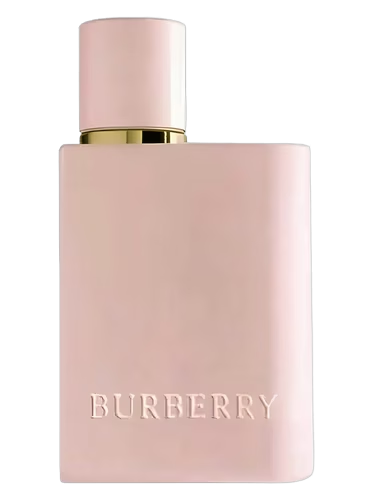
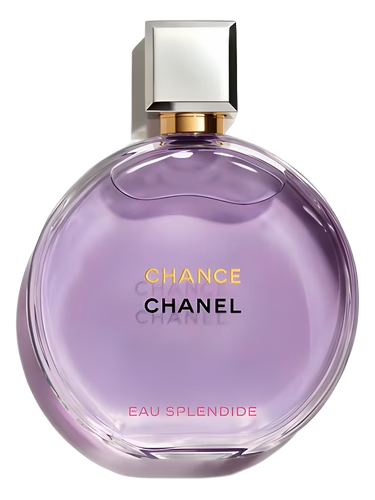
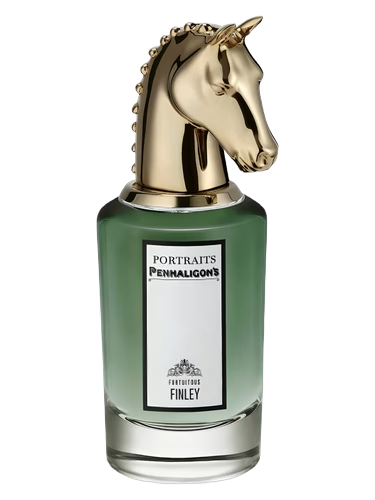
What is Mung Bean?
Mung Bean is an ancient legume originating in India, valued in modern niche perfumery for its unique, non-conventional starchy and green aromatic profile.What does Mung Bean smell like?
It features a subtle, starchy, and mildly sweet aroma with delicate green and earthy nuances, often described as having a light, powdery texture.How is Mung Bean essence extracted?
In modern commercial production, it is typically extracted using distillation or advanced methods like ultrasound-assisted extraction to preserve its delicate antioxidants and aromatic compounds.What are some top perfumes featuring Mung Bean?
Notable fragrances include d'Annam Mooncake, Strangers Parfumerie Sweet Celestials, and Voyager Golden Hour.When is Mung Bean in season?
Mung beans are warm-season crops typically planted in late spring and harvested in late summer or early autumn, though they can be sprouted year-round.