Fragrance Notes Are Layers Of Scent That Are Layered To Form The Final Fragrance. Fragrance Notes Are Categorised Into Three Main Elements Based On How Long They Take To Evaporate, And How Long They Typically Last Following Application: Top Notes, Heart Notes And Base Notes.
Mulberry
Mulberry offers a rich, sweet, and complex fruity profile in perfumery, blending the jammy, wine-like depth of dark berries with subtle green and woody undertones. It provides a luscious, vibrant, and slightly mysterious sweetness, often used to create sophisticated, deep red-fruit accords in gourmand and chypre compositions.

Origin & Extraction Of Mulberry
Mulberry, derived from the fruit of the *Morus* tree, is not a traditional historical note in classic perfumery, which historically relied on readily available and stable citrus, floral, and resinous extracts. Its use gained prominence much later, primarily emerging in the late 20th and early 21st centuries. The fruit's essence—a complex blend of dark, jammy sweetness reminiscent of wine and subtle green undertones—became attractive with the rise of the gourmand and fruity-chypre fragrance families. These modern categories sought rich, non-linear fruit notes that could convey lushness and depth, making the elusive and nuanced Mulberry a valuable, yet often synthetically produced, component to create sophisticated berry accords.
In modern fine fragrance, the Mulberry note is employed to introduce a luscious, vibrant sweetness that transitions seamlessly into heart and base notes, distinguishing it from sharper, more volatile citrus or simple red berry notes. Because natural mulberry extract can be difficult to stabilize for perfumery, the note is frequently constructed as an accord, utilizing sophisticated synthetics to achieve its signature rich, wine-like profile. This contemporary application positions Mulberry as a key ingredient for niche and designer houses aiming for sophisticated, deep fruit compositions that evoke richness, luxury, and a mysterious, dark-berry sweetness.
Historically, extraction methods for mulberry leaves and fruits centered on simple, traditional techniques such as maceration and hot water infusion. These processes involved soaking the plant material in water or alcohol (ethanol or methanol) at room temperature or using boiling water to prepare teas and medicinal extracts. While effective for basic applications, these artisanal methods were often limited by long processing times and lower yields of specific bioactive compounds like phenolics and flavonoids.
Modern commercial and laboratory extraction has evolved to include advanced technologies designed to maximize efficiency and preserve delicate phytochemicals. Current standard practices utilize ultrasonic-assisted extraction (UAE) and microwave-assisted extraction (MAE), which enhance cell disruption and solvent penetration to achieve higher yields in significantly shorter times. Other specialized techniques include supercritical CO2 extraction for high-purity phenolic compounds and enzyme-assisted extraction using cellulase to improve the recovery of vitamins and pigments. Recent research also highlights the use of specialized resin chromatography, such as Amberlite XAD-16, to purify extracts by removing sugars and concentrating active fractions like 1-DNJ and resveratrol.
While Mulberry is not a classical, foundational note like rose or jasmine, it has become integral to modern compositions seeking a rich, dark-fruit signature. It is particularly valued in fruity-chypre and gourmand fragrances for its lush, wine-like sweetness and subtle woody nuances, which give it a depth that volatile red berries often lack. This sophistication ensures the fruity opening transitions seamlessly into the complex heart and base notes.
- A notable fragrance that features a distinctive mulberry accord is Jo Malone London Blackberry & Bay, where the jammy, dark mulberry scent is used alongside tart blackberry to create a vibrant, yet elegant, opening that is balanced by the sharp green freshness of bay leaf.
- Another example is Bvlgari Mon Jasmin Noir L'Eau Exquise, which utilizes a light mulberry essence to complement the jasmine heart, adding a subtle, juicy fruitiness to the otherwise clean floral composition.
The successful integration of the Mulberry note often relies on its ability to evoke a sense of deep, luxurious color and texture, making it perfect for fragrances that aim for a rich, mysterious sweetness. Its dark berry profile is frequently employed to enhance woody or amber bases, providing a contrasting element that keeps the overall scent vibrant and modern. This usage highlights its versatility beyond a simple top note, allowing it to anchor the composition with sophisticated fruit depth.
Sustainability Of Mulberry
Sustainability of Mulberry
- Achieved B Corp Certification in 2024, demonstrating a commitment to high standards of social and environmental performance, transparency, and accountability
- Commitment to a net-zero greenhouse gas emissions target by 2035, with near-term reduction targets validated by the Science Based Targets initiative (SBTi)
- Implementing circular economy models through the Mulberry Exchange and a dedicated Lifetime Service Centre that repairs and restores over 10,000 bags annually to extend product life
- Sourcing 100% of leather from environmentally accredited tanneries, with a focus on developing a hyper-local, regenerative supply chain that supports soil health and biodiversity
- Prioritizing waste reduction by using Zero Waste to Landfill providers at UK factories and repurposing millions of disposable coffee cups into signature green packaging
- Investing in renewable energy, including the installation of a large solar photovoltaic array at Somerset manufacturing sites to significantly reduce operational carbon footprint
Trivia
In mythology, the mulberry is associated with the tragic story of Pyramus and Thisbe, where the fruit's berries famously turned from white to deep red after being stained by the blood of the ill-fated lovers.
Most Popular Scents Using Mulberry
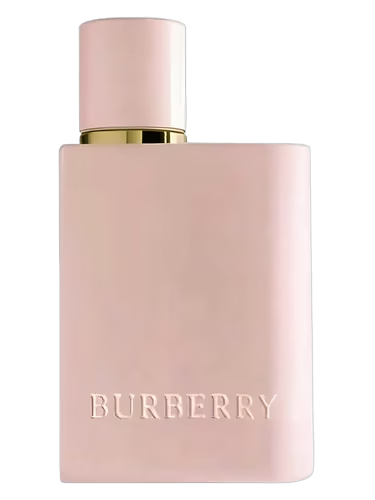
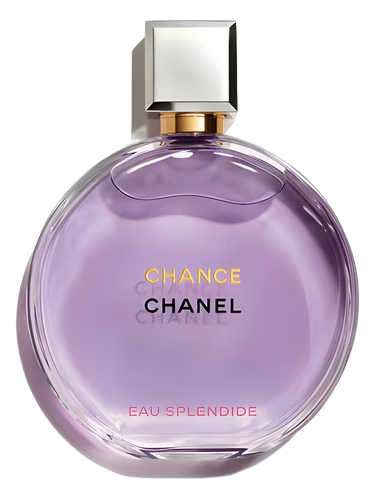
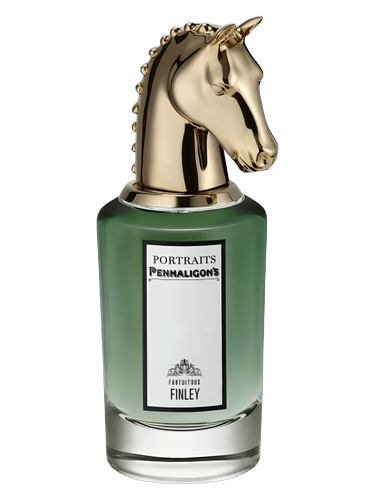
What is Mulberry?
Mulberry is a fruit-based fragrance note derived from the Morus tree, known for its rich, sweet, and jammy profile that gained prominence in modern gourmand and fruity-chypre perfumery.What does Mulberry smell like?
It offers a complex, wine-like dark fruit scent with succulent sweetness, tart berry facets, and subtle green or woody undertones that provide more depth than typical red berries.How is Mulberry essence extracted?
Because natural mulberry is difficult to stabilize, it is typically recreated as a synthetic accord; however, advanced methods like ultrasonic-assisted and solvent extraction are used for laboratory and botanical purposes.What are some top perfumes featuring Mulberry?
Notable fragrances include Jo Malone London Blackberry & Bay, Bvlgari Mon Jasmin Noir L'Eau Exquise, Lalique Amethyst, and Floris Mulberry Fig.When is Mulberry in season?
Mulberry trees typically flower in early to mid-spring, with the primary fruit harvesting season occurring from May through August, peaking in mid-summer.