Fragrance Notes Are Layers Of Scent That Are Layered To Form The Final Fragrance. Fragrance Notes Are Categorised Into Three Main Elements Based On How Long They Take To Evaporate, And How Long They Typically Last Following Application: Top Notes, Heart Notes And Base Notes.
Moss Flox
Moss Flox offers a highly distinctive and unique floral profile that is green, herbaceous, and mildly narcotic. It provides a sharp, textural opening with earthy nuances, valued for its complex and unconventional character that subtly suggests the aromatic bitterness of cannabis or crushed green leaves.

Origin & Extraction Of Moss Flox
Moss Flox, or *Phlox subulata*, is not a traditional historical pillar in classic perfumery, unlike notes such as Bergamot or Rose. Its use primarily belongs to the contemporary and niche segments of the fragrance industry, which actively seek out unique, non-traditional, and conceptual aromatic profiles. Its adoption reflects a modern trend of incorporating highly textural, green, and unconventional notes to create depth and 'hyper-realism'—a scent that evokes a very specific, untamed natural environment, rather than a conventional floral bouquet.
Due to its complex odor profile—green, herbaceous, and subtly narcotic, sometimes suggesting crushed leaves or cannabis—Moss Flox offers perfumers a specialized tool to add a sharp, sophisticated bitterness to compositions. It often functions to bridge bright top notes with woody or oriental bases, providing an earthy, slightly wild counterpoint. Its relevance lies in its ability to contribute to the complex storytelling and enigmatic character found in modern, avant-garde fragrances, where it helps define a fragrance as unique and distinctive.
Extraction Methods of Moss Phlox
Historically, moss phlox (Phlox subulata) has been primarily propagated through traditional vegetative methods such as division and simple softwood cuttings. Division involves digging up established, overgrown clumps in the early spring or fall and manually separating the shallow root systems into smaller sections. Another traditional practice includes taking tip cuttings in late spring and rooting them in moist, sandy soil or simple peat-based mixes, often relying on natural seasonal cycles to establish new growth.
Modern commercial production has evolved to include more precise and technical methods to ensure uniformity and high yield. Latest practices utilize vegetative tip cuttings treated with rooting hormones like K-IBA as a basal dip to expedite development. Advanced greenhouse techniques involve the use of specialized 105-cell plug trays, controlled misting schedules to prevent wilting, and strict temperature management (70-72°F) for rooting. Furthermore, innovative protocols now incorporate a period of vernalization—subjecting the plants to cold treatment between 35°F and 44°F for at least eight weeks—to ensure the best flowering performance for retail.
Moss Flox, with its green, herbaceous, and subtly narcotic profile, is an unconventional note often reserved for niche and experimental perfumery where its complexity can truly shine. Because it suggests the bitterness of crushed green leaves or even cannabis, it lends a modern, textural edge to compositions. While not frequently found in mainstream blockbusters, its unique scent helps establish a sophisticated, nature-based authenticity in fragrances.
- Moss Flox’s distinctive green character can be appreciated in compositions that aim for an earthy, slightly wild atmosphere, contrasting beautifully with brighter floral or lighter citrus notes.
One notable example where a similar deep, herbaceous green quality is central is **Narcotic Venus**. Although this fragrance may feature different notes for the main composition, the unconventional, dark green elements reminiscent of Moss Flox are highly valued in similar scents to provide depth and an intriguing counterpoint to white florals. This type of note ensures the fragrance avoids being overly sweet or conventional, appealing to those seeking an enigmatic signature scent.
Furthermore, in the avant-garde segment of the industry, fragrances aiming for "hyper-realism" or a connection to raw, untamed nature may employ a note like Moss Flox. Its inclusion often serves to deepen the base or heart of an Oriental or Woody fragrance, replacing more traditional mosses with a sharper, more exhilarating green texture. This complexity helps modern niche scents like those from **Zoologist** or **Slumberhouse** achieve their distinctive, evocative storytelling.
- Blooming primarily occurs for 3 to 4 weeks during the mid to late spring months, typically from March through June, creating a vibrant carpet-like display
- The plant may produce a smaller, secondary bloom in the fall, especially when trimmed back after the initial spring flowering
- Seed capsules develop during the summer and reach maturity by the autumn
- Evergreen to semi-evergreen needle-like foliage provides visual interest throughout the summer, fall, and winter months
- New growth and flower bud development begin in late winter to early spring before the primary blooming season
Sustainability Of Moss Flox
Sustainability of Moss Phlox
- Promoting biodiversity by serving as a vital native host plant for butterfly and moth larvae and providing early-season nectar for bees, hummingbirds, and other pollinators
- Implementing natural erosion control on slopes and embankments through its vigorous, mat-forming growth habit and stabilizing root systems
- Reducing the need for chemical interventions due to its natural resistance to common diseases like powdery mildew and its low flammability rating
- Supporting sustainable landscaping as a hardy, drought-tolerant native alternative to aggressive invasive species like Periwinkle (Vinca minor)
- Encouraging low-impact gardening practices through its minimal maintenance requirements and ability to thrive in poor, rocky, or sandy soils without heavy fertilization
Trivia
Moss phlox derives its name from the Ancient Greek word for flame, a reference to the intense, fiery brilliance of its flowers that can become so abundant they completely hide the plant's foliage.
Most Popular Scents Using Moss Flox


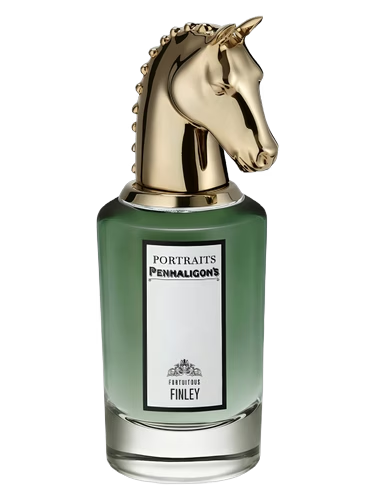
What is Moss Flox?
Moss Flox is a fragrance note derived from Phlox subulata, a mat-forming perennial native to North America, prized in modern and niche perfumery for its unique, textural green profile.What does Moss Flox smell like?
It offers a highly distinctive aroma that is green, herbaceous, and mildly narcotic, with sharp earthy nuances that can subtly suggest the scent of crushed green leaves or cannabis.How is Moss Flox used in perfumes?
It is often used as a heart note to provide a sophisticated, slightly wild bitterness that bridges bright top notes with deeper woody or oriental bases.Are there any famous perfumes with Moss Flox?
Notable fragrances featuring this note or its distinct herbaceous profile include DS & Durga Magnolia City, Commodity Moss, and Wild Veil Caramel Phlox.Is Moss Flox a natural or synthetic note?
While it represents a botanical plant, in perfumery it is often reconstructed as a synthetic building block to replicate the earthy, damp character of restricted materials like natural oakmoss.