Fragrance Notes Are Layers Of Scent That Are Layered To Form The Final Fragrance. Fragrance Notes Are Categorised Into Three Main Elements Based On How Long They Take To Evaporate, And How Long They Typically Last Following Application: Top Notes, Heart Notes And Base Notes.
Moringa Blossom
Moringa Blossom is a delicate, white floral note characterized by a crisp, sweet, and clean profile. It often blends nuances of fresh jasmine and lily with light green and subtly powdery undertones. It conveys an ethereal, uplifting, and slightly creamy sweetness, placing it in the elegant white flower category.

Origin & Extraction Of Moringa Blossom
Moringa, derived from the tree *Moringa oleifera* (often called the "miracle tree"), has a deep history in traditional uses, particularly in South Asia and Africa, for medicine, nutrition, and oil extraction. The oil, known as Ben oil, was historically used by Romans and Egyptians in cosmetic and unguent formulations, including perfumery, due to its odorless and stable nature, making it an excellent carrier oil to absorb and hold scents. However, the specific *Moringa Blossom* note, which captures the delicate, white floral scent of the flower itself, is a much more contemporary concept in fine fragrance.
The use of Moringa Blossom as a distinct aromatic note gained significant traction in Western perfumery in the late 20th and early 21st centuries, reflecting a trend towards utilizing unique, natural, and clean floral profiles. It is prized for offering a light, crisp, and slightly creamy sweetness that provides an alternative to heavy white florals like tuberose or gardenia. Its prominence was cemented by houses seeking transparent, uplifting scents, notably by The Body Shop, which featured the note in a popular, gentle fragrance line, thus establishing the Moringa Blossom as a recognized, modern signature in the fresh and clean floral category.
Extraction Methods of Moringa Blossom
Historically, the aromatic and medicinal properties of moringa blossoms were captured through simple infusion and maceration techniques. Traditional methods involved steeping the fresh flowers in hot water to create therapeutic teas or macerating them in carrier oils and honey to preserve their delicate floral essence and nutritional profile. These ancient practices were primarily focused on utilizing the blooms for their sweet nectar and immediate health benefits within local communities in South Asia and Africa.
Modern extraction for moringa blossom has evolved to include more sophisticated techniques such as steam distillation and solvent extraction to produce concentrated essential oils and absolutes. Recent developments also utilize green technology, including subcritical water extraction and ultrasound-assisted extraction (UAE), which optimize the recovery of bioactive compounds like flavonoids and phenolics while minimizing the use of organic solvents. Additionally, supercritical CO2 extraction is increasingly employed to capture the most volatile and heat-sensitive aromatic molecules, ensuring a high-purity extract that maintains the flower's natural scent and biological activity for use in luxury perfumery and pharmaceuticals.
Moringa Blossom is cherished in modern perfumery for its delicate, crisp, and slightly creamy white floral aroma, offering a clean sweetness that is both ethereal and uplifting. Due to its unique profile, blending nuances of jasmine and lily with light green undertones, it is often utilized to create soft, radiant, and intensely feminine compositions, particularly those that seek to evoke a natural, dewy freshness.
- The note gained significant attention through The Body Shop's popular fragrance line, where the bMoringa b fragrance successfully showcased its light, subtly sweet, and clean floral scent as a standalone signature, demonstrating its appeal as a gentle, everyday floral.
Beyond single-note fragrances, Moringa Blossom is expertly blended into more complex bouquets to add a refined texture and luminous lift. It frequently serves to soften bolder white florals or enhance green compositions, preventing them from becoming too sharp. This subtle yet sophisticated role ensures the note provides depth while maintaining an airy quality, contributing to the perceived elegance and longevity of the heart accord.
- In designer perfumery, the note has appeared in various limited editions and specialized flankers seeking a fresh, exotic twist, such as certain versions of bDKNY Be Delicious b or collections from L'Occitane, where it adds a crisp, natural sweetness to fruity and citrus openings.
The contemporary relevance of Moringa Blossom lies in its ability to bridge classic elegance with modern transparency. It provides the richness of a traditional white floral without the heaviness, making it ideal for contemporary Eaux de Toilette and Eaux Fraîches. As perfumers continue to explore natural and sustainable ingredients, the moringa flower is becoming an increasingly valued component for crafting light, sophisticated, and universally appealing floral fragrances.
Sustainability Of Moringa Blossom
Sustainability of Moringa Blossom
- Acts as an environmental powerhouse by sequestering carbon dioxide at rates up to 20 times higher than other common tropical trees
- Supports regenerative agriculture through deep taproots that prevent soil erosion and nutrient-rich leaves that serve as natural fertilizer
- Promotes a zero-waste circular economy as nearly every part of the tree can be repurposed for food, medicine, animal feed, or natural pesticides
- Provides a sustainable solution for water purification using crushed seeds as a biodegradable, eco-friendly coagulant to remove contaminants and bacteria
- Enhances socio-economic resilience for rural communities by providing a drought-resistant, year-round source of income and nutrient-dense food security
- Protects biodiversity by serving as a natural companion plant in agroforestry systems and attracting pollinators like bees with its blossoms
Trivia
Moringa flowers are traditionally harvested under moonlight in some regions to protect the delicate leaves and blooms from direct sunlight once they are cut.
Most Popular Scents Using Moringa Blossom
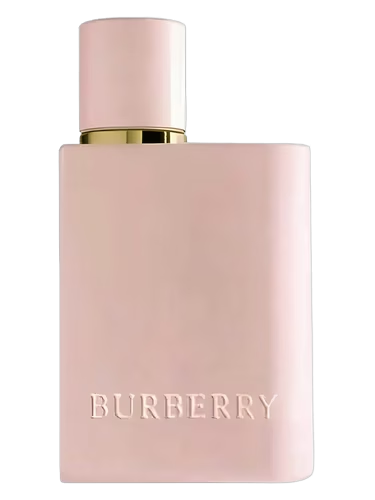
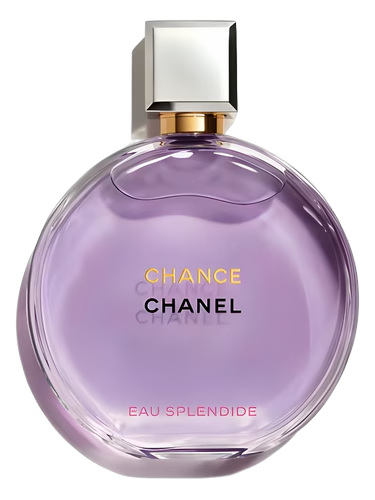
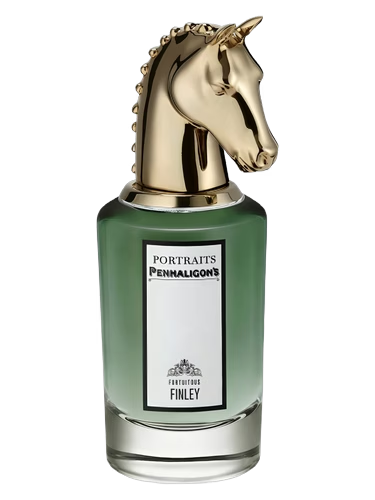
What is Moringa Blossom?
Moringa Blossom is the delicate white flower of the Moringa oleifera tree, known as the miracle tree, native to Northern India and prized for its ethereal, clean floral scent.What does Moringa Blossom smell like?
It offers a crisp, sweet, and slightly creamy white floral profile with nuances of jasmine and lily, complemented by light green and subtly powdery undertones.How is Moringa Blossom essence extracted?
While traditionally captured through maceration and infusion, modern methods include steam distillation, solvent extraction, and advanced supercritical CO2 extraction to preserve its volatile aromatic molecules.What are some top perfumes featuring Moringa Blossom?
Notable fragrances include The Body Shop Moringa, Lattafa Perfumes Maahir Honor, Valley Blossoms Moringa, and Solstice Scents Moringa Blossom.When is the Moringa tree in season?
The tree typically flourishes in spring and summer, with blooming generally occurring once a year between April and June in the Northern Hemisphere, though it can bloom year-round in tropical climates.