Fragrance Notes Are Layers Of Scent That Are Layered To Form The Final Fragrance. Fragrance Notes Are Categorised Into Three Main Elements Based On How Long They Take To Evaporate, And How Long They Typically Last Following Application: Top Notes, Heart Notes And Base Notes.
Miracle Berry
The Miracle Berry scent is vivid and tangy initially, mirroring its flavor-altering ability, then softens into a gentle, enchanted berry sweetness. It's often used for its unique fruity profile that transitions from sharp zest to a delicate, unconventional sweetness in a composition.

Origin & Extraction Of Miracle Berry
The Miracle Berry, or *Synsepalum dulcificum*, is native to West Africa and has been a part of the local diet and culture for centuries, with the earliest European accounts dating back to the 18th century. Unlike traditional fruits used in perfumery, this berry is primarily known for its unique property of containing miraculin, a glycoprotein that temporarily makes sour foods taste sweet. Because of this, its historical significance is rooted in culinary and medicinal uses, not traditional perfumery, which historically relied on more stable and easily extractable essential oils like those from the rinds of European citruses (e.g., Bergamot and Lemon).
The note's relevance to perfumery is entirely modern, emerging as perfumers increasingly seek unique, unconventional fruity profiles that offer complex transitions. Since the berry does not yield a traditional essential oil, the "Miracle Berry" scent is recreated as an accord, valued for its ability to transition from a vivid, tangy opening (E185) into a gentle, unconventional sweetness. This synthetic interpretation allows contemporary fragrances to incorporate a delicate, 'enchanted' sweetness that appeals to modern niche and gourmand trends, often appearing in compositions that aim to surprise the wearer with a sweet-tart, exotic fruity element.
Extraction Methods of Miracle Berry
The primary method for extracting the active components of the miracle berry, specifically the taste-modifying glycoprotein known as miraculin, has evolved from traditional consumption to advanced industrial processes. Historically, the extraction was a manual, direct process where the fresh berry was chewed to coat the tongue with its pulp, releasing the miraculin to bind with sweetness receptors. In traditional medicinal practices, the berries were often boiled to extract juices for treating respiratory illnesses, though modern science notes that excessive heat can denature the sensitive protein.
Modern commercial extraction focuses on preserving the stability of miraculin through non-thermal and low-temperature techniques. The current standard involves mechanical pitting to remove the seed, followed by blending the pulp and skin into a puree. This puree is then subjected to lyophilization (freeze-drying) to reduce moisture while protecting the heat-sensitive proteins. Advanced research also utilizes high-pressure pulsed electric fields (HIPEF) as a non-heat treatment to enhance extraction efficiency and permeability. For high-purity applications, the glycoprotein is often extracted using saliferous acidic buffers and purified through centrifugation and ultrafiltration, ensuring the final extract retains its unique ability to transform sour tastes into sweet ones.
The Miracle Berry note, a modern and often synthetic accord capturing the fruit's unique tangy-to-sweet transition, has begun to appear in contemporary niche and designer compositions seeking unconventional fruity profiles. While not yet a classical cornerstone like Bergamot or Lemon, its usage signals a desire for exotic complexity in top notes. For instance, the designer house Hermès, known for its elegant simplicity, featured the note in its 2024 female fragrance, Barénia, using the unusual berry to provide a sophisticated, transitioning sweetness that elevates the composition beyond typical fruit scents.
- * * *
In the realm of independent and experimental perfumery, the Miracle Berry accord is prized for its ability to create a distinctive, enchanting opening. Its profile—starting vivid and tangy before settling into a gentle sweetness—lends itself perfectly to complex gourmand and exotic fruity scents. An example of its adoption in this space is the 2025 unisex scent Hicky Extrait de Parfum from Zodiac, where the note is employed to provide a surprising, bright introduction that complements deeper, often heavier base notes, adding a unique modern signature.
- * * *
The versatility of the Miracle Berry note has also made it attractive to houses specializing in vibrant, high-impact accords. These brands utilize the note to enhance other berry and floral elements, giving the fragrance a perceptible "pop" of sweetness and zest. For example, Lily And Berry Opulence by The Dua Brand, also slated for a 2025 release, incorporates the Miracle Berry to amplify the richness and luminosity of the other berry notes, ensuring a juicy, tropical, and long-lasting fruity impression that appeals to wearers looking for powerful, sweet-tart longevity.
Sustainability Of Miracle Berry
Sustainability of Miracle Berry
- Promoting biodiversity conservation through the use of Analog Forestry Systems, which integrate miracle berry cultivation with local ecosystems to protect native species
- Supporting the socio-economic resilience of West African farming communities by establishing fair procurement systems and improving local infrastructure, such as access to clean drinking water and education
- Adopting organic cultivation practices that eliminate the use of synthetic pesticides, ensuring a safe and chemical-free product while protecting soil health
- Implementing best management practices to ensure environmental sustainability and resource efficiency in commercial farming operations
- Advancing circular economy principles by exploring the fruit's diverse applications in health and technology to maximize resource use and minimize waste
- Fostering long-term species preservation by supporting breeding initiatives and ethical sourcing to protect the miracle berry from being endangered in its native range
Trivia
The miracle berry contains a unique glycoprotein called miraculin that temporarily tricks the tongue into perceiving sour and acidic foods, like lemons or vinegar, as being intensely sweet.
Most Popular Scents Using Miracle Berry
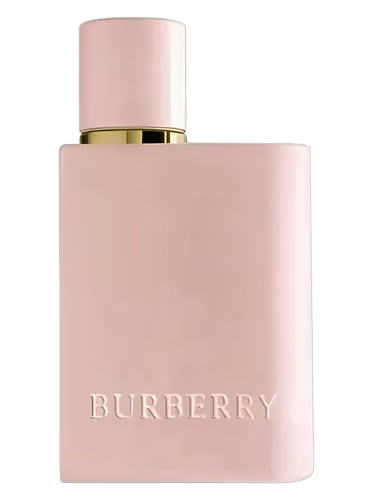
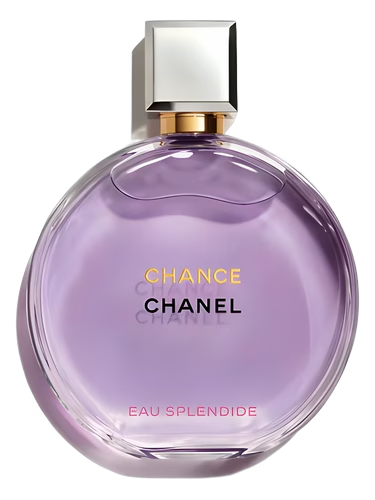
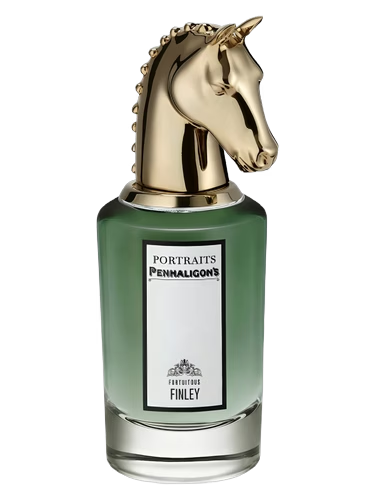
What is Miracle Berry?
Miracle Berry, or Synsepalum dulcificum, is a West African fruit known for containing miraculin, a protein that turns sour tastes sweet, and is used in modern perfumery as a unique transitioning accord.What does Miracle Berry smell like?
The scent features a vivid and tangy opening that mirrors its flavor-altering properties, eventually softening into a gentle, enchanted, and unconventional berry sweetness.How is Miracle Berry essence extracted?
As it does not yield a traditional essential oil, the fragrance note is typically recreated as a synthetic accord, while the fruit's active components are industrially extracted through freeze-drying.What are some top perfumes featuring Miracle Berry?
Notable fragrances include Hermès Barénia, Zodiac Hicky Extrait de Parfum, and The Dua Brand Lily And Berry Opulence.When is Miracle Berry in season?
The plant is an evergreen that can bear fruit year-round in tropical climates, though the most abundant harvests typically occur during the winter months.