Fragrance Notes Are Layers Of Scent That Are Layered To Form The Final Fragrance. Fragrance Notes Are Categorised Into Three Main Elements Based On How Long They Take To Evaporate, And How Long They Typically Last Following Application: Top Notes, Heart Notes And Base Notes.
Mimosa
Mimosa is prized in perfumery for its very sweet, intensely powdery floral character, often evoking notes of honey and hay. It carries delicate light green facets, suggesting the freshness of the plant, blended with subtle yet sophisticated woody undertones. It adds a tender, soft, and luminous quality to fragrance compositions.

Origin & Extraction Of Mimosa
Mimosa oil, typically extracted from the flowers of the *Acacia decurrens* (Cassie or Farnesiana Mimosa) and *Acacia dealbata*, has been utilized in perfumery for centuries, particularly in France, where the tree thrives along the Côte d'Azur. The rich, sweet, and powdery scent, often described as having facets of honey and hay, made it a key ingredient during the late 19th and early 20th centuries. Its inclusion became characteristic of delicate, sophisticated floral compositions, providing a creamy, golden warmth that softened sharper floral or citrus notes. Mimosa was essential in creating the 'fluffy' or 'velvety' texture prized in classic French perfumery.
While Neroli and Rose were foundational to classical perfume, Mimosa provided a distinctive note that achieved prominence in the mid-20th century, cementing its status as a luxurious and radiant floral component. Today, it remains highly valued for its versatility, appearing not only in traditional floral bouquets but also in modern gourmand and niche fragrances, where its powdery, honeyed depth is used to provide longevity and a comforting, luminous quality. Modern techniques ensure the essence captures the freshness and delicate green undertones, securing Mimosa's continued relevance in contemporary fine fragrance.
Extraction Methods of Mimosa
The primary method for extracting mimosa essence is solvent extraction of its fresh flowers, and occasionally its twigs. Because the aromatic compounds in mimosa are too delicate to withstand the high heat of steam distillation, this process is used to create a "concrete"—a waxy substance containing the plant's essential oils, waxes, and resins. This concrete is then further refined with alcohol to produce mimosa absolute, a highly concentrated and viscous liquid prized in fine perfumery for its powdery, floral, and honeyed aroma.
Historically, mimosa was often processed using the traditional technique of enfleurage, where flower petals were placed on layers of odorless animal or vegetable fat to gradually absorb their fragrance over several days. Modern industrial production has shifted toward more efficient artisanal solvent extraction methods, particularly in regions like Grasse, France. Recent advancements also include the use of supercritical CO2 extraction, which utilizes pressurized carbon dioxide as a solvent to capture a more complete and pure aromatic profile without leaving behind any chemical residues.
Mimosa, with its intensely powdery, sweet, and honeyed floral scent, has long been a key note in classic and sophisticated perfumery. One of the most celebrated examples is **Champs-Élysées** by Guerlain, where Mimosa takes center stage, blended with lilac and almond to create a luminous, springtime atmosphere. This fragrance perfectly captures the sunny, slightly green, and comforting powdery aspect of the flower, making it a benchmark for mimosa-centric compositions. Another iconic fragrance utilizing this note is **Amarige** by Givenchy, where the mimosa contributes to a rich, radiant, and opulent white floral bouquet, adding a touch of golden warmth and sweetness.
- The subtle yet complex nature of the mimosa note allows it to transition between delicate floral compositions and richer, more gourmand or oriental styles, providing depth with its hay-like and honey undertones.
In contemporary perfumery, Mimosa continues to be explored, offering a soft contrast to modern sharp notes or enhancing creamy textures. **Jo Malone Mimosa & Cardamom** showcases the flower's versatility by pairing its sweetness with the spicy, aromatic warmth of cardamom, resulting in a cozy, oriental floral scent. Furthermore, the niche market often champions the natural, authentic facets of mimosa; for instance, **L'Artisan Parfumeur Mimosa Pour Moi** captures the realistic scent of mimosa blossoms—powdery, green, and ethereal—as if standing right next to the tree.
- The use of mimosa often provides fragrances with exceptional longevity, especially its powdery elements, allowing the soft floral essence to anchor the composition through the dry-down phase.
Mimosa is also crucial in creating the illusion of delicate, fluffy texture in a scent. The note’s inherent pollen-like quality gives a fragrance an almost tactile, velvety feeling. A recent popular usage is found in **Acqua di Parma Gelsomino Nobile**, where mimosa is used to round out the floral heart, providing a supporting role that softens the prominent jasmine and tuberose notes. Whether utilized as the star ingredient in a bright floral soliflore or as a rich background player, Mimosa remains an indispensable material for conveying sunshine, sweetness, and tender elegance in fine fragrances.
Sustainability Of Mimosa
Sustainability of Mimosa
- Supporting ethical and responsible sourcing programs that provide agricultural equipment and infrastructure to mimosa harvesting families, particularly in Morocco
- Protecting local ecosystems through the use of sustainable harvesting practices and manual hand-picking to prevent damage to the plants
- Promoting 100% natural, clean-label formulas that are biodegradable, cruelty-free, and exclude harmful synthetic preservatives and phthalates
- Adopting eco-friendly packaging solutions, including plastic-free materials and refillable glass bottles to reduce environmental impact
- Preserving traditional mimosa cultivation and the genetic diversity of the species through careful management of historical orchards in regions like Grasse and Tanneron
Trivia
The mimosa plant's name is derived from the Latin word mimus, meaning mime, because its leaves are sensitive to touch and will quickly retract or close up as if they are reacting to being handled.
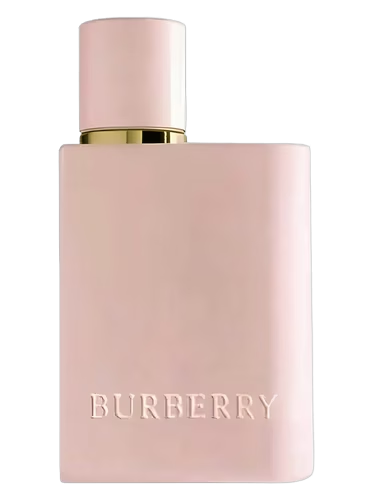
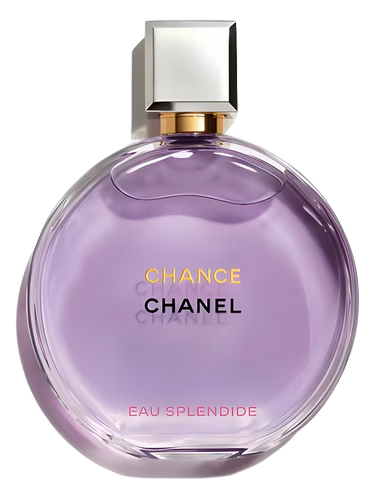
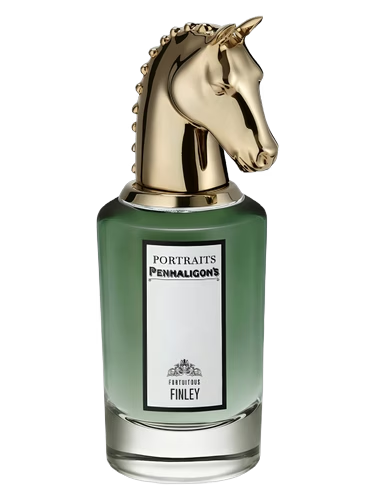
Most Popular Scents Using Mimosa
What is Mimosa?
Mimosa is a sweet, intensely powdery floral note derived primarily from the fluffy yellow blossoms of the Acacia dealbata and Acacia decurrens trees, which are native to Australia but famously cultivated in the South of France.What does Mimosa smell like?
It features a unique olfactory profile characterized by honeyed sweetness and a dry, powdery texture similar to rice powder, often accompanied by soft green facets reminiscent of cucumber and subtle woody or almond-like undertones.How is Mimosa essence extracted?
Because its aromatic compounds are too delicate for steam distillation, Mimosa is typically obtained through solvent extraction of the fresh flowers and twigs to create a concrete, which is then refined into a highly concentrated absolute.What are some top perfumes featuring Mimosa?
Iconic and popular fragrances highlighting this note include Guerlain Champs-Élysées, Jo Malone Mimosa & Cardamom, Prada Infusion de Mimosa, Diptyque L'Eau Papier, and Amouage Love Mimosa.When is Mimosa in season?
Mimosa is celebrated for its spectacular winter and early spring blooming period, typically reaching its peak between January and March, making it one of the few flowers to provide vibrant color and fragrance during the colder months.