Fragrance Notes Are Layers Of Scent That Are Layered To Form The Final Fragrance. Fragrance Notes Are Categorised Into Three Main Elements Based On How Long They Take To Evaporate, And How Long They Typically Last Following Application: Top Notes, Heart Notes And Base Notes.
Millet
Millet, as a fantasy note, provides a warm, dry, and slightly sweet cereal aroma with subtle toasted, nutty, and starchy undertones. It evokes a comforting, rustic grain quality, adding a unique, earthy texture and a hint of gourmand sweetness to compositions, especially in cozy, autumn-themed or exotic fragrances.

Origin & Extraction Of Millet
Millet, a collective term for several small-seeded grasses, has a long history as a staple food crop across Asia and Africa, dating back thousands of years. However, its use as a specific, recognized note in fine perfumery is quite modern. Historically, perfumery focused on classic, volatile components like florals, resins, and citruses. The concept of using a 'cereal' or 'grain' note emerged much later, primarily driven by the increasing popularity of gourmand and abstract natural fragrances in the late 20th and early 21st centuries.
In modern perfumery, Millet is considered a "fantasy note," meaning the scent is often an accord created in a lab to evoke the comforting, dry, warm, and slightly nutty aroma of toasted grain, rather than a direct essential oil extraction. It is utilized to add a rustic, earthy texture, subtle sweetness, and a unique gourmand depth to compositions. This note is often found in niche or contemporary designer fragrances aiming to capture cozy, autumn, or exotic themes, bridging the gap between edible warmth and natural textures.
Extraction Methods of Millet
Historically, millet extraction was a manual process tied to traditional harvesting and food preparation. Grains were separated from the stalks through threshing—beating them on the ground or using simple tools—followed by winnowing, where farmers tossed the grains into the air to let the wind carry away the lighter chaff. For medicinal or dietary purposes, millet was traditionally processed through soaking, cooking, roasting, germination, and fermentation, or ground into flour using manual stone mills.
Modern extraction methods have evolved to isolate specific bioactive compounds like oils, proteins, and dietary fibers using sophisticated chemical and physical technologies. Millet bran oil is now obtained through traditional solvent extraction, supercritical carbon dioxide extraction (SCE), or subcritical propane extraction (SPE). Protein fractions such as albumin and globulin are isolated using the Osborne sequential extraction procedure, involving reagents like sodium chloride and sodium hydroxide. Advanced techniques such as ultrasound-assisted extraction (UAE), microwave-assisted extraction, and the use of green deep eutectic solvents (DESs) are currently employed to maximize the yield of phenols and antioxidants while reducing processing time and environmental impact.
The Millet note, prized for its warm, dry, and subtly sweet cereal aroma, serves as a unique textual element in modern perfumery, primarily within niche and abstract gourmand compositions. As a fantasy note, it evokes a comforting, rustic grain quality, bridging the gap between edible sweetness and earthy texture. Its unique profile is often utilized to lend an unexpected depth and cozy dimension to fragrances that might otherwise be dominated by sweeter components. Perfumers employ Millet to suggest fields of grain, harvest time, or toasted warmth, moving beyond traditional floral or citrus top notes toward a more conceptual, cozy narrative.
- While Millet is a specialized note, its presence is often implied or explicitly listed in fragrances that aim for a sophisticated, cereal-based gourmand or comforting woody-oriental theme.
In contemporary high-end perfumery, notes that evoke specific textures and warmth, like Millet, are becoming increasingly popular. Although specific major designer fragrances centered on Millet are rare, the note often contributes a supporting, nutty richness to scents featuring hay, wheat, or toasted sesame accords. For instance, in an imaginary structure, Millet might complement the rich vanilla and spice of a fragrance like a less intense version of the grain found in some artistic interpretations of gourmands, adding a refined, dry counterpoint to sweetness.
- The note's rustic warmth makes it an excellent pairing for dry woods (like cedar or vetiver) and soft resins (like amber), giving compositions a long-lasting, autumnal character.
The use of Millet is most clearly seen in the niche realm where creative composition is paramount. For example, specific independent houses might feature Millet to capture an exotic, starchy, or traditional food theme, such as a concept inspired by African or Asian culinary traditions. When showcased, it offers a sophisticated alternative to mainstream sweet notes, providing the complexity required for a high-definition, comforting scent. While specific global bestsellers are hard to definitively name with Millet as a main protagonist, its influence contributes greatly to the textured complexity in modern artisanal compositions, enhancing the longevity and earthiness of related notes in fragrances like **Lattafa Perfumes'** more textured creations or niche gourmands.
Sustainability Of Millet
Sustainability of Millet
- Promoting sustainable agriculture as a climate-resilient crop that requires significantly less water and fewer chemical fertilizers compared to traditional cereals
- Advancing zero-waste initiatives by utilizing cold-press extraction methods for millet oil, which use less energy and produce fewer by-products
- Supporting a circular economy by upcycling millet side-streams into high-value active ingredients for skincare and perfumery
- Preserving ingredient potency and biodiversity through gentle mechanical processing that avoids harsh chemical solvents and heat degradation
- Enhancing socio-economic resilience for farming communities by establishing value-added markets for traditional, nutrient-dense grains
Trivia
In the world of fragrance, millet is utilized as a fantasy note to recreate the specific, comforting aroma of warm cereals and grains, despite the plant itself having no natural extract used in traditional perfumery.
Most Popular Scents Using Millet
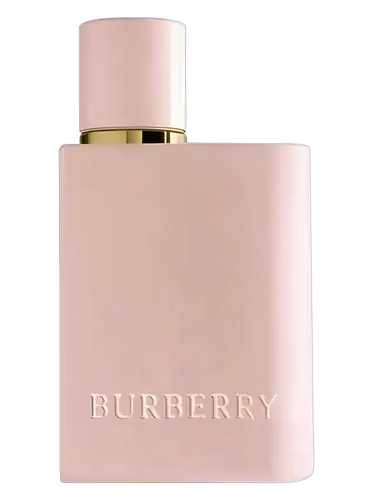
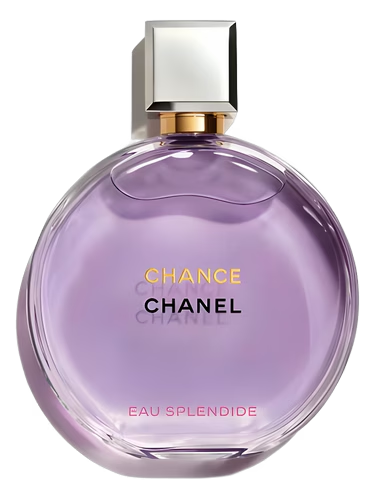
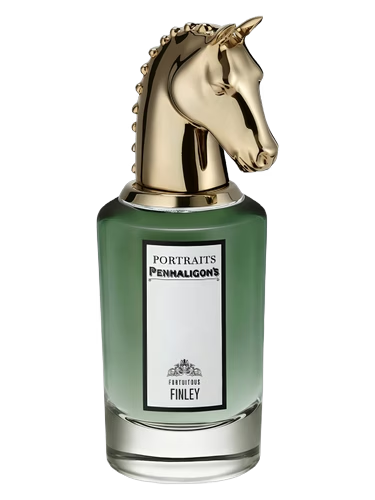
What is Millet?
Millet is a collective term for small-seeded grasses used as staple crops; in perfumery, it is a modern fantasy note used to evoke a comforting, rustic grain quality.What does Millet smell like?
It provides a warm, dry, and slightly sweet cereal aroma with subtle toasted, nutty, and starchy undertones, adding an earthy texture to compositions.How is the Millet note created in perfumery?
As a fantasy note, the scent is typically an accord created in a laboratory to mimic the aroma of toasted grain rather than being a direct natural extraction used in traditional perfumery.What are some top perfumes featuring Millet?
A prominent example of a fragrance featuring the millet note is Maître Parfumeur et Gantier Grain de Plaisir.Is Millet a sustainable ingredient?
Yes, millet is a climate-resilient crop that requires significantly less water and fewer fertilizers than other cereals, and its side-streams can be upcycled into high-value ingredients.