Fragrance Notes Are Layers Of Scent That Are Layered To Form The Final Fragrance. Fragrance Notes Are Categorised Into Three Main Elements Based On How Long They Take To Evaporate, And How Long They Typically Last Following Application: Top Notes, Heart Notes And Base Notes.
Milkweeds
Milkweeds offer a delicate, luminous white floral scent, often described as silky and creamy with sweet, honeyed undertones. The profile frequently includes nuances of vanilla, subtle spice (like cardamom/nutmeg), and a gentle green or citrus-brushed freshness, creating a soft, nurturing, and slightly exotic floral harmony.

Origin & Extraction Of Milkweeds
Milkweeds, while abundant in various regions, particularly North America, have a relatively limited and modern history in fine perfumery compared to classical European floral notes like Rose or Jasmine. Historically, the plant was utilized more for its fibrous stalk and for medicinal purposes by indigenous cultures. Its incorporation into contemporary fragrance is tied to a modern perfumery trend that seeks unique, non-traditional white florals to offer a creamy, luminous profile distinct from the heavier, more indole-laden classic florals.
The note is generally captured synthetically or through headspace technology to reproduce the delicate, sweet, and slightly spicy aroma of the flower. Its rise in popularity began primarily in niche and artisanal perfumery in the late 20th and early 21st centuries. Perfumers employ Milkweeds to add a soft, slightly exotic, and nurturing sweetness, often paired with gourmand nuances of vanilla and honey, creating compositions that evoke open meadows and natural sophistication rather than formal bouquets.
Extraction Methods of Milkweed
Historically, milkweed has been processed through manual techniques to harvest seeds, floss, and bast fibers. Seed collection involves hand-picking mature, leathery pods and separating the seeds from the silky floss (coma) by hand-stripping or using traditional "home-spun" methods like shaking pods in a paper bag with coins. For fiber extraction, indigenous and artisanal traditions involve harvesting stalks after they have weathered and blackened, cracking them open to remove the pith, and manually peeling the cellulose bast fibers from the bark. Ancient methods for medicinal or culinary uses often relied on simple infusion, maceration, or simmering parts of the plant.
Modern and industrial extraction methods utilize mechanical and chemical advancements to isolate specific compounds. To separate seeds and floss on a larger scale, mechanized equipment like "modified ear corn pickers," seed impact mills, or specialized machines with barbed paddles are used. Recent developments in high-value material extraction include the use of steam distillation or supercritical CO2 extraction to capture aromatic molecules, and multi-stage liquid-solid extractions using solvents like water, acetone, and toluene to recover polyisoprene (natural rubber) from the leaves. For textile-grade cellulose fibers, latest methods involve treating peeled bark with sodium hydroxide solutions followed by controlled heating and maceration using nitric and chromic acid to isolate single fiber cells.
Milkweeds, while not a classical note in mainstream perfumery, have gained prominence in niche and artisanal fragrances seeking a unique, creamy white floral profile. The essence of Milkweeds, often capturing its sweet, luminous, and slightly honeyed-vanilla facets, is a sophisticated alternative to traditional notes like tuberose or gardenia. It lends a soft, nurturing quality to a composition, frequently utilized to soften sharper edges in complex white floral bouquets or gourmand arrangements.
- A notable use of a similar delicate, milky floral accord, suggestive of the milkweed's gentle profile, can be found in **L'Artisan Parfumeur's Mon Numéro 10**, where creamy floral notes blend with spices and resins to create a velvety texture.
In modern perfumery, particularly among independent houses, Milkweed's specific, slightly exotic aroma is sometimes featured to evoke a sense of Americana or untamed wilderness, contrasting its sweetness with green or earthy notes. This approach highlights its complexity, blending the white floral luminescence with its inherent nuances of subtle spice and fresh greenness, creating a scent that is both comforting and distinctly evocative of open meadows.
- Another fragrance that explores a similar creamy, luminous floral theme is **Tom Ford's Soleil Blanc**, which, while centered on ylang-ylang and tuberose, achieves a comparable solar, sweet, and luxurious milky effect that aligns with the desired profile of the Milkweed note.
Due to the novelty and specific nature of Milkweeds, its presence often signifies a more experimental or luxurious composition. The note’s potential to bridge creamy white florals with subtle gourmand hints of vanilla and honey ensures a memorable and long-lasting impression. It is an ingredient chosen by perfumers aiming to create a smooth, sophisticated sillage that moves beyond conventional floral structures into something more textured and refined.
Sustainability Of Milkweeds
Sustainability of Milkweeds
- Supporting biodiversity by serving as the exclusive host plant for monarch butterfly larvae and providing a critical nectar source for various pollinators
- Mitigating climate change through carbon sequestration and improving soil health by preventing erosion and enhancing water infiltration
- Promoting sustainable land management by planting native species in non-crop areas, roadsides, and urban gardens to restore lost habitats
- Developing a circular economy by researching milkweed fiber as a sustainable, lightweight, and insulating alternative for the textile and insulation industries
- Advancing regional conservation through large-scale seed distribution initiatives and the establishment of certified monarch waystations
Trivia
During World War II, the silky floss from milkweed seed pods was so buoyant and insulating that it was used as a substitute for kapok to fill over 1.2 million life jackets for Allied sailors.
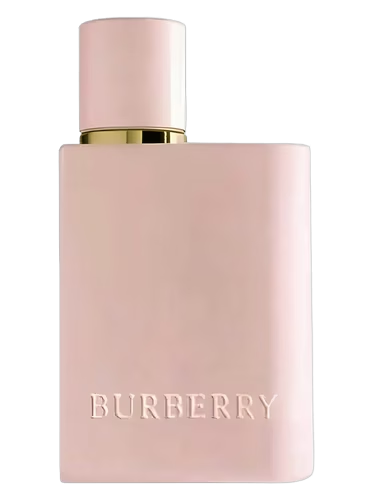
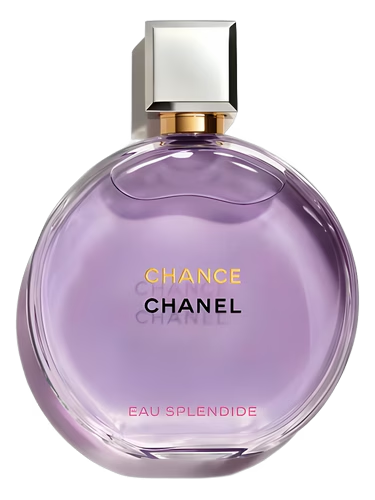
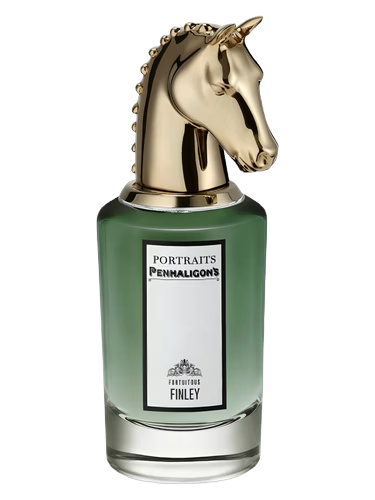
Most Popular Scents Using Milkweeds
What is Milkweed?
Milkweeds are a group of plants native to North and South America that have recently gained popularity in niche perfumery for their creamy, luminous white floral profile distinct from heavier classic florals.What does Milkweed smell like?
It features a delicate, silky, and creamy white floral scent with sweet honeyed undertones, subtle vanilla facets, and a gentle touch of spice like cardamom or nutmeg.How is Milkweed essence extracted?
In modern perfumery, aromatic molecules are often captured through headspace technology, steam distillation, or supercritical CO2 extraction to preserve the flower's delicate profile.What are some top perfumes featuring Milkweed?
Top fragrances include Adirondack Fragrance Milkweed Flower, DSH Perfumes Become The Shaman, and Marble & Milkweed Elettaria Botanical Perfume.Is Milkweed a sustainable ingredient?
Yes, milkweeds are highly sustainable as they support biodiversity by serving as the exclusive host plant for monarch butterfly larvae and providing a critical nectar source for pollinators.