Fragrance Notes Are Layers Of Scent That Are Layered To Form The Final Fragrance. Fragrance Notes Are Categorised Into Three Main Elements Based On How Long They Take To Evaporate, And How Long They Typically Last Following Application: Top Notes, Heart Notes And Base Notes.
Mignonette
A very sweet-smelling and pleasant Mediterranean flower with distinct violet-like and delicate fruity nuances. Mignonette offers an intensely sweet, green-floral freshness that is often used to add luminous, soft complexity and depth to fine floral bouquets, especially in classical compositions.

Origin & Extraction Of Mignonette
The Mignonette flower, scientifically known as Reseda odorata, has been prized since antiquity for its intensely sweet fragrance. Although its use in perfumery is not as foundational as notes like rose or jasmine, it gained significant popularity during the 18th and 19th centuries, particularly in Europe. Its historical relevance is often tied to its association with elegance and delicate floral bouquets; the highly fragrant plant was frequently cultivated in aristocratic gardens, and its scent was considered a hallmark of refined Victorian-era perfumes.
In modern perfumery, Mignonette remains a valuable, though often subtle, component. It is used to provide a green-floral freshness, violet-like nuances, and a soft, powdery quality to compositions, effectively bridging volatile citrus top notes with richer, more enduring floral or woody hearts. While less common as a central theme in mainstream contemporary scents, it is appreciated by niche and artisan houses for its ability to add luminous complexity and sophistication, helping to elevate modern fresh or aquatic structures with an unexpected, delicate, and historic floral facet.
Extraction Methods of Mignonette
Historically, the extraction of mignonette's aromatic essence was primarily achieved through enfleurage or solvent extraction of the delicate flowers of the Reseda odorata plant. Because the blossoms are extremely fragile and possess a low oil yield, traditional steam distillation was often avoided as the high heat could degrade the subtle, violet-like scent. The resulting mignonette concrete or absolute was a prized and rare ingredient in 19th-century perfumery.
In modern fragrance production, the scent of mignonette is frequently recreated using headspace technology, which captures the volatile aromatic molecules from the living flower without harvesting it. This data is then used to reconstruct the scent synthetically or through a blend of natural isolates. While traditional solvent extraction remains a method for producing natural mignonette absolute, it is increasingly rare due to the high cost and labor-intensive nature of cultivating and processing the flowers.
The Mignonette note, cherished for its intensely sweet, green-floral freshness and violet-like nuances, often finds its place in sophisticated floral bouquets, especially those adhering to classical structures. Although not a primary note in many modern bestsellers, it serves as an elegant support system, lending luminous complexity and a soft, powdery quality to fine compositions. Its historical association with elegance is evidenced by Napoleon reportedly sending seeds of the plant to Josephine for her garden, acknowledging its "beautiful, exotic perfume," which inspired Victorian blends like the ones offered by Bourbon French Parfums.
- The classic, sweet, and powdery profile of Mignonette makes it ideal for integrating soft complexity into a fragrance without overpowering other floral elements.
One notable example of a mainstream fragrance utilizing Mignonette is Issey Miyake’s **L'Eau d'Issey Pour Homme** (1994). While often categorized as a fresh aquatic scent, Mignonette is skillfully blended in the heart of the composition, providing a unique, delicate green-floral facet that elevates the sharp citrus and spice notes. This use demonstrates Mignonette’s versatility, moving beyond strictly classical floral compositions to add an unexpected layer of freshness and sophistication to modern, often masculine, structures.
- Mignonette is also found in fragrances from influential houses such as Dior and Guerlain, often contributing to the subtle depth and refinement of their heritage floral and Eau de Cologne compositions.
Today, Mignonette is appreciated by both designer and niche perfumers for its ability to bridge zesty top notes with soft, enduring floral hearts. Its delicate fruity and green-floral aspects offer a refined alternative to heavier floral components. Its inclusion in sophisticated modern houses seeking unique transparency and projection, as hinted by its presence alongside names like Tom Ford and Amouage, secures its ongoing relevance as a subtle, yet essential, element in fine perfumery.
Sustainability Of Mignonette
Sustainability of Mignonette
- Promoting environmental health through the use of sustainable shellfish like oysters, which act as natural water filters and carbon sinks to help mitigate climate change
- Supporting coastal ecosystem restoration by encouraging the growth of natural shellfish reefs that prevent seafloor erosion and stabilize mudflats
- Advocating for "Slow Fish" principles by sourcing local ingredients to reduce the carbon footprint associated with long-distance food transportation
- Fostering socio-economic resilience by partnering with local fishery cooperatives and smallholder farmers to ensure fair trade and resource longevity
- Implementing zero-waste and circular economy initiatives through the use of biodegradable packaging and upcycling organic side-streams from production
Trivia
Mignonette was so popular in 19th-century Paris that the French government reportedly considered banning window boxes of the flower because its intense fragrance attracted such large crowds that they blocked narrow streets.
Most Popular Scents Using Mignonette
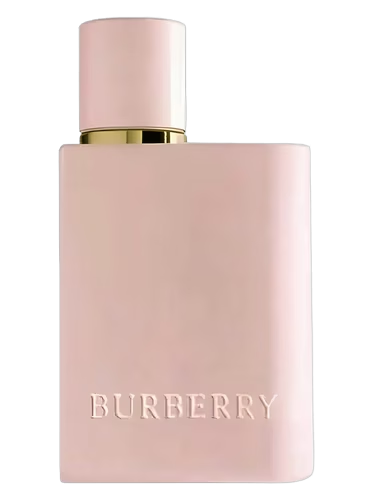
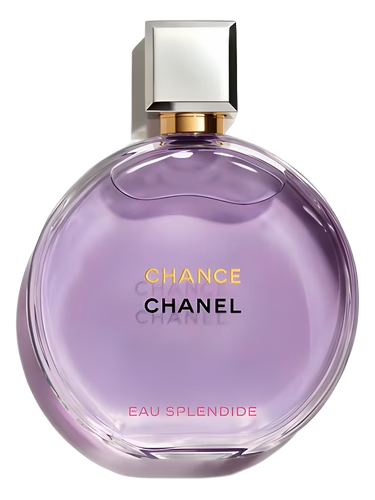
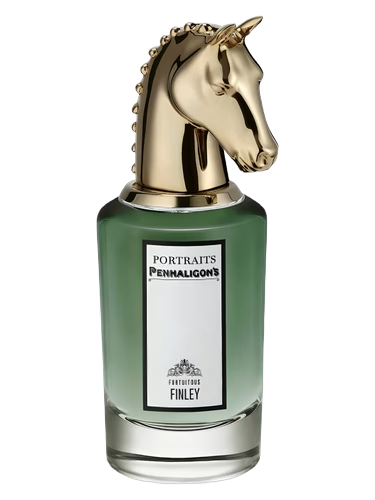
What is Mignonette?
Mignonette, or Reseda odorata, is a Mediterranean flower prized since antiquity for its intensely sweet, green-floral fragrance and historical association with refined elegance.What does Mignonette smell like?
It offers a complex scent profile featuring deep violet-like nuances, delicate fruity notes, and a fresh, powdery green-floral quality.How is Mignonette essence extracted?
Historically obtained through maceration or enfleurage, modern perfumery typically recreates the scent using headspace technology or natural isolates due to the low oil yield of the fragile blossoms.What are some top perfumes featuring Mignonette?
Notable fragrances including this note are Issey Miyake L'Eau d'Issey Pour Homme, Estée Lauder Private Collection, and Bourbon French Parfums Mignonette.What is the history of Mignonette in perfumery?
It was highly fashionable in the 18th and 19th centuries, notably championed by Empress Josephine after Napoleon sent her seeds from his Egyptian campaign.