Fragrance Notes Are Layers Of Scent That Are Layered To Form The Final Fragrance. Fragrance Notes Are Categorised Into Three Main Elements Based On How Long They Take To Evaporate, And How Long They Typically Last Following Application: Top Notes, Heart Notes And Base Notes.
Michelia leaf
Michelia leaf offers a green, invigorating, and tropical scent, distinct from the flower oil. It features a crisp, slightly minty, and subtly floral aroma with woody nuances. It provides an exotic and diffusive lift, often used as a refreshing middle or top note, adding a sophisticated, green vitality with subtle spicy undertones.

Origin & Extraction Of Michelia leaf
The Michelia leaf note is a sophisticated and relatively modern addition to the perfumer's repertoire. Unlike traditional notes like Bergamot or Lemon, which were foundational to historical perfumery structures such as the Eau de Cologne, the leaf extract of the Michelia plant (often associated with Champaca flowers) gained prominence as perfumers began exploring more photorealistic and exotic green elements. Its unique aromatic profile—a blend of green, crisp, slightly minty, and tropical nuances—offered a refined alternative to simpler citrus or green notes, allowing for more complex and enduring freshness in compositions.
Its increasing use is tied to contemporary trends in niche and artisanal perfumery, which value naturalistic and subtle sophistication. The leaf note serves a specialized function: it acts as a bridge between volatile, sparkling top notes and richer, more tenacious floral or woody hearts. This allows the fragrance to maintain a sense of green vitality and exoticism throughout its development, making it an essential component for modern scents that aim to evoke lush, tropical environments without relying solely on heavy floral or fruity accords.
Extraction Methods of Michelia Leaf
The essential oil from Michelia leaf, often referred to as Michelia alba leaf oil, is primarily produced through steam distillation. This traditional process involves passing pressurized steam through fresh or dried leaves to rupture the oil glands, allowing the volatile aromatic compounds to evaporate and then condense into a liquid essential oil. In some regional practices, hydrodistillation—where the leaves are directly boiled in water—is also used, though steam distillation remains the commercial standard to ensure a higher quality oil with a profile rich in linalool and sesquiterpenes.
Historically, capturing the delicate scent of Michelia was often achieved through traditional solvent extraction or maceration in oils. More recently, modern advancements have introduced sophisticated techniques to improve yield and chemical purity. Supercritical CO2 extraction is now utilized to capture a more complete aromatic profile without the use of high heat, while subcritical solvent extraction and ultrasound-assisted extraction (UAE) are employed to efficiently recover bioactive compounds and polyphenols. These latest methods offer a greener alternative by reducing solvent waste and preserving the heat-sensitive molecules that define the leaf's unique, spicy-floral aroma.
The Michelia leaf note is a sophisticated and relatively modern addition to the perfumer's palette, prized for its distinctive green, invigorating, and subtly tropical character. Unlike the more commonly used Michelia flower (Champaca) oil, the leaf offers a crisp, slightly minty freshness with woody undertones, making it ideal for adding green vitality and an exotic lift to the opening and heart of a fragrance. Its complex profile helps bridge sparkling top notes with deeper floral or woody accords, ensuring a contemporary and refined freshness.
- While not always listed explicitly, the signature green-tropical aroma of Michelia leaf is often incorporated into compositions that aim for a lush, humid, and refreshing feel, such as those found in many modern niche or artisanal creations.
- The note’s unique combination of green and subtle spice makes it valuable in creating highly diffusive, long-lasting middle notes that support exotic white florals, often enhancing the natural atmosphere of fragrances centered on themes like rainforests or distant islands.
The subtle, sophisticated complexity of Michelia leaf has found a home in several high-end fragrances. One notable example is in **Memo Paris Madurai**, which focuses on the creamy aspect of the Tuberose flower but utilizes a green, leafy structure (akin to Michelia leaf) to provide a fresh, almost dewy opening that prevents the white floral heart from becoming too heavy. This use demonstrates the leaf note's ability to maintain clarity and lightness in a dense composition.
In other instances, the note's subtle spiciness is leveraged to complement aromatic and woody structures. For example, some specialized lines aiming for photorealistic botanical scents, such as those from **Parfum Satori**, incorporate the fresh, vegetal aroma of Michelia leaf to provide a realistic, grounding green texture, setting them apart from scents using simple citrus or tea notes. Its presence guarantees a sophisticated, naturalistic opening that is both refreshing and nuanced.
Sustainability Of Michelia leaf
Sustainability of Michelia Leaf
- Promoting the cultivation of hardy, resilient species like M. laevifolia that can recover from extreme weather events, reducing the need for plant replacements and chemical interventions
- Adopting organic soil management by incorporating organic matter and mulch to improve water retention and prevent leaf yellowing during dry periods
- Implementing natural pest control strategies using horticultural oils and biodegradable detergents to manage scale insects without synthetic pesticides
- Encouraging the use of well-drained soil and precise irrigation practices to prevent root rot and minimize water waste
- Supporting biodiversity by planting Michelias as understory trees that provide essential perches and habitats for songbirds and local wildlife
Trivia
Botanists recently reclassified the entire Michelia genus as Magnolia, discovering that these plants are actually a section of the ancient Magnolia family, which dates back over 95 million years to before the evolution of bees.
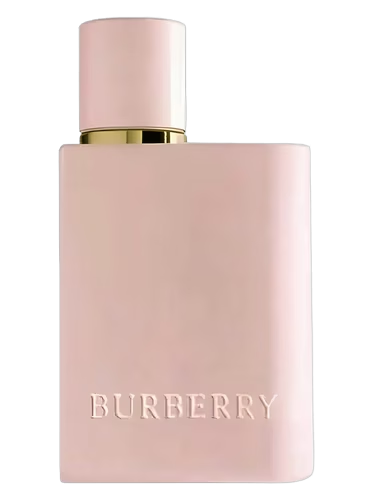
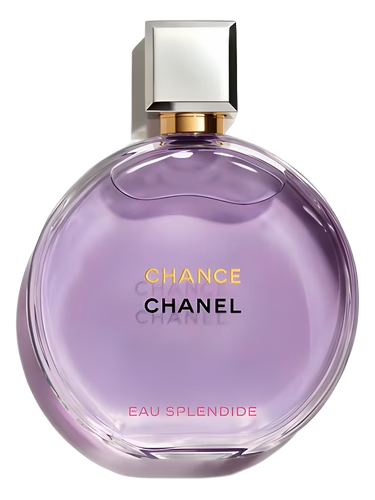
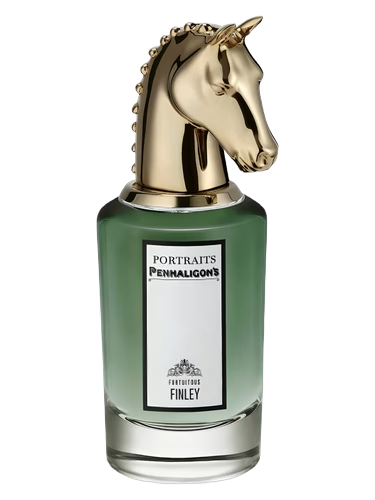
Most Popular Scents Using Michelia leaf
What is Michelia leaf?
Michelia leaf is a fragrance note derived from the foliage of the Michelia plant, often the Michelia alba or champaca varieties, offering a green, invigorating, and tropical aroma distinct from the plant's flowers.What does Michelia leaf smell like?
It features a crisp, slightly minty, and vegetal scent with woody nuances and subtle spicy undertones, often described as smelling like a humid tropical greenhouse.How is Michelia leaf essence extracted?
The essential oil is primarily produced through steam distillation of the fresh or dried leaves, though modern methods like supercritical CO2 extraction are also used to preserve heat-sensitive aromatic compounds.What are some top perfumes featuring Michelia leaf?
Notable fragrances include Memo Paris Madurai, Aynoir Michelia Alba, Nu Wilds Michelia Alba, and various botanical creations from Wild Veil.When is Michelia leaf in season?
While the tree is an evergreen and maintains foliage year-round, its most active growth phase typically occurs in early spring, with new growth flushes continuing through October.