Fragrance Notes Are Layers Of Scent That Are Layered To Form The Final Fragrance. Fragrance Notes Are Categorised Into Three Main Elements Based On How Long They Take To Evaporate, And How Long They Typically Last Following Application: Top Notes, Heart Notes And Base Notes.
Melon
A fresh, sweet, and intensely juicy aquatic note, typically characterized by Calone, a popular synthetic ingredient. It provides a vibrant, dewy, and expansive melon aroma, evoking a sense of cool, refreshing summer fruit and adding a modern, airy transparency to compositions, particularly in the 1990s.

Origin & Extraction Of Melon
The "Melon" note in perfumery is primarily linked to the synthetic molecule Calone (or Watermelon Ketone), which was discovered by Pfizer in 1966. While the fruit itself, such as cantaloupe, has a long history, its use as a distinctive, expansive note in fragrance is modern. Calone provides the characteristic fresh, intensely juicy, and cool aquatic/marine aroma associated with melon. This synthetic breakthrough allowed perfumers to capture a vibrant, dewy freshness that was previously unattainable with natural extracts.
The Calone-driven melon note reached peak popularity in the late 1980s and especially the 1990s, defining the aquatic and "new freshness" fragrance categories. It was used to evoke scents of the seashore and refreshing summer fruit, adding an airy transparency to compositions. While fragrances like Prescriptives' Calyx (re-launched by Clinique) made the melon note famous, its success solidified its place as an essential, if often polarizing, ingredient in modern perfumery, moving beyond traditional citrus-based fresh scents.
Extraction Methods of Melon
The extraction of melon aromatic compounds and oils has historically relied on traditional manual and mechanical processes. For culinary and artisanal purposes, seeds (such as Egusi) were historically dehulled, ground, and hand-mashed to extract pure oil without chemical additives. In juice production, traditional methods involved steaming the exterior of whole melons to soften the surface and remove microbials before mechanical chopping and finishing to separate the flesh from the rind and seeds.
Modern commercial extraction has evolved to include advanced mechanical and chemical techniques to improve yield and preserve bioactive compounds. Cold expression using hydraulic or screw presses is now a standard for high-quality "virgin" melon seed oils, while large-scale operations often utilize solvent extraction (typically with hexane) or Soxhlet apparatus. Recent innovations have introduced greener alternatives such as aqueous enzymatic extraction (AEE), which uses proteases and cellulases to release oil, and supercritical fluid extraction (SFE). For extracting volatile antioxidants and polyphenols from melon by-products like peels, contemporary labs employ sophisticated methods such as ultrasound-assisted (US) and pulsed electric field (PEF) extraction to enhance efficiency and sustainability.
The rise of the aquatic and fresh fragrance genre in the late 1980s and 1990s was heavily dependent on the melon note, driven by the synthetic molecule Calone. This era saw the launch of iconic fragrances that popularized the intensely juicy, dewy, and expansive freshness of melon. One of the earliest and most influential examples was **Prescriptives' Calyx** (later re-launched by Clinique), which showcased the vibrant, cool fruitiness of melon alongside green and floral notes, establishing the blueprint for the refreshing summer fragrance.
- *
The melon note, with its ability to convey 'aquatic transparency,' became a cornerstone of highly successful and widely recognized scents. Fragrances like **L'Eau d'Issey Pour Homme** by Issey Miyake, while often categorized as marine, incorporated the melon-like coolness to amplify its water-based structure. While not always the primary focus, the melon accord provided the distinct, airy lift that defined the commercial freshness of the decade, making it instantly recognizable and mass-appealing.
- *
More contemporary and niche applications continue to utilize the note, often paired with other exotic or unique elements to add modern sophistication. For example, the scent profile described in **Après la Mousson** by Hermès suggests a lush, vibrant greenness where a delicate, fragrant fruit note, reminiscent of melon, could blend harmoniously to create an enchanting picture of life. Meanwhile, in classic colognes like **4711 Echt Kölnisch Wasser Muelhens**, a subtle, refreshing melon-like nuance can often be perceived, complementing the traditional invigorating citrus notes and subtle floral accents.
Sustainability Of Melon
Sustainability of Melon
- Implementing regenerative agriculture practices such as crop rotation with green manure (maize and Brachiaria) to improve soil health and reduce the carbon footprint
- Adopting precision irrigation techniques like drip systems to conserve water resources and minimize nutrient leaching into groundwater
- Reducing agricultural waste by exploring biodegradable paper mulch and spun-bonded PP fabric as sustainable alternatives to traditional plastic mulching
- Promoting biodiversity and natural pest management through the use of trap crops, windbreaks, and integrated pest management (IPM) to reduce reliance on synthetic pesticides
- Supporting local, family-run farms and utilizing barcode-based tracking systems to ensure full traceability and transparency within the supply chain
Trivia
Despite its refreshing scent, it is impossible to extract an essential oil from the melon fruit due to its extremely high water content, so the note is recreated in labs using synthetic molecules like Calone.
Most Popular Scents Using Melon
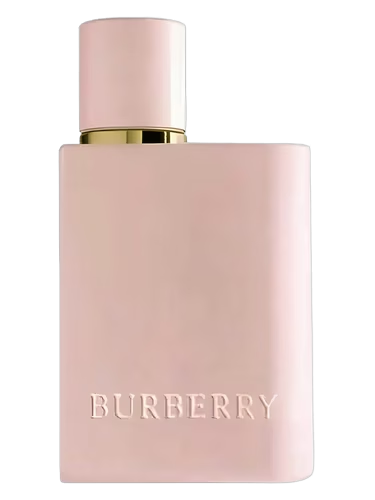
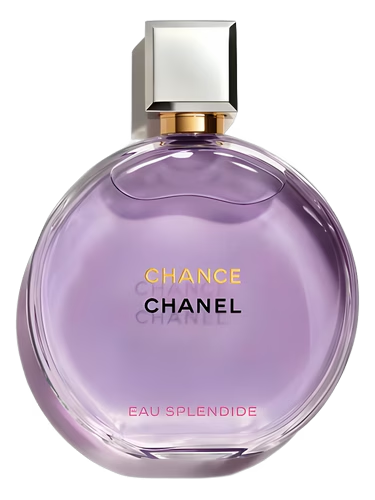
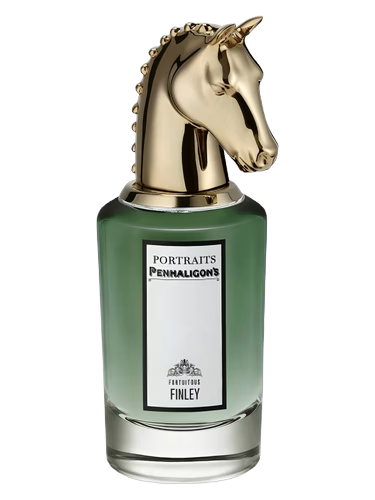
What is the Melon note in perfumery?
Melon is a fresh, sweet, and intensely juicy aquatic note that is primarily created using synthetic molecules like Calone to evoke a sense of cool, refreshing summer fruit.Can natural essential oil be extracted from melons?
No, it is impossible to extract a usable essential oil from melons due to their extremely high water content; therefore, the scent is always reconstructed in a laboratory.What does the Melon note smell like?
It offers a vibrant, dewy, and expansive aroma with watery and slightly green facets, often described as a mix of cantaloupe, honeydew, or watermelon.What are some top perfumes featuring Melon?
Iconic fragrances include Issey Miyake L'eau d'Issey, Calvin Klein Escape, Ralph Lauren Polo Blue, and Dolce & Gabbana 3 L'Imperatrice.How is the Melon note used in fragrance compositions?
It is typically used as a top note to provide an immediate burst of freshness and transparency, often paired with citrus, floral, or marine accords to create an airy, modern feel.