Fragrance Notes Are Layers Of Scent That Are Layered To Form The Final Fragrance. Fragrance Notes Are Categorised Into Three Main Elements Based On How Long They Take To Evaporate, And How Long They Typically Last Following Application: Top Notes, Heart Notes And Base Notes.
Melissa Flower
Melissa Flower (Lemon Balm) offers a bright, intensely fresh, lemony, and herbaceous aroma, often featuring subtle nuances of lime zest. It provides a vibrant, clean, and uplifting top note, prized for its refreshing clarity and natural, green character in contemporary compositions.

Origin & Extraction Of Melissa Flower
Lemon Balm (Melissa) has a long history outside of modern perfumery, primarily valued for its medicinal and culinary uses in Europe, dating back to ancient Greece and Rome. Its gentle, lemon-like scent, combined with its therapeutic qualities, led to its historical use in soothing balms, teas, and distilled waters, especially in monasteries during the Middle Ages.
Although it is not a cornerstone of classic perfumery like Bergamot or traditional Lemon, its incorporation into fragrances is largely a modern trend. Melissa Flower is prized for its clean, uplifting clarity and natural green character, often used as a unique alternative to traditional citrus notes. Today, it features in niche and artisanal perfumery, providing a sophisticated, herbaceous lift, particularly in revitalizing Eaux de Cologne and natural fragrance compositions.
Extraction Methods of Melissa Flower (Lemon Balm)
Historically, Melissa officinalis has been processed through simple infusion and maceration techniques to capture its volatile oils and medicinal properties. Traditional folk methods involve steeping fresh or dried leaves and flowers in solvents like alcohol to create tinctures, or in vegetable glycerin and carrier oils for several weeks. For more concentrated essences, water-steam distillation has long been the standard, although the plant's low essential oil yield—often as little as 0.01% to 0.1%—makes the resulting "Melissa oil" one of the most precious and frequently adulterated in perfumery.
Modern extraction techniques have advanced to improve both yield and the preservation of delicate bioactive compounds like rosmarinic acid. Ultrasound-assisted extraction (UAE) and microwave-assisted extraction (MAE) are now commonly used to rupture cell walls more efficiently than traditional soaking. Furthermore, pressurized liquid extraction (PLE) and supercritical fluid extraction (SFE) using carbon dioxide offer environmentally friendly alternatives that operate at lower temperatures, ensuring the fresh, lemony aromatic profile remains intact without thermal degradation. Recent developments also include enzyme-assisted extraction and microencapsulation via spray-drying or freeze-drying to stabilize the volatile components for use in cosmetics and fragrances.
Melissa Flower, often referred to as Lemon Balm, is a delicate note that offers a bright, intensely fresh, lemony, and herbaceous aroma. While not as common as Neroli or Lemon in classic perfumery, it is prized for lending a clean, uplifting clarity and natural green character, especially in high-end niche and natural fragrances. Its inclusion often signifies a composition aiming for ethereal freshness and aromatic refinement, moving beyond standard citrus notes.
- A prominent use of Melissa Flower can be found in **Jo Malone's Nettle & Wild Achillea**, where it contributes to the overall green, dewy, and slightly herbal English countryside aesthetic, providing a sparkling counterpoint to the sharper nettle note.
- Another notable example is in **Fragonard's Eau de Hongrie**, which often features Melissa (Lemon Balm) alongside classic citrus notes to create an authentic, historical 'Hungarian Water' scent profile—bright, therapeutic, and herbaceous.
- In the world of niche perfumery, brands occasionally utilize Melissa to amplify the authentic herbal and lemon nuances in their *eaux de cologne* or aromatic blends, such as certain limited editions from **Guerlain's Aqua Allegoria** line that focus on garden themes.
Due to its volatile nature and intense lemon-herb profile, Melissa Flower oil is sometimes used therapeutically in aromatherapy and consequently translated into fragrances designed to evoke calm and wellness. This positioning means it features less frequently in mass-market fragrances, but is a valued ingredient by perfumers who seek to capture the precise, natural scent of the plant itself. This emphasis on natural fidelity allows the Melissa note to shine, offering a clean, zesty freshness that is less aggressive than pure lemon oil.
Sustainability Of Melissa Flower
Sustainability of Melissa Flower
- Promoting sustainable agricultural practices by utilizing organic livestock manures, such as sheep, poultry, and cattle manure, to enhance soil productivity and improve the quality of essential oils without synthetic fertilizers
- Supporting biodiversity and ecosystem health by cultivating Melissa officinalis as a pollinator-friendly plant that provides a rich nectar source for honeybees and butterflies
- Adopting low-impact cultivation techniques that favor hardy, perennial growth, reducing the need for intensive chemical interventions and supporting long-term land restoration
- Implementing water-efficient management by leveraging the plant's natural drought tolerance and ability to thrive in diverse, even poor, soil conditions with minimal irrigation once established
- Encouraging circular economy principles through the use of regenerative life support technologies, such as those explored in the MELiSSA project, which focus on waste reclamation, water recovery, and food production
Trivia
The genus name Melissa is derived from the Greek word for honey bee, a tribute to the plant's legendary ability to attract bees so effectively that it has been used by beekeepers for over 2,000 years to keep swarms from straying.
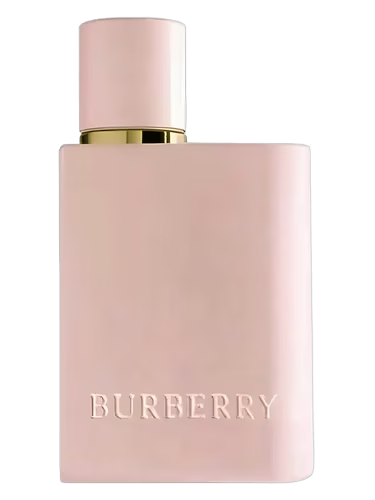
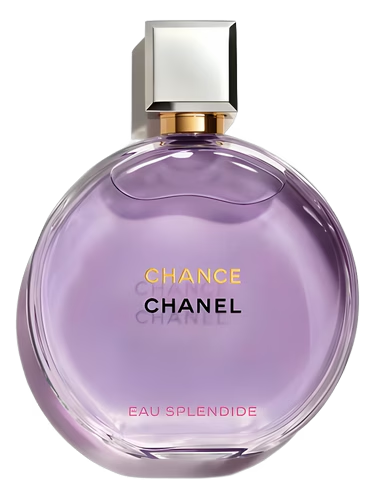
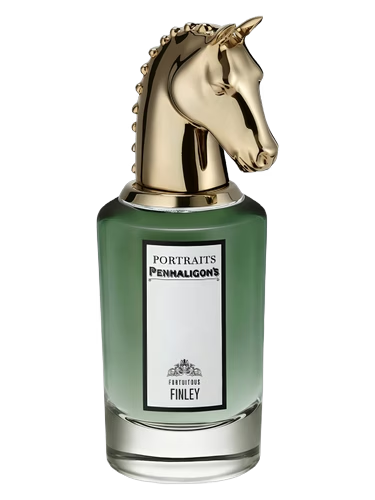
Most Popular Scents Using Melissa Flower
What is Melissa Flower?
Melissa Flower, also known as Lemon Balm or Melissa officinalis, is a herbaceous perennial from the mint family prized in perfumery for its bright, lemony, and herbaceous aroma.What does Melissa Flower smell like?
It offers an intensely fresh, citrusy scent with green, herbal nuances and soft honeyed undertones, providing a cleaner and more complex profile than standard lemon oil.How is Melissa Flower essence extracted?
The primary method is steam distillation of the flowers and leaves, though it is one of the lowest-yielding aromatic plants, often requiring several tonnes of material to produce a single kilogram of oil.What are some top perfumes featuring Melissa Flower?
Notable fragrances include Jo Malone Nettle & Wild Achillea, Fragonard Eau de Hongrie, TRNP Sanctum, and certain editions of Guerlain Aqua Allegoria.When is Melissa Flower in season?
While the leaves can be harvested from spring to autumn, the flowering period typically occurs during the summer months, specifically from June through August.