Fragrance Notes Are Layers Of Scent That Are Layered To Form The Final Fragrance. Fragrance Notes Are Categorised Into Three Main Elements Based On How Long They Take To Evaporate, And How Long They Typically Last Following Application: Top Notes, Heart Notes And Base Notes.
Melilotus
Melilotus (Sweet Clover) offers a comforting, tonka-like profile. Its distinct scent is sweet, herbal, and rooty, dominated by coumarin, which gives it a character reminiscent of hay and tobacco. This is often layered with buttery, honeyed, and vanilla undertones, creating an elegant, warm, and comforting floral-gourmand facet.

Origin & Extraction Of Melilotus
Melilotus, or Sweet Clover, has a historical background rooted in herbal and folk medicine, particularly in Europe and Asia, where it was valued for its medicinal properties and its distinct, pleasant aroma. The note's defining scent comes from coumarin, a chemical compound naturally abundant in the plant, which gives it its characteristic sweet, hay-like, and tonka bean-like smell. Historically, while the plant itself was used to scent linens and tobacco, its specific application as a fine fragrance ingredient became more deliberate following the discovery and popularization of isolated coumarin in the late 19th century, which allowed perfumers to introduce this specific warm, grassy sweetness into compositions.
In modern perfumery, Melilotus serves as a sophisticated bridge between fresh herbal notes and deeper, oriental or gourmand bases. It is not a foundational note like Bergamot or Rose, but rather a unique, specialized ingredient prized by niche and contemporary designer houses. Its coumarinic profile offers complexity and longevity, providing a grounding, earthy warmth that enhances tobacco, amber, and vanilla accords. Its contemporary relevance lies in its ability to contribute a refined, non-cloying sweetness and a unique textural element (hay/rooty) to modern fragrances, allowing for warm, comforting, and elegant scent narratives.
Extraction Methods of Melilotus
Historically, Melilotus (sweet clover) has been processed through traditional maceration and infusion techniques to capture its aromatic and medicinal compounds, particularly coumarin. These "folk methods" often involved steeping fresh or dried flowers and leaves in solvents like alcohol to create tinctures or boiling them in water to produce herbal infusions. In traditional practice, master herbalists would often allow fresh plants to wilt for 12 to 24 hours before maceration in a 1:3 ratio with 50% alcohol to ensure the highest efficacy of the extract.
Modern extraction methods have become more specialized and precise to optimize the yield of active components like flavonoids and coumarins. Current industrial standards often utilize heat reflux extraction, where powdered plant material is processed with solvents such as 50-80% ethanol or methanol at controlled temperatures, typically around 60°C. Advanced laboratory techniques now include ultrasound-assisted extraction (UAE), supercritical CO2 extraction, and surfactant-assisted extraction using agents like polysorbate-80 to improve solubility. Recent developments also incorporate membrane concentration and purification through macroporous adsorption resins or liquid-liquid extraction with ethyl acetate to achieve high-purity extracts suitable for pharmaceutical and cosmetic applications.
The Melilotus, or Sweet Clover, note is primarily defined by its coumarin content, lending a sophisticated, hay-like, and sweet profile that bridges floral, herbal, and gourmand categories. While not as universally common as notes like vanilla or rose, its distinct comforting warmth makes it a celebrated feature in niche and artisanal fragrances looking for an elegant, warm character. One such example is Sova by Slumberhouse, a fragrance known for its dense, tobacco and hay accords, where Melilotus contributes its signature coumarin-driven sweetness and earthy texture, solidifying a deep, cozy scent profile.
- Mélilot by L'Occitane en Provence (2023) highlights the note’s inherent freshness and sweetness in a modern, unisex composition.
In contemporary perfumery, Melilotus is often utilized to provide complexity and depth to amber and oriental compositions, moving beyond a simple herbal note. The fragrance Tango by Masque Milano, for instance, uses the note to inject a buttery, rooty sweetness into its intense, sensual blend of amber and spices. This application demonstrates the note's versatility, allowing it to soften powerful base notes while providing a long-lasting, sophisticated warmth reminiscent of cured tobacco and honey.
- Ex Voto by WienerBlut features Melilotus to enhance its complex, historical scent narrative, emphasizing the herbal and slightly rooty aspects of the note.
- The note also appears in Ambre D'or Extrait De Parfum, where it complements the rich amber structure with its dry, coumarinic sweetness.
When used sparingly, Sweet Clover can lend an unexpected gourmet or comforting facet. Its naturally occurring coumarin is highly evocative of vanilla and baked goods, but with an earthier, more natural touch. This quality is often leveraged in complex gourmand-adjacent scents like Solstice Scents’ Mountain Vanilla, where Melilotus reinforces the vanilla and sweet accords with its hay-like depth, ensuring the sweetness feels grounded and herbaceous rather than synthetic, making it a prized element for unique, warm, and sophisticated floral-gourmand creations.
Sustainability Of Melilotus
Sustainability of Melilotus
- Promoting soil reclamation by stabilizing eroded slopes and restoring degraded lands to a fertile state capable of supporting future agriculture
- Enhancing soil health through biological nitrogen fixation and the production of abundant biomass that increases organic matter content
- Utilizing deep taproots to penetrate subsoil layers, which improves soil structure, reduces clay pan problems, and aids in water and soil conservation
- Implementing phytoremediation strategies by cultivating stress-resistant varieties to improve the fertility and biological activity of saline, alkaline, and marginal soils
- Supporting biodiversity and ecosystem services by providing high-quality forage for livestock and wildlife, as well as serving as a significant nectar source for honeybees and other pollinators
- Adopting zero-waste and circular economy principles by using municipal waste-derived compost as an organic amendment to enhance microbial proliferation and plant growth
Trivia
Historically used to scent snuff and smoking tobacco, melilot develops its characteristic vanilla-like fragrance only as it dries, a process that converts its natural compounds into aromatic coumarin.
Most Popular Scents Using Melilotus
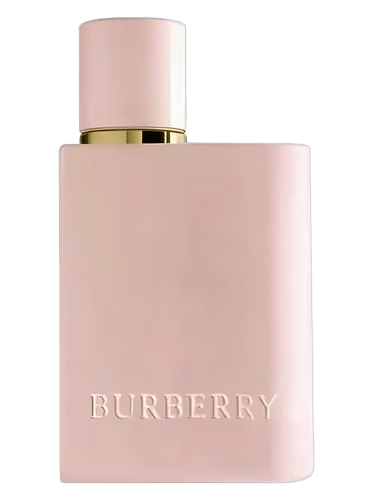
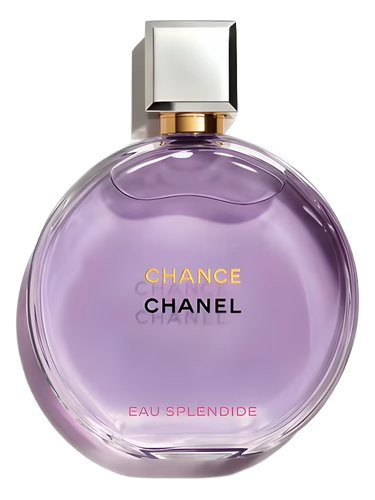
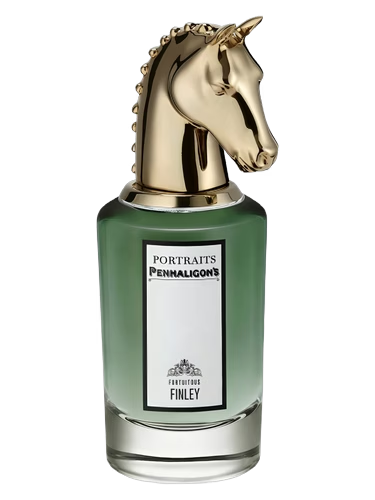
What is Melilotus?
Melilotus, also known as Sweet Clover, is a legume native to Europe and Asia prized in perfumery for its sweet, hay-like aroma derived from its high coumarin content.What does Melilotus smell like?
It features a comforting, tonka-like profile with sweet, herbal, and rooty facets reminiscent of freshly cut hay and tobacco, often layered with vanilla and honey undertones.How is Melilotus essence extracted?
The essence is typically obtained through maceration or modern solvent extraction of the dried flowers and leaves, a process that converts natural compounds into aromatic coumarin.What are some top perfumes featuring Melilotus?
Notable fragrances including this note are L'Occitane en Provence Mélilot, Slumberhouse Sova, Masque Milano Tango, and Hermetica Paris Multilotus.When is Melilotus in season?
Melilotus typically blooms from May through September, with the aroma of the plant becoming most intense and characteristic as it is harvested and dried.