Fragrance Notes Are Layers Of Scent That Are Layered To Form The Final Fragrance. Fragrance Notes Are Categorised Into Three Main Elements Based On How Long They Take To Evaporate, And How Long They Typically Last Following Application: Top Notes, Heart Notes And Base Notes.
Meadowsweet
Meadowsweet offers a deliciously sweet and creamy floral profile, distinctively reminiscent of summer. It presents a gentle, honeyed sweetness with nuances of almond/heliotropine, often captured as light white-flower plumes. It is a soft, elegant floral note used to bring a sweet, slightly powdery lift to compositions.

Origin & Extraction Of Meadowsweet
Meadowsweet (Filipendula ulmaria) has a rich history outside of perfumery, where it was revered in Europe for centuries. Historically, the plant was known as meadwort and was often used to flavor mead and beer, as well as being strewn across floors for its pleasant, almond-like scent when crushed. Medicinally, it was important for its salicylic acid content, the active ingredient in aspirin, giving it an early role in remedies for pain and fever. However, Meadowsweet did not become a classical or foundational note in fine perfumery during the 18th and 19th centuries, a period dominated by Mediterranean citruses and heavier florals.
Meadowsweet's relevance to modern perfumery is primarily as a niche and contemporary note. It is valued for its unique profile—a blend of soft, creamy sweetness, gentle almond/heliotropine nuances, and fresh white-flower plumes—which evokes natural, pastoral scenes. Its current use is focused on creating sophisticated, nature-inspired compositions, especially in artisanal and modern houses looking to capture unique facets of the European countryside. It often serves as a subtle, sweet bridge between fresh green accords and floral hearts, offering a distinct and elegant lift.
Extraction Methods of Meadowsweet
Historically, meadowsweet has been prepared through traditional herbal methods such as simple water infusions (tea) and decoctions, where dried or fresh flowers and leaves are steeped or boiled to release their aromatic and medicinal properties. It was also commonly macerated in alcohol to create tinctures (typically at ratios of 1:2 for fresh herb or 1:5 for dried) and used as a flavoring agent in beverages like mead, wine, and ale. A landmark historical extraction occurred in 1897 when salicin was isolated and chemically altered to create acetylsalicylic acid, the precursor to modern aspirin.
Modern commercial and laboratory extraction techniques utilize advanced solvents and controlled conditions to optimize the yield of bioactive phenolic compounds and flavonoids. Common contemporary methods include aqueous extraction at high temperatures (90-100 °C) for specific durations to maximize phenol content, as well as water-alcohol extraction using varying concentrations of ethanol (typically 40% to 70%). For specialized applications, industry standards now employ sophisticated processes such as vacuum concentration, spray drying (nebulization), and lyophilization (freeze-drying) to produce stable, highly concentrated dry extracts for pharmaceutical and cosmetic use.
Meadowsweet (Filipendula ulmaria), with its creamy, sweet, and slightly almond-like floral profile, is frequently used in contemporary perfumery to evoke the soft atmosphere of summer fields. One of the most recognized fragrances featuring this note is Green Wheat & Meadowsweet by Jo Malone London. This scent focuses on the fresh, aromatic quality of the note, blending the honeyed floral aspects with crisp green accords like wheat and cypress, positioning it as a sophisticated, fresh unisex cologne.
- The subtle, elegant sweetness of Meadowsweet makes it a popular choice in niche and artisanal houses seeking unique, evocative narratives.
The note also appears in conceptual and often darker compositions, showcasing its versatility beyond simple floral freshness. For example, Jorum Studio's Phloem and Alkemia Perfumes' Voyance both feature Meadowsweet, where its light, powdery lift is likely used to provide contrast or texture against richer, deeper notes within the composition, appealing to consumers looking for complex and less conventional fragrances.
- While not a cornerstone of classical French perfumery, Meadowsweet has secured a place in modern releases for its distinctive sweet and herbaceous facets.
Other fragrances, such as Burren Perfumery's Summer Harvest, utilize Meadowsweet to capture a specific natural landscape, leaning heavily on its inherent association with honeyed, sun-drenched white-flower plumes. This use of Meadowsweet highlights its ability to lend a gentle, sophisticated sweetness that is softer and more nuanced than many traditional white florals.
- Blooming typically occurs during the summer months, with fragrant creamy-white flower clusters appearing from June through September
- Young leaves emerge in early spring, often as early as April, and can be harvested alongside blossoms through late summer
- Ornamental fruits develop in the autumn, providing visual interest after the primary flowering season
- The plant follows a perennial growth cycle, requiring annual pruning in late winter or early spring before new shoots emerge
- Seeds reach maturity in late summer and autumn, often requiring a period of cold stratification over winter to germinate the following spring
Sustainability Of Meadowsweet
Sustainability of Meadowsweet
- Classified as a species of Least Concern and stable on the IUCN Red List, indicating it is not currently at risk of extinction
- Promoting ethical harvesting practices to mitigate threats from habitat loss and over-harvesting from wild populations
- Cultivation in biodiversity-friendly gardens as a pollinator-friendly plant that attracts bees, flies, and other beneficial insects
- Utilizing organic farming techniques and natural mulch to maintain soil moisture and fertility without synthetic chemicals
- Adopting locally-grown sourcing models to eliminate air miles and reduce the carbon footprint associated with long-distance floral transport
Trivia
Meadowsweet is the original botanical source of salicylic acid, and its former Latin name, Spiraea ulmaria, actually provided the "spirin" in the name of the world's most famous painkiller, Aspirin.
Most Popular Scents Using Meadowsweet
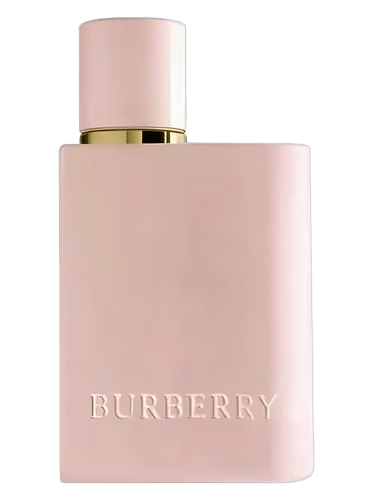
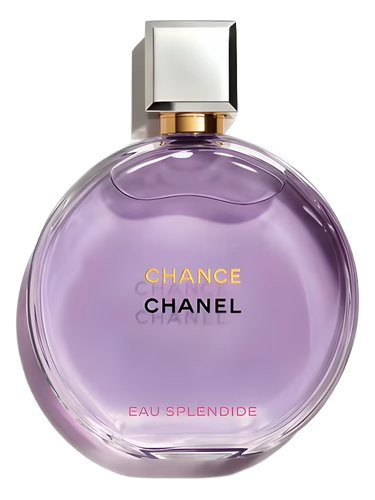
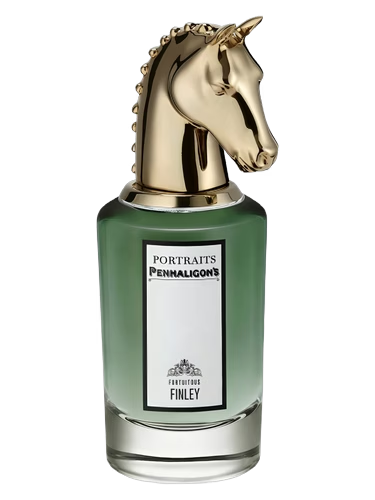
What is Meadowsweet?
Meadowsweet, or Filipendula ulmaria, is a perennial herb in the rose family native to Europe and Western Asia, known for its creamy-white flower clusters and historical use as a flavoring agent and medicinal herb.What does Meadowsweet smell like?
It offers a sweet, creamy floral profile with a honeyed richness and distinct nuances of almond or heliotropine, often described as a soft and elegant summer scent.How is Meadowsweet essence extracted for perfumery?
In modern fragrance production, the essence is typically obtained through distillation or solvent extraction to capture its delicate aromatic compounds, while historically it was often used as a water infusion or tincture.What are some top perfumes featuring Meadowsweet?
Notable fragrances include Jo Malone London Green Wheat & Meadowsweet, Alkemia Aelfscyne, Jorum Studio Phloem, and Burren Perfumery Summer Harvest.When is Meadowsweet in season?
The plant typically blooms during the summer months, with its fragrant flower clusters appearing from June through September.