Fragrance Notes Are Layers Of Scent That Are Layered To Form The Final Fragrance. Fragrance Notes Are Categorised Into Three Main Elements Based On How Long They Take To Evaporate, And How Long They Typically Last Following Application: Top Notes, Heart Notes And Base Notes.
Mariposa Lily
Mariposa Lily offers a very floral and distinctly feminine aroma, often characterized as a fruity fresh scent. It provides a bright, uplifting opening that resembles a clean body spray, presenting gentle, sweet fruitiness without specific dominant notes like strawberry. It lends a soft, fresh sophistication to compositions.

Origin & Extraction Of Mariposa Lily
The Mariposa Lily, native to Western North America, lacks the deep historical ties to perfumery that classic European florals such as rose or jasmine possess. Traditionally, the flower was not a common source of essential oils for fragrance houses. Its introduction into perfumery is a relatively modern phenomenon, coinciding with a contemporary trend in the late 20th and early 21st centuries toward exploring unique, specific, and often native American floral notes to evoke naturalistic or 'clean body spray' scent profiles.
Perfumery uses the Mariposa Lily note to impart a gentle, subtly sweet, and distinctly feminine fruity-fresh quality to compositions. Because the note is associated with a clean, uplifting aroma, it is frequently employed in contemporary fragrances, particularly those seeking a luminous opening or a sophisticated fresh twist. Its relevance lies in its ability to offer a modern, non-traditional floral alternative that bridges clean freshness with soft fruitiness, ensuring its growing use in niche, designer, and seasonal scents.
Extraction Methods of Mariposa Lily
Historically, the extraction of mariposa lily aromatic and medicinal compounds involved manual collection and simple processing of the plant's sweet bulbs and seeds. Indigenous tribes, such as the Pomo and Sierra Miwok, traditionally harvested the bulbs using digging sticks during the spring blooming period. The bulbs were then prepared by rubbing them across open-twined baskets to remove the outer skin before being roasted, boiled, or baked. For seed extraction, ripe capsules were hand-stripped or clipped from the plant just as they began to split in early summer. These traditional methods prioritized physical preservation and immediate use, as the bulbs do not store well once harvested.
Modern extraction techniques have evolved to include more efficient mechanical and chemical processes to isolate specific compounds like polysaccharides. Recent experimental methods utilize orthogonal testing to optimize extraction factors such as time, frequency, and temperature. A common contemporary process involves pulverizing the plant material, followed by reflux extraction with ethanol and subsequent water extraction and centrifugation. Advanced purification steps often include concentration under reduced pressure and precipitation with 95% ethanol to isolate high-purity extracts for pharmaceutical research. Additionally, modern propagation extraction involves rapid mechanical shattering of dry fruits using brief blending, which allows for the quick collection of seeds without damaging the viable embryos.
The Mariposa Lily note, cherished for its very floral and distinctly feminine, fruity-fresh aroma, has found a home in several contemporary fragrances seeking a clean, uplifting opening. For instance, **Brisa Cubana** by Escada (2024), a female fragrance, likely leverages the lily’s bright, gentle sweetness to evoke a breezy, tropical sophistication, aligning with the brand’s focus on vibrant, seasonal scents.
- *
While often used in feminine compositions, Mariposa Lily also lends a subtle freshness to unisex offerings. Geo. F. Trumper's **Havana Cologne** (2019) and Phlur's **Añoranza** (2019) both feature this note. In such colognes, the lily’s soft, clean body spray-like quality acts as a refined counterpoint to potentially sharper or more traditional cologne ingredients, providing an unexpected layer of luminous, modern freshness.
- *
The note is also being incorporated into fragrances slated for future release, suggesting its growing popularity as a sophisticated alternative to mainstream floral or fruity notes. Upcoming releases like **Sweet Candy** by Camara Perfumes (2025) and **Blue Sage** by Note Fragrances (2025) are expected to utilize Mariposa Lily’s unique, subtle fruitiness to create compositions that are both gentle and enduring, securing its place in modern perfumery trends.
Sustainability Of Mariposa Lily
Sustainability of Mariposa Lily
- Implementing conservation agreements between federal and state agencies, such as the Bureau of Land Management and U.S. Forest Service, to reduce logging threats and protect critical habitats
- Developing provincial and federal management plans to prevent at-risk species like Lyall's mariposa lily from becoming endangered through coordinated land-use measures
- Utilizing advanced tissue culture and micropropagation techniques in botanical gardens to overcome slow natural maturation cycles and produce genetically diverse specimens for restoration
- Conducting detailed population censuses and inventories to identify elite genotypes and monitor the impact of environmental factors like climate change and invasive species
- Promoting public awareness and citizen science initiatives, such as the Oregon Bee Atlas, to document and protect the diverse pollinators that these wildflowers support
- Encouraging sustainable land management practices, including the regulation of motorized recreation and the prevention of illegal bulb collection, to maintain soil integrity and biodiversity
Trivia
The Mariposa Lily, whose name translates to butterfly in Spanish, is the state flower of Utah and was a vital food source for Indigenous peoples and Mormon pioneers, who consumed its bulb to survive periods of famine.
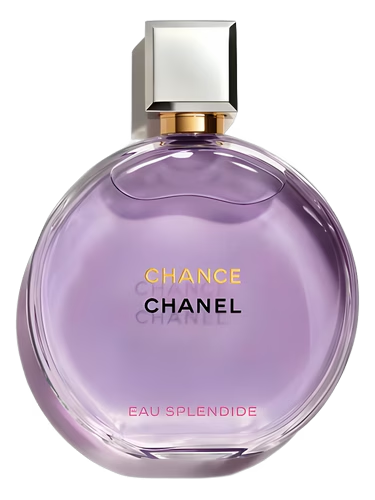
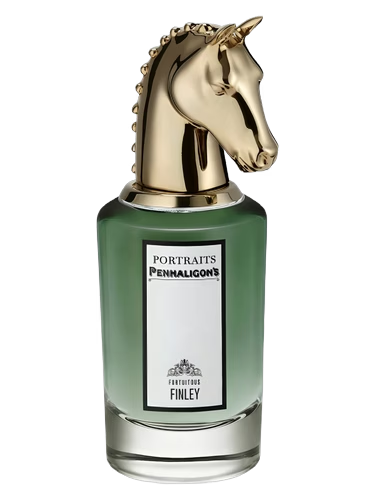
Most Popular Scents Using Mariposa Lily

What is Mariposa Lily?
The Mariposa Lily is a floral note derived from a genus of wildflowers native to Western North America, primarily used in modern perfumery to create clean, feminine, and naturalistic scent profiles.What does Mariposa Lily smell like?
It offers a very floral, fruity-fresh aroma that is bright and uplifting, often compared to a clean body spray with subtle, sweet fruitiness and a soft, sophisticated finish.How is Mariposa Lily essence extracted?
In modern fragrance production, the aromatic compounds are typically obtained through solvent extraction, while experimental methods use reflux extraction with ethanol to isolate high-purity extracts.What are some top perfumes featuring Mariposa Lily?
Notable fragrances include Escada Brisa Cubana, Phlur Añoranza, Geo. F. Trumper Havana Cologne, and upcoming releases like Camara Perfumes Sweet Candy.When is Mariposa Lily in season?
The plant follows a distinct growth cycle with a peak blooming period typically spanning from late spring through mid-summer, generally between February and August depending on elevation.