Fragrance Notes Are Layers Of Scent That Are Layered To Form The Final Fragrance. Fragrance Notes Are Categorised Into Three Main Elements Based On How Long They Take To Evaporate, And How Long They Typically Last Following Application: Top Notes, Heart Notes And Base Notes.
Marian Plum
Marian Plum offers a complex, tropical fruity note, blending the succulent sweetness of ripe mango with a tart, slightly green acidity reminiscent of unripe plum. It's juicy, vibrant, and exotic, providing a lush, mouth-watering quality often used to bring a sparkling, unique signature to top and middle notes in fruity-floral compositions.

Origin & Extraction Of Marian Plum
The Marian Plum (or Maprang, *Bouea macrophylla*) is a tropical fruit native to Southeast Asia. Unlike classic European fruits such as Bergamot or Lemon, which have been staples in perfumery since the invention of Eau de Cologne, the Marian Plum is a relatively new and niche note in the modern perfumer's palette. Historically, it was cherished primarily in its native regions for culinary use due to its unique flavor profile—a blend of mango sweetness and tart, green acidity.
The introduction of Marian Plum to fine fragrance is a reflection of the 21st-century trend toward exotic, complex, and intensely realistic fruity notes. Perfumers leverage its vibrant, juicy character to create unique tropical accords that offer a sophisticated twist on conventional fruity-floral compositions. Because the natural extraction of the fruit can be volatile or challenging, the note is often recreated using synthetic accords and headspace technology to capture its characteristic mouth-watering sweetness and subtle green undertones, providing a contemporary, sparkling signature.
Extraction Methods of Marian Plum
Historically, the extraction of Marian plum (Bouea macrophylla) focused on artisanal and home-based methods for culinary and medicinal use. These traditional techniques involved manual expression of the juicy pulp from the ripe fruit and simple maceration or infusion of the leaves and seeds in water or ethanol to capture their therapeutic properties. In rural Southeast Asian communities, the fruit is often hand-harvested and processed using traditional village methods to create nectars and preserves.
Modern extraction methods have evolved to utilize advanced scientific techniques for cosmeceutical and pharmaceutical applications. Current standard practices include optimized solvent extraction and fractionation using ethanol, ethyl acetate, or hydroethanolic solutions to isolate specific phytochemicals like polyphenols and antioxidants. For high-purity oil production from the seeds (kernels), mechanical screw pressing is employed with strict temperature controls below 40°C to maintain oil quality. Furthermore, advanced analytical technologies such as near-infrared (NIR) spectroscopy and high-performance liquid chromatography (HPLC) are now used to non-destructively predict fruit quality and quantify bioactive components during the extraction process.
The Marian Plum note, valued for its complex blend of mango sweetness and tart, green plum acidity, is primarily showcased in contemporary and niche fragrances seeking an exotic, mouth-watering signature. Because it is a relatively modern introduction to perfumery—a reflection of the 21st-century trend toward intensely realistic and sophisticated fruity-floral compositions—its use often provides a vibrant, tropical twist on classic structures. Perfumers utilize this note not merely as a fleeting burst, but to establish a lush, lasting character in the heart of the scent.
- One notable example where a similar exotic mango/plum accord often features prominently is the renowned fragrance **Byredo Bal d'Afrique**. Although its official note list may vary, the vibrant, juicy, and slightly green tropical fruit effect associated with Marian Plum's profile contributes to the scent’s unique, sophisticated warmth.
- Another category embracing exotic fruits like Marian Plum is the modern designer fruity-floral. While specific official releases are rare, the characteristic "juicy green" quality is sought after in fragrances aiming for a vibrant, summer-ready appeal, such as those from the **Jo Malone** or **Acqua di Parma** lines that focus on Mediterranean or tropical landscapes.
The complexity of Marian Plum allows it to bridge the gap between volatile citrus openings and richer, warmer dry downs. Its tart greenness prevents the composition from becoming overly sweet, making it suitable for unisex and sophisticated feminine fragrances. Due to the challenge of natural extraction, the note is frequently recreated through synthetic accords and headspace technology, ensuring a consistent, sparkling, and high-definition representation of the fruit's unique aroma.
Ultimately, fragrances featuring Marian Plum emphasize a cheerful vitality and an exotic elegance. They appeal to consumers looking for a distinctive fruity profile that goes beyond conventional berries or peaches, lending a signature of lush, vibrant, and contemporary sophistication to the wearer, often found in high-end houses dedicated to showcasing rare or unusual ingredients.
Sustainability Of Marian Plum
Sustainability of Marian Plum
- Adoption of Good Agricultural Practices (GAP) to standardize production and ensure quality for domestic and export markets
- Promotion of ecological and organic farming practices that improve soil organic carbon and maintain healthy soil systems
- Implementation of soil solarization and monitoring of soil quality before planting to reduce reliance on chemical treatments
- Support for community enterprises and cooperatives that aim to eradicate poverty and improve socio-economic resilience for smallholder farmers
- Encouraging biodiversity and the cultivation of under-utilized tropical fruit crops to enhance agricultural commercialization and diversity
Trivia
Marian Plum is often referred to as the plum mango because it is a botanical hybrid in flavor, featuring a unique scent profile that perfectly fuses the juicy sweetness of a ripe mango with the tart, acidic brightness of a plum.
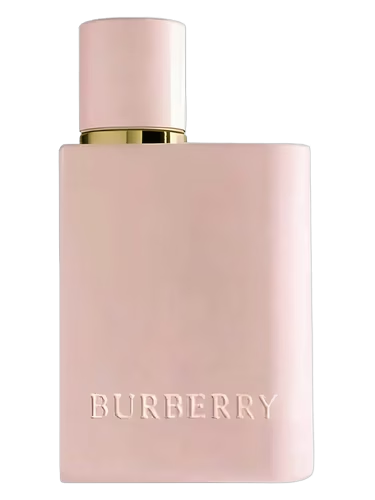
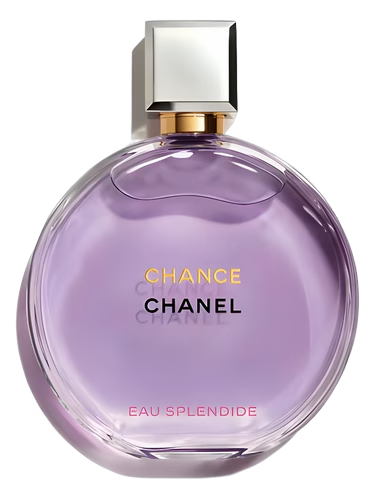
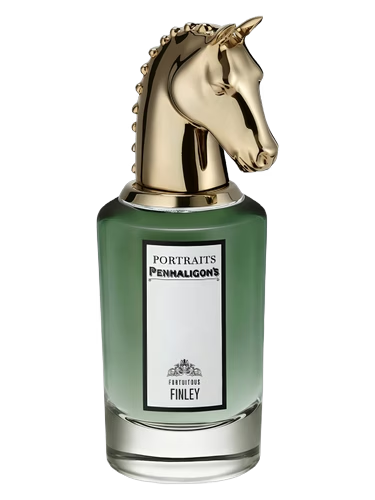
Most Popular Scents Using Marian Plum
What is Marian Plum?
Marian Plum, also known as Maprang, is a tropical fruit native to Southeast Asia that offers a modern, exotic signature in fruity-floral compositions.What does Marian Plum smell like?
It presents a complex, mouth-watering profile blending the sweetness of ripe mango with the tart, green acidity of an unripe plum.How is Marian Plum essence captured?
The note is often recreated through synthetic accords and headspace technology to capture its juicy, vibrant character that can be difficult to extract naturally.What are some top perfumes featuring Marian Plum?
Fragrances showcasing this note include Strangers Parfumerie Aroon Sawat, Toskovat' Ichigo Ichie, and Snif Show Pony.When is Marian Plum in season?
It is a seasonal fruit of late spring and summer, with peak harvests typically occurring between January and June in Southeast Asian regions.