Fragrance Notes Are Layers Of Scent That Are Layered To Form The Final Fragrance. Fragrance Notes Are Categorised Into Three Main Elements Based On How Long They Take To Evaporate, And How Long They Typically Last Following Application: Top Notes, Heart Notes And Base Notes.
Mangosteen
Mangosteen offers a complex, tropical aroma in perfumery, blending creamy sweetness with a vibrant, tart tanginess. It possesses delicate floral nuances and a unique, astringent green quality, often likened to a mix of peach, strawberry, and lychee. This multifaceted profile provides both refreshing lift and smooth, velvety depth.

Origin & Extraction Of Mangosteen
Mangosteen, a tropical fruit native to Southeast Asia, specifically the Malay archipelagos, Indonesia, and Thailand, has a history rooted primarily in culinary delights and traditional medicine. Revered for its succulent white flesh and dark purple hue, the fruit was historically used in Asian traditional medicine to treat various ailments. This regional popularity and cultural significance preceded its use in Western perfumery, which typically relied on more traditional European citrus and floral oils.
The allure of Mangosteen in perfumery is a more recent development, reflective of a modern trend where perfumers explore exotic, complex, and unique fruit notes beyond the traditional palette. While its essential oils are not historically foundational like Bergamot or Lemon, the compound's complex aroma—blending creamy sweetness, tart tanginess, and green astringency—has made it a sought-after note to lend a tropical, multifaceted depth to contemporary fragrances.
Extraction Methods of Mangosteen
Historically, the extraction of bioactive compounds from mangosteen, particularly from the thick pericarp (peel), relied on traditional manual methods and simple solvent processes. Early techniques involved cleaning, drying, and grinding the peel into a powder, which was then subjected to maceration in water or ethanol for several days at room temperature. Decoction, or boiling the peel in water, was also a common traditional practice used to extract tannins and other water-soluble medicinal components for artisanal use.
Modern commercial and laboratory methods have evolved to be more efficient and specialized. Mangosteen oil is often produced through cold pressing, a mechanical extraction process that uses high pressure and low temperatures to preserve delicate phytonutrients without chemical solvents. For the isolation of xanthones like alpha-mangostin, advanced techniques now include ultrasound-assisted extraction (UAE), microwave-assisted extraction (MAE), and supercritical carbon dioxide (SC-CO2) extraction, which offer higher yields and faster processing times. Recent innovations also feature sequential solvent extraction systems using a combination of water, hexane, and acetonitrile to sustainably recover high-purity compounds for pharmaceutical and nutraceutical applications.
Mangosteen, prized for its unique balance of creamy sweetness, vibrant tartness, and subtle green facets, has become a signature note in fragrances aiming for an exotic, contemporary freshness. This complex fruit provides perfumers with a multifaceted opening that avoids the common citrus intensity, instead offering a smooth, velvety texture. While not as historically foundational as notes like Bergamot, its inclusion immediately suggests a tropical, modern sensibility.
- One notable fragrance featuring this note is **L'Eau d'Issey Pure Nectar de Parfum** by Issey Miyake, where Mangosteen contributes a juicy, slightly creamy fruit accord, enriching the floral heart.
- Another example is **Oh, Lola !** by Marc Jacobs, which uses the note to provide a playful, slightly sweet tropical dimension to the opening.
In modern niche perfumery, Mangosteen is often utilized to lend depth and sophistication to light, fruity compositions. Its green, astringent quality helps ground the sweetness, making the fruit note feel more authentic and complex. This versatility allows it to transition smoothly between sparkling top notes and richer floral or woody bases, ensuring the fragrance maintains an uplifting yet substantial character.
Due to its relatively modern status in Western fragrance, Mangosteen often appears in summer and limited-edition releases, celebrating its exotic origins. Its presence is valued for creating an immediate association with lush, faraway climates, providing an invigorating, mouth-watering lift that is distinctly different from traditional European fruit scents. The note continues to gain popularity as perfumers explore less common ingredients to create truly unique tropical accords.
- Blooming typically occurs during the dry season, commonly between late winter and early summer, triggered by a period of dry weather followed by rainfall
- The fruit maturation process takes approximately 5 to 6 months (110–145 days) from anthesis to harvest
- In major producing regions like Thailand, the primary harvest season runs from April to June or May through September, spanning the transition from summer to the rainy season
- In other tropical regions such as Indonesia and Northern Australia, harvesting typically begins in November and can extend through January
- Mangosteen trees are evergreen and maintain their foliage year-round, while the fruit is generally considered a late summer to early fall note in many tropical climates
Sustainability Of Mangosteen
Sustainability of Mangosteen
- Promoting biodiversity and soil conservation through agroforestry systems, such as intercropping with shade trees, bananas, and pepper
- Implementing organic soil management practices using compost, mulch, and bio-enhancers to improve fertility and moisture retention
- Adopting water-efficient irrigation methods, including rainwater harvesting and drip systems, to prevent water stress and root rot
- Utilizing Integrated Pest Management (IPM) and eco-friendly technologies, such as mycorrhizal fungi and nanotechnology, to reduce reliance on synthetic chemicals
- Supporting smallholder resilience and rural livelihoods by establishing cooperatives and strengthening value chains for fair market access
- Advancing climate-resilient cultivation through precision agriculture and grafting techniques that reduce the juvenile growth period
Trivia
Known as the "Queen of Fruits," the mangosteen is famously associated with a legend where Queen Victoria offered a reward of 100 pounds sterling to anyone who could deliver the fresh fruit to her in England.
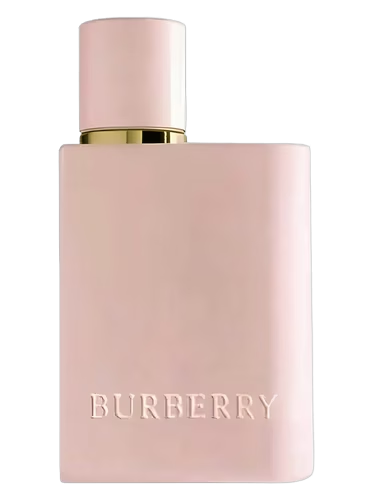
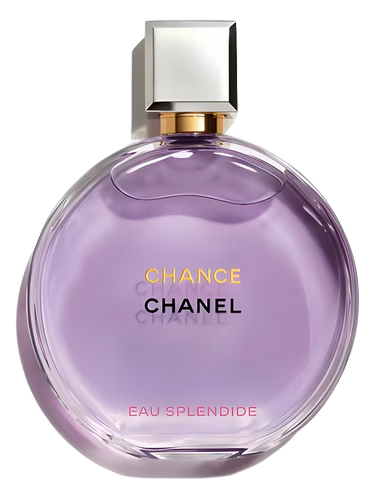
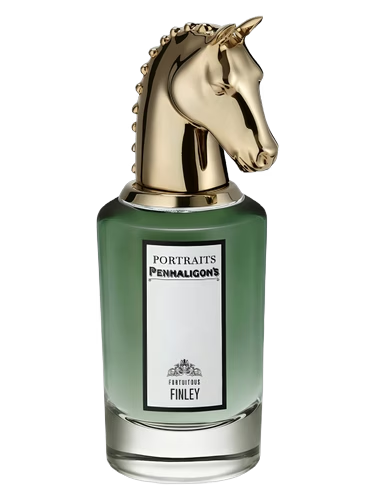
Most Popular Scents Using Mangosteen
What is Mangosteen?
Mangosteen is a tropical fruit native to Southeast Asia, often called the "Queen of Fruits," and is used in modern perfumery for its unique, exotic, and multifaceted depth.What does Mangosteen smell like?
It offers a complex tropical aroma that blends creamy sweetness with a vibrant, tart tanginess, accompanied by delicate floral nuances and a unique, astringent green quality.How is Mangosteen essence extracted?
Mangosteen essence is primarily solvent-extracted, though modern commercial production also utilizes cold pressing and advanced techniques like ultrasound-assisted extraction to preserve delicate compounds.What are some top perfumes featuring Mangosteen?
Notable fragrances include L'Eau d'Issey Pure Nectar de Parfum by Issey Miyake, Oh, Lola! by Marc Jacobs, and The Maker Paradiso.When is Mangosteen in season?
The harvest season varies by region; in Thailand, it typically runs from April to September, while in Indonesia and Northern Australia, it occurs from November through January.