Fragrance Notes Are Layers Of Scent That Are Layered To Form The Final Fragrance. Fragrance Notes Are Categorised Into Three Main Elements Based On How Long They Take To Evaporate, And How Long They Typically Last Following Application: Top Notes, Heart Notes And Base Notes.
Mandora
Mandora offers a bright, intensely sweet, and juicy citrus scent, reminiscent of a hybrid between mandarin orange and orange, but with a unique honeyed depth and a slightly tart, refreshing edge. It delivers a lively, cheerful opening, transitioning into a smoother, more radiant warmth.

Origin & Extraction Of Mandora
Mandora is a relatively new and unique citrus note in fine perfumery, gaining prominence alongside other modern, exotic citrus hybrids. Unlike the historical pillars of citrus notes like Bergamot and Lemon, which date back to the invention of Eau de Cologne in the 18th century, Mandora's use is contemporary. Perfumers are increasingly drawn to it for its bright, sweet, and juicy profile that stands between mandarin and orange, offering a refined, honeyed depth and slightly tart edge that feels particularly suited for modern, luminous compositions.
Its relevance in perfumery is currently defined by its prominent feature in several high-end designer and niche releases of the 21st century. Its appearance signals a move toward complex, cheerful freshness that seeks to anchor the top notes with greater sweetness and warmth than traditional tart citruses. For example, its extensive use in the Gucci "Guilty" line showcases how Mandora is strategically employed to brighten heavier oriental or woody bases, demonstrating its value in creating a vivid and compelling top-note experience for contemporary audiences.
Extraction Methods of Mandora
The essential oil of mandora, a hybrid of the mandarin and orange grown on the island of Cyprus, is primarily obtained through cold expression of the fruit's zest. This mechanical process involves pressing the outer rind to rupture the oil-bearing glands and release the volatile aromatic compounds without the application of heat, which helps preserve its characteristic fresh and bright citrus profile. While steam distillation is sometimes used for citrus oils, cold expression remains the preferred standard for mandora to capture its unique "two-in-one" aromatic quality that combines qualities of both its parent fruits.
Historically, citrus oils like mandora were extracted using labor-intensive manual techniques such as the sponge method, where peels were pressed by hand against sponges to collect the essence, or the "ecuelle a piquer" method involving a bowl lined with needles. Modern commercial production has transitioned to advanced mechanical peelers and high-speed centrifugal separators that efficiently isolate the oil from the fruit emulsion. Recent developments in the broader citrus industry also include the use of molecular distillation to enhance purity and supercritical carbon dioxide (scCO2) extraction to capture even more delicate aromatic nuances while maintaining the oil's integrity.
Mandora is most prominently featured in the contemporary fragrance landscape through the Gucci Guilty line, particularly the various iterations that seek a modern, bright, and cheerful citrus opening. Its unique profile, blending the sweetness of mandarin with the depth of orange and a hint of tartness, allows it to serve as a distinctive and long-lasting top note that provides an immediate sense of optimism and energy. This hybrid citrus note gives the scents a luminous quality that is often more complex and radiant than standard orange or lemon.
- Gucci Guilty Pour Femme Eau de Toilette is a prime example, where Mandora provides a zesty, clean, and vitalizing introduction, setting the stage for the lilac and patchouli heart.
Beyond its use in mainstream designer fragrances, Mandora has also been adopted by niche perfumery for its sophisticated balance of sweet and slightly bitter nuances. Because it is a hybrid, it offers perfumers a way to introduce a familiar citrus freshness with an unexpected depth—specifically the unique "honeyed depth" mentioned in its profile. This makes it an ideal ingredient for colognes or fresh-aromatic compositions that aim for longevity and complexity beyond the fleeting nature of typical citrus oils.
- In fragrances like those from the **Acqua di Parma** Blu Mediterraneo collection, notes similar to Mandora might be used to enhance the natural, sun-drenched feel, although specific usage varies by flanker.
The incorporation of Mandora signifies a modern trend in perfumery towards notes that provide both clarity and warmth. Its ability to transition smoothly from a bright, juicy top note to a more radiant, slightly warmer presence in the heart of the perfume helps anchor the composition. This versatility ensures that while the opening is lively and effervescent, the scent retains a comforting, cheerful warmth, making it particularly successful in fragrances designed for year-round wear.
Sustainability Of Mandora
- Cultivating hybrid citrus varieties like the Mandora (a cross between a mandarin and an orange) to improve crop resilience and adapt to changing climate conditions in the Mediterranean
- Supporting local agricultural economies in Cyprus by prioritizing Mandora production, which provides essential seasonal income for regional farming communities
- Implementing water-efficient irrigation techniques and integrated pest management to reduce chemical runoff and preserve soil health in citrus groves
- Promoting a circular economy by repurposing Mandora fruit that does not meet fresh market standards for essential oil extraction and juice production
- Adopting sustainable harvesting practices to ensure long-term tree health and maintain the biodiversity of the local ecosystem
Trivia
Mandora is a hybrid citrus fruit from Cyprus that is often mistaken for a clementine, but it is actually a cross between a mandarin and an orange that is so acidic and tough to peel it is frequently used as a zesty alternative to standard citrus in perfumery.
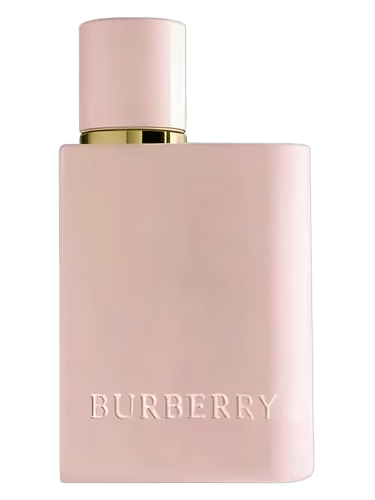
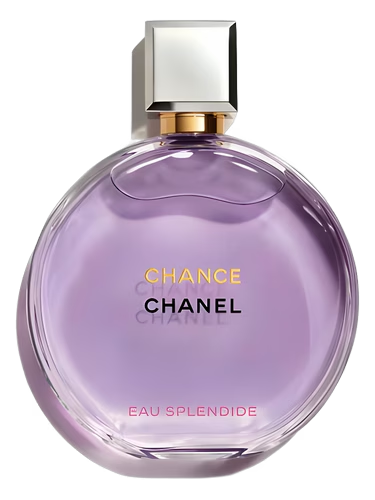
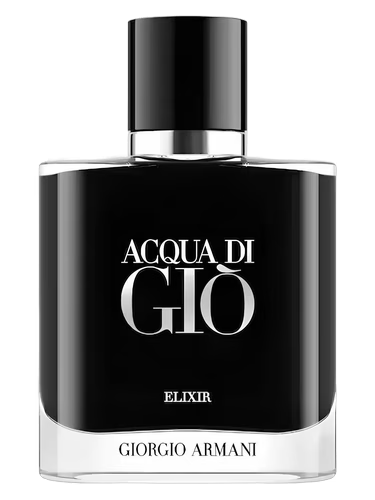
Most Popular Scents Using Mandora
What is mandora?
Mandora is a unique citrus hybrid from the island of Cyprus, created by crossing a mandarin orange with a sweet orange to produce a bright, honeyed, and intensely juicy fruit.
What does mandora smell like?
It offers a sophisticated citrus profile that blends the zesty sweetness of mandarin with the depth of orange, characterized by a refined honeyed sweetness and a slightly tart, refreshing edge.
How is mandora oil extracted?
The essential oil is primarily obtained through cold expression (pressing) of the fruit's zest, a mechanical process that preserves its fresh, volatile aromatic compounds without using heat.
What are some top perfumes featuring mandora?
Mandora is most famously featured in the Gucci Guilty line, including Gucci Guilty Pour Femme, as well as in niche scents like Mazhar by FiiLiT and Capri by 19-69.
When is mandora in season?
The fruit is primarily harvested in Cyprus during the winter and spring, reaching its peak flavor and aromatic maturity between January and April.
How does mandora differ from a clementine?
While often mistaken for clementines, mandoras are generally larger, have a tougher peel that is harder to remove, and possess a more acidic, complex flavor profile.