Fragrance Notes Are Layers Of Scent That Are Layered To Form The Final Fragrance. Fragrance Notes Are Categorised Into Three Main Elements Based On How Long They Take To Evaporate, And How Long They Typically Last Following Application: Top Notes, Heart Notes And Base Notes.
Mandarin Orange
Mandarin Orange offers a bright, juicy, and cheerful citrus note. It's sweeter and less tart than lemon or lime, featuring a luminous, slightly floral zest that evokes fresh, peeled fruit. Used primarily as a top note, it provides an uplifting, sparkling opening, often lending a sunny, effervescent quality to compositions.

Origin & Extraction Of Mandarin Orange
Mandarin orange, originating in ancient China, has been cultivated for millennia, but its introduction to the Western world, particularly Europe, was relatively late compared to other citruses like the bitter orange or lemon. Its sweet, delicate oil—extracted from the peel—found its way into perfumery in the 19th century, particularly after its cultivation spread to the Mediterranean. It offered a softer, juicier, and less volatile alternative to the sharp zest of bergamot and lemon, making it an appealing top note for fragrances that sought a bright, cheerful, and sunny opening without the traditional cologne bitterness.
In modern perfumery, Mandarin Orange is highly valued for its versatility, transitioning seamlessly between fresh, oriental, and gourmand compositions. It provides an immediate sense of warmth and energy. While historical Eaux de Cologne primarily relied on Bergamot, contemporary fragrances frequently utilize Mandarin to add a recognizable, sweet, and uplifting signature that appeals broadly. Its prominence has solidified its role as an essential top note, often used to soften sharper accords and enhance the overall luminosity of a scent.
Extraction Methods of Mandarin Orange
The primary method for extracting mandarin orange essential oil is cold expression (pressing) of the fresh fruit peel. This mechanical process involves rasping or squeezing the outer rind to rupture the oil glands and release the volatile essence. Historically, this was achieved through labor-intensive manual techniques such as the sponge method, where rinds were pressed against sponges to collect the oil, or the "ecuelle a piquer" method, which used a bowl lined with needles to puncture the fruit. Another traditional approach involves steam distillation, where pressurized steam passes through the peels to capture aromatic compounds, though this can sometimes degrade heat-sensitive molecules.
Modern commercial production has evolved to utilize high-speed mechanical peelers and centrifugal separators to efficiently isolate the oil from the resulting emulsion. Recent advancements focus on green and high-efficiency technologies, including supercritical carbon dioxide (scCO2) extraction and microwave-assisted distillation, which aim to improve purity and yield. Innovative techniques like Pulsed Electric Field (PEF) and ultrasound-assisted extraction are also being explored as eco-friendly pretreatments to disrupt cell membranes and enhance the recovery of bioactive compounds without the need for high temperatures or harsh petroleum-based solvents.
Mandarin Orange is a celebrated top note, treasured for its bright, sweet, and uplifting quality that instantly adds effervescence to a composition. In the realm of classic fragrances, it provides a luminous opening that is less acidic than lemon or lime. One iconic example where Mandarin Orange plays a vital role is in the Guerlain masterpiece, Shalimar, where its zest cuts through the rich vanilla and oriental base, creating a timeless balance of light and darkness.
- The note is particularly versatile, offering an immediate sense of cheerfulness and vitality.
In modern perfumery, Mandarin Orange is frequently featured in vibrant, contemporary fresh scents and sparkling florals. Its sweetness makes it an ideal counterpart to white florals and light woods. A prominent usage is in the Dolce & Gabbana fragrance, Light Blue, where it contributes to the invigorating, Mediterranean freshness alongside grapefruit and bergamot, helping to define the scent's energetic and clean character.
- Mandarin Orange is often blended with other citruses to enhance its longevity and depth, ensuring the top note endures.
The note is also crucial in gender-neutral and niche offerings, where its purity and brightness elevate sophisticated structures. For instance, in fragrances like Atelier Cologne's Mandarine Glaciale, the note is stripped down and highlighted, often paired with green notes or subtle spices to showcase its multifaceted complexity. Its sweet, juicy facet ensures a smooth transition from the sparkling opening into the heart of the perfume, solidifying its place as a cornerstone of modern fragrance artistry.
Sustainability Of Mandarin Orange
Sustainability of Mandarin Orange
- Adopting independent third-party certifications such as Sustainably Grown to verify environmental standards, worker protection, and economic resilience
- Implementing precision agriculture using drone imaging, satellite monitoring, and soil sensors to optimize water usage and reduce the environmental footprint
- Developing climate-resilient and disease-resistant rootstocks to combat threats like citrus greening and adapt to warming climates
- Promoting biodiversity within orchards, which can increase pollinator diversity by up to 30% compared to traditional monocultures
- Utilizing integrated pest management (IPM) and biopesticides to reduce reliance on synthetic chemicals and protect local ecosystems
- Advancing zero-waste initiatives by repurposing fruit by-products and side-streams into value-added products like juices and essential oils
Trivia
In Chinese culture, the mandarin orange is a powerful symbol of good fortune and prosperity, and it is a central tradition to gift the fruit during Chinese New Year festivities to invite wealth and celebration into the home.
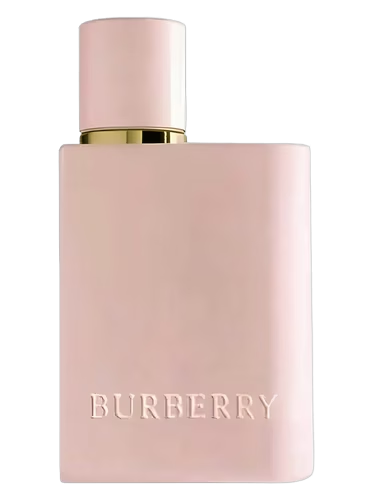
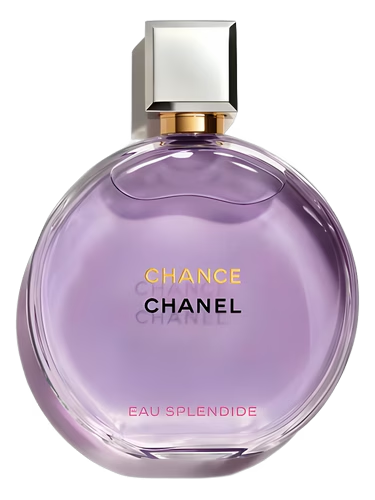
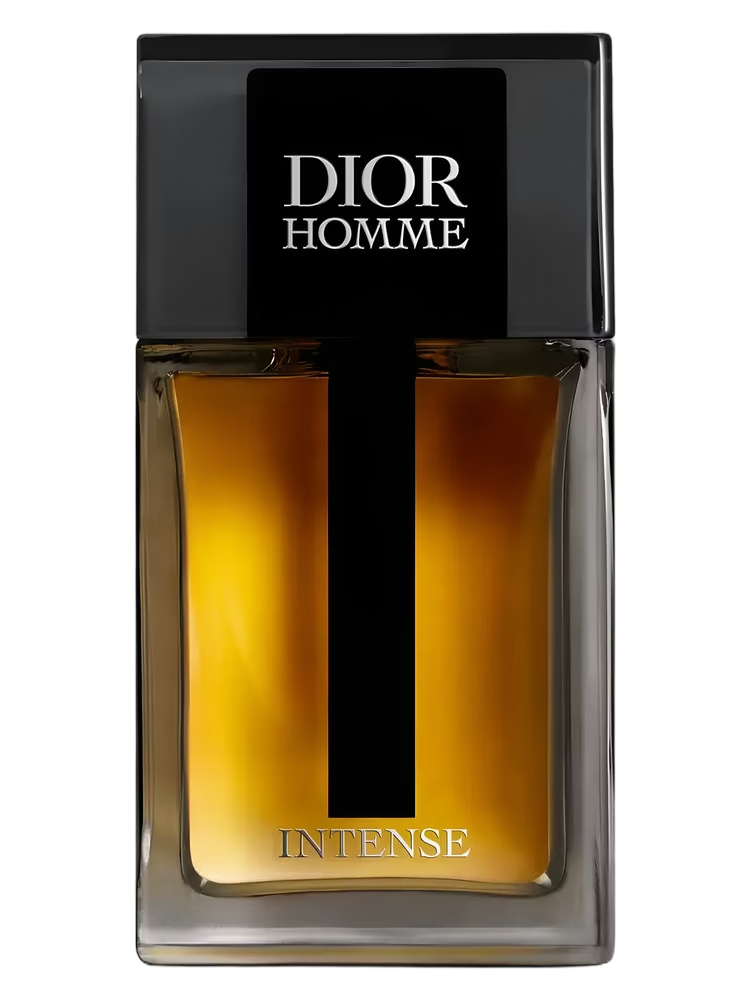
Most Popular Scents Using Mandarin Orange
-
What is Mandarin Orange in perfumery?
Mandarin Orange is a bright, juicy, and cheerful citrus note prized for its sweet and less tart aroma compared to lemon or lime, often providing an uplifting opening to a fragrance. -
How is Mandarin Orange essential oil extracted?
The essential oil is primarily obtained through cold expression of the fresh fruit peel, a mechanical process that preserves its delicate, sunny, and effervescent aromatic qualities. -
What does Mandarin Orange smell like?
It offers a sweet, zesty, and slightly floral citrus scent that evokes the aroma of fresh, peeled fruit with a softer and rounder profile than sharper citrus notes like bergamot. -
What are some top perfumes featuring Mandarin Orange?
Iconic fragrances featuring this note include Guerlain Aqua Allegoria Mandarine Basilic, Louis Vuitton Afternoon Swim, Tom Ford Mandarino di Amalfi, and Prada Infusion Mandarine. -
When is Mandarin Orange in season?
Mandarin oranges are quintessential winter fruits, with a primary harvest season typically spanning from November through April, when the fruit reaches its peak sweetness and flavor.