Fragrance Notes Are Layers Of Scent That Are Layered To Form The Final Fragrance. Fragrance Notes Are Categorised Into Three Main Elements Based On How Long They Take To Evaporate, And How Long They Typically Last Following Application: Top Notes, Heart Notes And Base Notes.
Mamey
Mamey offers a rich, sweet, and complex tropical fruit aroma. It features a marzipan-like sweetness with nuances of cherries and squash. Its profile is often described as a blend of sweet potato, pumpkin, honey, prune, peach, apricot, cantaloupe, cherry, and almond facets, lending a unique, creamy depth to perfumes.

Origin & Extraction Of Mamey
The Mamey fruit, specifically the Mamey Sapote (*Pouteria sapota*), is native to Central America and the Caribbean, where it has been cultivated for centuries. Traditionally valued for its rich, sweet pulp, which exhibits a complex flavor profile spanning notes of almond, cherry, honey, and pumpkin, its use in perfumery is primarily modern. Unlike classical European materials, Mamey lacks the deep history of notes like Bergamot or Rose, only gaining attention as perfumers began exploring unique, exotic fruit accords in the late 20th and 21st centuries.
In contemporary perfumery, the Mamey note is often created synthetically or via specialized extraction to capture its creamy, sweet, and nutty nuances. It is not typically used as a fleeting top note, but rather to lend a unique, gourmand depth and texture to the heart or base of a fragrance. This sophisticated approach allows Mamey to contribute a tropical, rich sweetness, serving as a complex alternative to common fruit notes and aligning well with modern niche and artisanal fragrances focused on exotic food-inspired scents.
Extraction Methods of Mamey
Historically, the extraction of aromatic and bioactive compounds from the mamey sapote (Pouteria sapota) was centered on artisanal and home-based methods, such as boiling the fruit's large seeds (pixtle) to create traditional beverages or using simple manual expression to obtain pulp for immediate consumption. For medicinal and cosmetic purposes, the kernels were traditionally toasted and ground to release their rich, almond-scented oils, which were then captured through basic infusion or maceration in water.
In modern commercial and scientific applications, the extraction of mamey sapote oil and carotenoids has become more sophisticated. The primary commercial method for oil extraction is mechanical pressing or solvent extraction using n-hexane via Soxhlet equipment. To improve yield and sustainability, latest advancements include Aqueous Enzymatic Extraction (AEE), which uses enzyme complexes like Viscozyme L to break down cell walls without harsh chemicals, and Ultrasound-Assisted Extraction (UAE), which utilizes cavitation forces to enhance mass transfer and preserve the fruit's nutritional profile. Furthermore, high-performance liquid chromatography (HPLC) and controlled dehydration into stable powders are now used to isolate specific carotenoids and preserve the fruit's organoleptic properties for global transport.
The Mamey note, characterized by its complex, sweet, and nutty tropical profile (reminiscent of marzipan, honey, and apricot), is a relatively modern and niche addition to perfumery. Due to its unique gourmand depth and texture, it is often featured in sophisticated, artisanal fragrances rather than mainstream blockbusters, where it lends an exotic, creamy sweetness to the heart or base. One prominent use of the Mamey accord can be found in Boucheron Quatre Absolue de Nuit Pour Femme, where it contributes a luscious, almond-like richness to the composition, complementing other sweet and oriental notes.
- * * *
The Mamey note's complexity allows it to bridge fruity top notes with rich, oriental bases, providing an interesting alternative to more common sweet notes like vanilla or tonka bean. Perfumers seeking to evoke the lushness of the Caribbean or Central America often utilize this material. An example of this is its subtle inclusion in compositions designed to feature a unique tropical sweetness, making the fragrance stand out from typical fruity-floral scents. While specific commercial examples are rare and often limited to niche lines, its presence signifies a move towards unique, food-inspired exotic accords.
- * * *
Although Mamey may not define an entire category of fragrance in the way that Bergamot defines Eau de Cologne, its distinctive scent, blending sweet potato, pumpkin, and almond facets, is highly valued for adding an unexpected, textural element. It provides longevity and depth in the dry down, often supporting musk or amber accords. This allows the fragrance, such as in certain limited-edition or experimental scents from houses exploring tropical materials, to maintain a creamy, inviting warmth long after the initial spray.
Sustainability Of Mamey
Sustainability of Mamey
- Cornerstone species for integrated agroforestry systems that blend tree crops with annual crops and livestock to provide environmental and social benefits
- Significant carbon sequestration potential that delivers higher market value per ton compared to traditional field crops
- High water-use efficiency and drought resilience once established due to deep root systems that stabilize soil and reduce erosion
- Adoption of regenerative organic cultivation and integrated pest management (IPM) to reduce reliance on chemical inputs and protect biodiversity
- Utilization of climate-resilient farming practices such as mulching and cover cropping to preserve soil moisture and improve organic matter
- Promotion of digital agriculture and satellite-based monitoring to optimize orchard management, reduce losses, and quantify environmental impacts
Trivia
In Mexico and Cuba, the mamey's creamy, almond-pumpkin aroma is so iconic that it inspired the popular "batido de mamey" milkshake, which perfumers now recreate as a unique tropical gourmand accord.
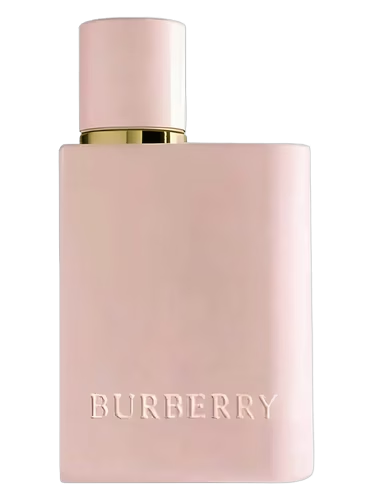
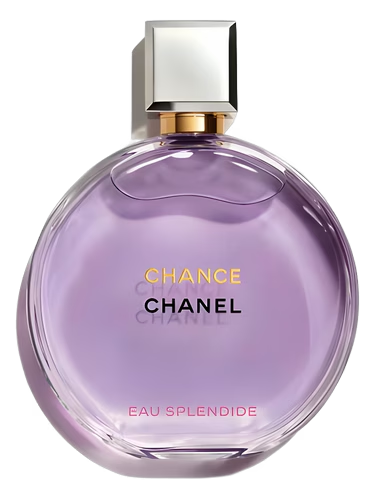
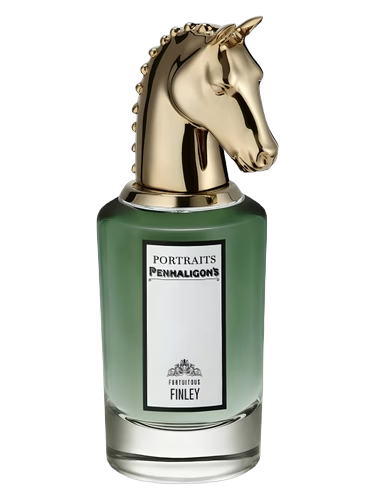
Most Popular Scents Using Mamey
What is Mamey?
Mamey, specifically Mamey Sapote, is a tropical fruit native to Central America and the Caribbean, valued in modern perfumery for its rich, sweet, and creamy aroma.What does Mamey smell like?
It offers a complex, gourmand profile featuring marzipan-like sweetness with facets of honey, almond, cherry, pumpkin, and apricot.How is Mamey essence extracted?
In modern applications, the essence is typically obtained through mechanical pressing, solvent extraction, or advanced techniques like ultrasound-assisted extraction.What are some top perfumes featuring Mamey?
Notable fragrances include EAUSO VERT Fruto Oscuro, Skylar Sunkissed Dahlia, Boucheron Quatre Absolue de Nuit Pour Femme, and Coyotl Colotl.When is Mamey in season?
While available year-round due to a long maturation cycle, its peak harvest season typically spans from late winter through early fall.