Fragrance Notes Are Layers Of Scent That Are Layered To Form The Final Fragrance. Fragrance Notes Are Categorised Into Three Main Elements Based On How Long They Take To Evaporate, And How Long They Typically Last Following Application: Top Notes, Heart Notes And Base Notes.
Malva
Malva offers a delicate, rosy, and green floral aroma with soft aromatic and spicy undertones. Often used to harmonize compositions, it lends a gentle, pure, and slightly innocent beauty to fragrances. Its presence provides a gentle embrace, softening sharper edges for a nuanced, subtly floral-herbaceous lift.

Origin & Extraction Of Malva
Malva, or Mallow, has a long history of traditional use in Europe and other regions for medicinal and culinary purposes, particularly its use in soothing preparations, dating back centuries. However, its history as a prominent, standardized note in fine perfumery is more subtle compared to staples like Rose or Jasmine. Historically, mallow's delicate, rosy-green, and slightly musky aroma (often associated with the related Musk Mallow, *Malva moschata*) was incorporated into European fragrant waters and herbal blends, prized for its gentle, clean scent that provided a softening, harmonizing effect on other, more volatile ingredients.
In modern perfumery, the Malva note is typically synthesized or extracted to provide a gentle, pure, and slightly powdery floral-herbaceous lift, often residing in the heart or base of a composition rather than the opening. It gained relevance in contemporary fragrance design as perfumers sought nuanced, natural-smelling florals to add complexity, longevity, and a 'clean' texture without being overpowering. It is frequently featured in niche and sophisticated designer fragrances to blend sharper edges and support soft floral-musk accords, lending a serene and innocent beauty.
Extraction Methods of Malva
The extraction of malva (Malva sylvestris) involves processing its aerial parts, including flowers, leaves, and stems, to capture its rich content of mucilages, tannins, and antioxidants. Traditionally, malva extracts were prepared through simple manual methods such as maceration, where dried plant material was soaked in solvents like water or alcohol, or through infusions used in herbal medicine. Historic practices also included air-drying the plant in the shade before grinding it to preserve its delicate bioactive compounds.
Modern commercial production utilizes a variety of sophisticated techniques to optimize yield and potency. Standard methods include solvent extraction using ethanol, water, or glycerin, often performed via cold processes to avoid heat-induced degradation of effective components. Advanced industrial techniques now employ ultra-sonication to enhance the recovery of target compounds and steam distillation for producing essential oils. Furthermore, recent research has introduced green extraction methods using natural deep eutectic solvents (NADESs) and supercritical CO2 extraction, which offer more sustainable and high-purity alternatives to traditional chemical solvents.
Malva (Mallow) is appreciated for its delicate, rosy, and subtly green characteristics, often used to impart a gentle, pure, and slightly innocent feel to a fragrance. While not as prominently featured as notes like rose or jasmine, it plays a supportive role in adding a soft, clean floral dimension. One notable example where Malva contributes to the overall freshness and soft floral structure is in certain classic compositions, lending an airy quality that complements other light flowers and musks, such as in fragrances reminiscent of traditional European floral waters.
- *
In modern perfumery, Malva can be incorporated into sophisticated floral-herbaceous scents to enhance complexity and longevity without overpowering the composition. It is particularly valued in niche and artisan fragrances that seek a nuanced, subtly floral-green signature. Malva’s delicate scent profile helps to harmonize sharper notes and is sometimes found in clean, 'white shirt' style fragrances, although finding overtly "famous" mass-market fragrances with Malva as a central, advertised note can be challenging due to its supporting nature. Instead, look for it listed among the heart notes of subtle, elegant perfumes like **Guerlain's Aqua Allegoria Flora Nerolia** (where it could contribute to the overall soft floral-green backdrop, though note listings vary) or similar tender floral creations.
- *
The Mallow flower's gentle sweetness and green undertones make it an excellent pairing for white florals and light woods. It can be utilized to suggest a feeling of natural simplicity and serenity. Although definitive, universally recognized "famous perfumes" where Malva is the star are few, it is a key ingredient in many high-end fragrances that require a specific, gentle floral lift, subtly influencing the drydown. For instance, in contemporary floral-musk perfumes, Malva might be used to soften the transition between a bright opening and a cozy base, offering a powdery, quiet floral presence that is crucial to the perfume's overall gentle texture, such as soft, comforting scents like some offerings from the **Bvlgari** or **Jo Malone** collections that prioritize natural-smelling lightness.
Sustainability Of Malva
Sustainability of Malva
- Adopting a circular economy model by upcycling textile waste into recycled specialty yarns for functional products, preventing fabric scraps from ending up in landfills
- Utilizing innovative processing technology to transform waste materials into high-value recycled materials, reducing industrial environmental impact
- Collaborating with custom packaging providers like Coverpla to create specialized glass bottles for fragrance lines
- Empowering local communities and promoting a responsible lifestyle through the transformation of waste into stylish, high-quality artisanal goods
- Promoting transparency and ethical sourcing within the fragrance and beauty industry to meet growing consumer demand for eco-conscious products
Trivia
The mallow plant is a botanical relative of cacao and okra, and its root was the original key ingredient used to create the very first marshmallow candies.
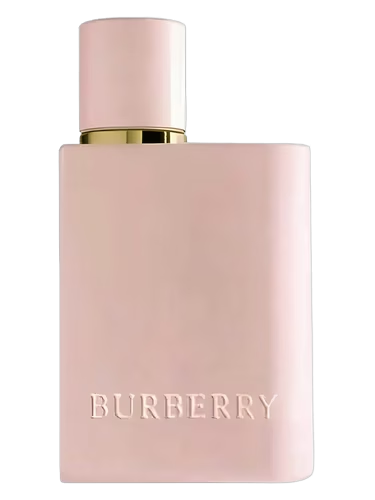
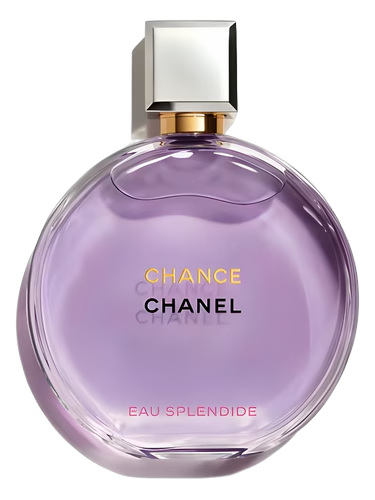
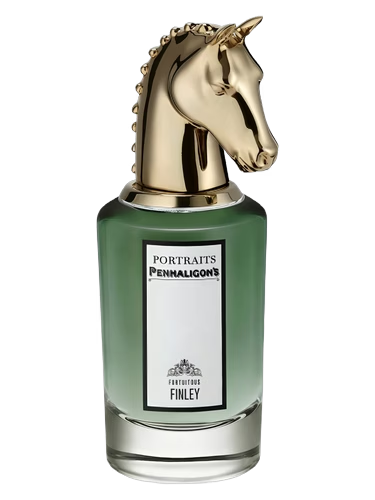
Most Popular Scents Using Malva
What is Malva?
Malva, also known as Mallow, is a herbaceous plant native to Europe, North Africa, and Southwest Asia, used in perfumery as a delicate, rosy, and green floral note.What does Malva smell like?
It offers a soft, pure, and slightly powdery aroma with watery-herbaceous qualities and subtle aromatic or spicy undertones.How is Malva essence obtained?
In fine perfumery, Malva is often a fantasy note, but it can be extracted through distillation or solvent extraction of its aerial parts like flowers and leaves.What are some top perfumes featuring Malva?
Notable fragrances that incorporate Malva or similar mallow notes include Helan Malva, Ativos Naturais Aloe Vera e Malva, and AlArabi mankhar Malva.When is Malva in season?
Malva has a long blooming period typically spanning from early summer through early autumn, beginning in June and lasting until the first frost.