Fragrance Notes Are Layers Of Scent That Are Layered To Form The Final Fragrance. Fragrance Notes Are Categorised Into Three Main Elements Based On How Long They Take To Evaporate, And How Long They Typically Last Following Application: Top Notes, Heart Notes And Base Notes.
Mahonial
Mahonial is a Givaudan molecule used to replace floral components like Lyral and Lilial. It offers a bright, gentle, and highly diffusive floral aroma, often associated with lily of the valley or muguet. It provides a clean, luminous, and slightly sweet watery freshness, adding lift and transparency to floral compositions.

Origin & Extraction Of Mahonial
Mahonial is a key modern perfumery molecule developed by Givaudan. Its history is tied directly to the evolution of synthetic floral notes, specifically as a replacement for older, restricted aroma chemicals like Lyral and Lilial, which were essential for creating the scent of lily of the valley (muguet). Mahonial's development allowed perfumers to maintain the clean, bright, and highly diffusive fresh floral effect characteristic of muguet and other white florals, ensuring regulatory compliance without sacrificing performance or luminosity in their compositions.
Unlike natural citrus or floral oils with histories stretching back centuries, Mahonial’s relevance is entirely contemporary, emerging in the late 20th and early 21st centuries. It is now a crucial ingredient for crafting modern, transparent, and long-lasting floral bouquets. Its capacity to add a watery freshness, lift, and significant projection has cemented its use across both high-end designer fragrances and niche creations, often serving as a floral booster in fresh, aquatic, and "clean" categories.
Extraction Methods of Mahonial
As a synthetic aroma chemical, Mahonial is not extracted from botanical sources but is produced through chemical synthesis. Historically, the development of muguet (lily-of-the-valley) notes relied on aldehydes like hydroxycitronellal, first introduced in 1905, to replicate the scent of flowers that cannot be effectively processed through traditional means like steam distillation or solvent extraction. Modern perfumery utilizes advanced organic synthesis to create stable, high-performance molecules like Mahonial, which offers a fresh, green, and watery lily-of-the-valley profile.
While natural extracts often utilize methods such as CO2 extraction or molecular distillation to preserve delicate compounds, synthetic ingredients like Mahonial are manufactured in laboratory settings to ensure purity and olfactory consistency. Recent advancements in fragrance chemistry focus on sustainable "green chemistry" practices, developing biodegradable captives that provide long-lasting effects and high substantivity on various substrates without the environmental impact of traditional nitro-musks or older synthetic bases.
Mahonial, as a modern, high-performance Givaudan molecule, is widely utilized across contemporary perfumery, especially in compositions requiring a clean, luminous, and expansive muguet (lily of the valley) or fresh white floral heart. Its diffusive quality is crucial for creating fragrances that have significant projection and longevity. Because Mahonial replaces older, restricted molecules like Lyral and Lilial, it is a key component in refreshing classic floral structures and ensuring regulatory compliance while maintaining the desired bright, airy effect.
- Acqua di Gioia by Giorgio Armani
- Invictus by Paco Rabanne
- Oud Satin Mood by Maison Francis Kurkdjian
The primary function of Mahonial in a formula is to add a sheer, watery freshness and lift to the floral composition. This makes it particularly popular in modern feminine florals and "fresh" masculine fragrances, where a clean, slightly sweet, and highly radiant note is necessary to mimic the natural scent of blooming white flowers without any heavy or indolic undertones. It acts as a floral booster, providing transparency and sparkle from the top notes right through to the base.
In addition to traditional floral bouquets, Mahonial is also employed in niche and designer fragrances to enhance aquatic and clean accords. Its ability to convey a sense of 'luminous freshness' is leveraged when creating abstract floral notes or enhancing synthetic reconstructions of complex natural scents. This adaptability has cemented Mahonial's status as a key ingredient in the perfumer's palette for achieving contemporary clean and radiant effects.
- As a synthetic floral molecule replicating the scent of lily of the valley, Mahonial is often associated with the freshness of spring and the transition from winter to renewal
- The ingredient is highly versatile for year-round use due to its chemical stability and consistent purity, which avoids the seasonal variability of natural floral extracts
- Its clean and transparent profile makes it a popular choice for light, airy spring and summer compositions, often paired with citrus or green notes to enhance a sense of natural crispness
- Mahonial also features prominently in heavier, warm-weather scents like gourmands and orientals, where it provides a persistent floral heart that lasts through autumn and winter
- In perfumes designed for cooler seasons, it is frequently used to soften the edges of woody or musky base notes, adding a delicate veil of floral elegance that remains vibrant on the skin during cold weather
Sustainability Of Mahonial
Sustainability of Mahonial
- Serving as a sustainable synthetic alternative to Lily of the Valley, a flower that cannot be naturally extracted for commercial use due to low oil yields and the inefficiency of steam distillation
- Reducing the environmental footprint of fragrance production by providing a stable, high-performance captive molecule that replaces the need for resource-intensive natural floral harvesting
- Offering a safe and compliant replacement for restricted muguet aldehydes like Lilial and Lyral, which have been flagged for skin-sensitizing potential and environmental safety concerns
- Harnessing advanced green chemistry and innovation to create high-purity molecules that ensure olfactory consistency and quality control without the variability of natural crops
- Contributing to the preservation of biodiversity by decreasing the demand for wild-harvested botanicals through the use of laboratory-developed signature ingredients
Trivia
Mahonial was specifically engineered by Givaudan as a safe, synthetic alternative to replace Lilial, a long-standing floral staple that was banned in the EU in 2022 due to health concerns.
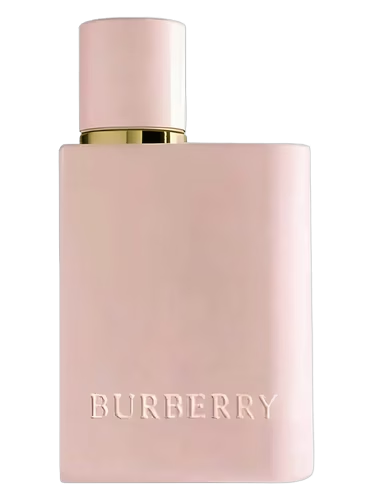
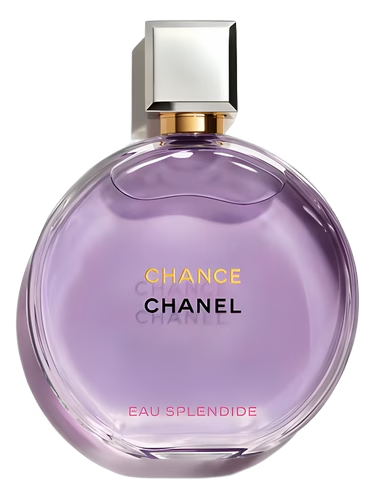
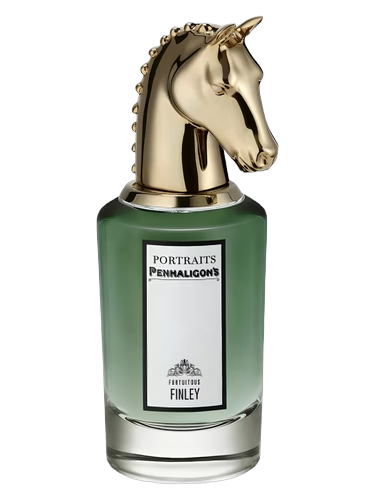
Most Popular Scents Using Mahonial
What is Mahonial?
Mahonial is a modern synthetic molecule developed by Givaudan as a clean, luminous replacement for restricted floral ingredients like Lilial and Lyral.What does Mahonial smell like?
It offers a bright, diffusive floral aroma primarily associated with lily of the valley (muguet), featuring watery freshness, green nuances, and soft magnolia facets.Why is Mahonial used in perfumery?
It is used as a high-performance floral booster to add lift, transparency, and significant projection to compositions without the heavy or indolic undertones of some natural florals.How is Mahonial produced?
As a synthetic aroma chemical, it is manufactured through advanced organic synthesis in laboratory settings rather than being extracted from botanical sources.What are some top perfumes featuring Mahonial?
Notable fragrances include Giorgio Armani Acqua di Gioia, Paco Rabanne Invictus, Maison Francis Kurkdjian Oud Satin Mood, and Versace Pour Femme Dylan Purple.