Fragrance Notes Are Layers Of Scent That Are Layered To Form The Final Fragrance. Fragrance Notes Are Categorised Into Three Main Elements Based On How Long They Take To Evaporate, And How Long They Typically Last Following Application: Top Notes, Heart Notes And Base Notes.
Magnolia Brooklynensis
A fantasy floral note, Magnolia Brooklynensis typically conveys a bright, complex, and luminous white floral scent. It blends the creamy, lemon-tinged facets of traditional magnolia with green, slightly aquatic, and sometimes spicy nuances, offering an elegant, modern, and highly sophisticated freshness.

Origin & Extraction Of Magnolia Brooklynensis
Magnolia Brooklynensis, a cultivar hybrid (often referred to as 'Magnolia Elizabeth' or similar pale-yellow flowering magnolias), is primarily a fantasy note in perfumery, meaning it is typically an accord created synthetically rather than extracted directly from the flower. Unlike foundational floral notes that have centuries of history, this note is a modern invention. Its creation reflects a contemporary trend in perfumery, which seeks luminous, complex, and highly refined white florals that are brighter and less indolic or creamy than traditional Magnolia grandiflorum notes.
The relevance of Magnolia Brooklynensis to modern perfumery lies in its ability to offer an elegant and sophisticated freshness. By blending the inherent creamy, lemon-tinged facets of magnolia with green and slightly aquatic nuances, perfumers utilize this accord to provide a sparkling, uplifting floral heart. Its popularity has grown in the late 20th and early 21st centuries, particularly among niche and designer houses aiming to convey a naturalistic, dewy, and long-lasting freshness in their floral compositions.
Extraction Methods of Magnolia Brooklynensis
Historically, aromatic compounds from Magnolia species were obtained through traditional methods such as enfleurage, where delicate blossoms were placed on layers of fat to absorb their scent, or simple maceration in oils. In traditional medicine, the bark and leaves were often processed using decoction or simple solvent extraction with alcohol or honey to capture bioactive lignans like magnolol and honokiol. Early distillation techniques involving steam were also used to produce hydrosols and essential oils, though these required careful temperature control to avoid damaging the fragile floral notes.
Modern extraction for perfumery and pharmaceutical applications utilizes advanced technologies to ensure higher purity and yield. Steam distillation remains a standard for producing essential oils and hydrosols, often involving reduced pressure to lower boiling points and preserve the flower's delicate chemical profile. Recent developments include supercritical CO2 extraction, which uses pressurized carbon dioxide as a solvent to capture a more complete and authentic scent profile without heat degradation. Additionally, specialized chemical processes such as mechanochemical reaction technology and high-speed counter-current chromatography (HSCCC) are now employed to isolate specific high-purity compounds for medicinal use.
Magnolia Brooklynensis, often utilized as a sophisticated fantasy note in modern perfumery, provides a luminous and complex white floral structure that moves beyond traditional magnolia. While a specific list of "famous" vintage perfumes is difficult to compile due to its status as a more recent, refined accord, this note is increasingly appearing in high-end niche and contemporary designer compositions looking to capture a bright, slightly green, and highly elegant freshness.
- This note is generally used to impart a sparkling, watery quality to the floral heart, differentiating it from the heavier, more creamy facets of grandiflorum magnolia.
Fragrances that showcase a similar bright, green, and slightly aquatic magnolia profile, which aligns with the description of Magnolia Brooklynensis, include modern interpretations of fresh florals. Examples include works by houses known for their innovative floral compositions, where the note contributes to a feeling of morning dew and vibrant nature. This allows perfumers to create a sophisticated floral signature that is both refreshing and long-lasting.
- The note is particularly valued for its subtle spicy and lemon-tinged undertones, which give the floral accord lift and complexity, preventing it from becoming too simple or sweet.
For those seeking compositions that capture this elegant, modern magnolia essence, look toward lines that specialize in highly naturalistic or photorealistic florals. While "Magnolia Brooklynensis" itself is proprietary or a specific accord, its character can be found in contemporary successes such as certain releases from **Jo Malone** or **Acqua di Parma**, which champion bright, refined citrus-floral blends where a luminous magnolia note serves as the backbone.
Sustainability Of Magnolia Brooklynensis
Sustainability of Magnolia brooklynensis
- Promoting biodiversity through the development of hardy interspecific hybrids that combine the strengths of North American and Asian species
- Improving urban environmental health by utilizing pollution-tolerant species as sustainable replacements for invasive trees in city landscapes
- Enhancing ecological resilience by selecting later-blooming varieties that naturally avoid frost damage, reducing the need for intensive protective interventions
- Supporting long-term conservation through active propagation and maintenance of historic breeding lines within botanical arboretums
- Utilizing low-maintenance deciduous trees that serve as natural shade sources and provide habitats for birds and pollinators in urban ecosystems
Trivia
Developed at the Brooklyn Botanic Garden in the 1950s to create the world's first yellow-flowered varieties, this hybrid is a rare "East meets West" cross between a North American cucumber tree and a Chinese mulan magnolia.
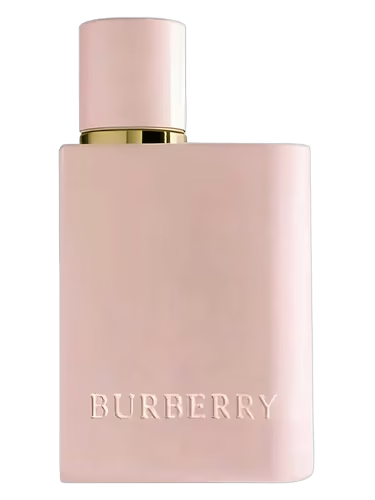
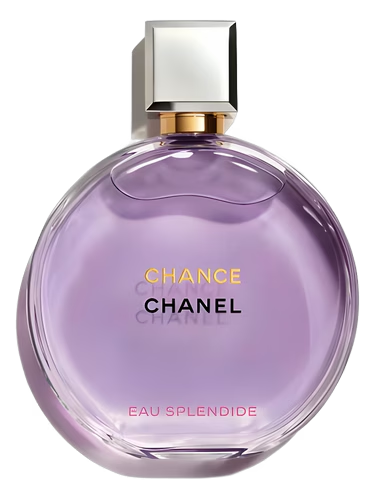
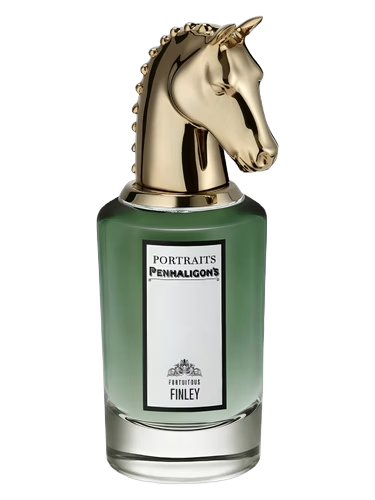
Most Popular Scents Using Magnolia Brooklynensis
What is Magnolia Brooklynensis?
Magnolia Brooklynensis is a modern fantasy floral note in perfumery, typically created as a synthetic accord to mimic the scent of specific yellow-flowered hybrid magnolias developed at the Brooklyn Botanic Garden.What does Magnolia Brooklynensis smell like?
It offers a bright, luminous white floral scent that blends creamy, lemon-tinged facets with fresh green, slightly aquatic, and subtle spicy nuances.How does it differ from traditional magnolia notes?
Unlike traditional Magnolia grandiflora, which can be heavy or indolic, Magnolia Brooklynensis is prized for its sophisticated freshness, transparency, and dewy, naturalistic character.How is the essence of Magnolia Brooklynensis captured?
While the fragrance note is often a synthetic recreation, aromatic compounds from these hybrids can be extracted using advanced methods like steam distillation or supercritical CO2 extraction to preserve their delicate profile.What is the history of Magnolia Brooklynensis?
It is a modern invention inspired by hybrids first developed in the 1950s at the Brooklyn Botanic Garden, representing a cross between North American and Chinese magnolia species.When is Magnolia Brooklynensis in season?
The hybrid trees typically bloom in late spring, from late April through May, with flowers emerging alongside or just after new foliage.