Fragrance Notes Are Layers Of Scent That Are Layered To Form The Final Fragrance. Fragrance Notes Are Categorised Into Three Main Elements Based On How Long They Take To Evaporate, And How Long They Typically Last Following Application: Top Notes, Heart Notes And Base Notes.
Magnolia
Magnolia offers a delicate, refined floral essence that is both fresh and sweet. It possesses a unique profile, blending the clean, bright scent of springtime blooms with warm, powdery, and mildly spicy undertones. It can present a green, sometimes transparent quality, and pairs well with citrus notes for a multifaceted and uplifting aroma.

Origin & Extraction Of Magnolia
The Magnolia flower was named after the 17th-century French botanist, Pierre Magnol, though varieties such as Magnolia macrophylla and grandiflora originated in China, India, and potentially North America. Historically, the flower has been appreciated for its elegant scent; however, commercial essential oil is not typically extracted from the flower for large-scale perfumery. Instead, its use in fragrance has largely relied on synthetic compounds and specialties designed to capture its unique profile, which blends clean, delicate freshness with sweet and sometimes spicy-green undertones.
Magnolia’s true relevance in modern perfumery is as a refined, multifaceted floral note. Because it is often synthesized, perfumers can precisely control its profile, allowing it to move beyond a fleeting top note. It gained popularity for lending a luminous, expansive quality to floral bouquets, often serving as an elegant alternative to heavier white florals. Its presence helps create contemporary compositions that are radiant, uplifting, and versatile, appealing particularly to fragrances that aim for a fresh, clean, or spring-like character.
Extraction Methods of Magnolia
The primary modern method for extracting magnolia essential oil is steam distillation of the fresh flowers, typically harvested in China between April and June. In this process, pressurized steam passes through the delicate petals to release volatile aromatic compounds, which are then cooled and condensed into a liquid. Because the flowers are extremely sensitive to heat and physical contact, they must be processed quickly after harvest to prevent wilting and degradation of their citrus-floral scent profile.
Historically, the extraction of magnolia scent relied on traditional labor-intensive techniques such as enfleurage and simple maceration. In enfleurage, fresh blossoms were pressed into a layer of odorless fat (pomade) to absorb the fragrance, a process repeated many times with fresh flowers until the fat was saturated. Modern innovations have introduced supercritical carbon dioxide (CO2) extraction, which uses pressurized CO2 at low temperatures to produce a highly pure extract that remains free of solvent residue and preserves thermally unstable components better than traditional steam distillation.
Magnolia is a beloved note in perfumery, celebrated for its unique blend of clean freshness and creamy sweetness, often lending a luminous quality to compositions. Its versatility allows it to be showcased in various fragrance genres, from airy florals to richer, white floral bouquets. A prime example of Magnolia’s elegance is found in the classic Dior J'adore. While known for its opulent floral blend, Magnolia contributes a delicate, expansive freshness to the heart, preventing the composition from becoming overly heavy and giving it its signature radiant lift.
In contemporary perfumery, Magnolia is frequently used to evoke the scent of springtime or tropical warmth. The note plays a central role in fragrances that aim for a photorealistic or transparent floral effect. A modern icon is Gucci Flora Gorgeous Gardenia, where the Magnolia note is prominent, complementing the gardenia to create a sweet, vibrant, and incredibly lush white floral impression. This approach leverages the note's bright, green undertones, making the scent feel youthful, sparkling, and instantly uplifting.
Magnolia also finds its place in sophisticated niche and designer offerings, where it often pairs with woody or musky bases to add depth and longevity. For instance, in Hermès Eau de Magnolia, the note is presented in a much purer, cleaner form, stripped down to highlight its zesty, green, and slightly lemony facets. This composition focuses on the airy, transparent nature of the flower, offering a refined, minimalist interpretation that appeals to those seeking a delicate yet enduring floral scent.
Sustainability Of Magnolia
Sustainability of Magnolia
- Conservation and restoration of endangered and endemic species through dedicated fieldwork, identification, and monitoring in nature reserves
- Partnership with private landowners to develop conservation projects and mitigation banks that restore and protect critical ecosystems
- Implementing sustainable extraction methodologies, such as harvesting flowers via cable car systems, to ensure minimal impact on the plant and its habitat
- Establishment of community-managed nurseries and training programs to refine germination techniques and promote local forest regeneration
- Promoting circular nature-based solutions by upcycling botanicals into sustainable fragrance products and amenities to fund research and protection efforts
- Replacement of invasive species with non-invasive magnolia hybrids in urban landscapes to enhance biodiversity and prevent the spread of diseases
- Utilization of minimally invasive propagation techniques to preserve the genetic lineage of historical and culturally significant cultivars
- Integration of environmental education and community awareness programs to highlight the ecological importance of magnolias in carbon sequestration and water cycle regulation
Trivia
Magnolias are some of the most ancient flowering plants on Earth, with fossils dating back 95 million years; because they evolved before bees existed, they are biologically designed to be pollinated by beetles.
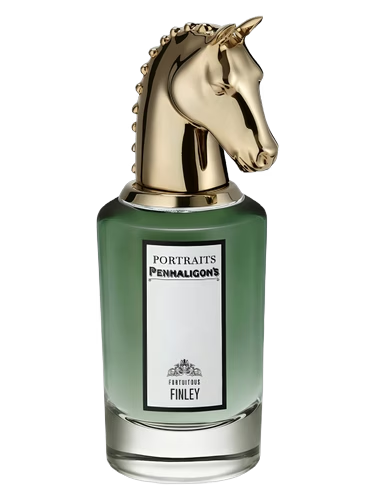
Most Popular Scents Using Magnolia


What is Magnolia?
Magnolia is a delicate floral note derived from one of the world's most ancient flowering plants, named after the French botanist Pierre Magnol and prized for its elegant, springtime aroma.What does Magnolia smell like?
It features a fresh, creamy, and sweet floral scent with distinctive lemony facets, light green undertones, and a soft, powdery finish.How is Magnolia essence extracted?
While often recreated synthetically for precision, natural essence is primarily obtained through steam distillation of fresh flowers or via supercritical CO2 extraction to preserve its delicate citrus-floral profile.What are some top perfumes featuring Magnolia?
Iconic fragrances highlighting this note include Dior J'adore, Gucci Flora Gorgeous Magnolia, Frédéric Malle Eau de Magnolia, and Acqua di Parma Magnolia Nobile.When is Magnolia in season?
Blooming periods vary by species, with deciduous varieties flowering from late winter through spring (February to April) and evergreen varieties peaking in late spring and summer (May to August).