Fragrance Notes Are Layers Of Scent That Are Layered To Form The Final Fragrance. Fragrance Notes Are Categorised Into Three Main Elements Based On How Long They Take To Evaporate, And How Long They Typically Last Following Application: Top Notes, Heart Notes And Base Notes.
Lysylang
Lysylang is a refined, fruity-floral scent that modernizes classic ylang-ylang. It presents a pure bouquet of white exotic flowers, including jasmine and frangipani, with delicate spicy lily nuances. The profile features a tropical, sunlit warmth, a silky floral water topnote, and a creamy gourmand coconut milk undertone.

Origin & Extraction Of Lysylang
Lysylang represents a significant, modern development in floral perfumery, specifically engineered as a refined and purified alternative to Ylang-Ylang oil. Traditional Ylang-Ylang essential oil is famous for its rich, heavy, and sometimes narcotic or animalic facets. Lysylang was created to preserve the desirable tropical, creamy, and exotic floral warmth of Ylang-Ylang while eliminating the heavier, more volatile, or narcotic notes, resulting in a cleaner, brighter, and more versatile fruity-floral profile. This development allows modern perfumers to use a powerful white floral note with greater precision and freshness.
Because of its sophisticated and contemporary nature, Lysylang is used primarily in modern fine fragrances, particularly within the solar floral and gourmand categories. Unlike natural Ylang-Ylang, which has centuries of history, Lysylang’s introduction is tied to the late 20th and early 21st century when chemists and perfumers sought to create long-lasting, bright floral accords. Its unique ability to bridge pure white florals (like jasmine and frangipani) with creamy, gourmand nuances, such as coconut milk, has made it invaluable for creating luminous, sunlit, and silky compositions that appeal to contemporary tastes.
Lysylang, a fractionated essence derived from ylang-ylang (Cananga odorata), is primarily obtained through steam distillation. Historically, ylang-ylang oil has been extracted using traditional steam or hydrodistillation, a process where fresh flowers are heated in water or exposed to pressurized steam to vaporize volatile aromatic compounds. This method is famous for its fractionation, where the oil is collected at different stages to produce grades such as Extra, I, II, III, and Complete. Modern industrial distillation plants utilize automated control systems and corrosion-resistant stills to optimize this process, often yielding the "Super Extra" grade used in luxury perfumery.
Recent technological advancements have introduced more efficient and sustainable methods, such as Supercritical Fluid Extraction (SFE) using carbon dioxide, which operates at lower temperatures to preserve delicate, heat-sensitive molecules. Other innovative techniques include Microwave-Assisted Hydrodistillation (MHD) and Solvent-Free Microwave Extraction (SFME), which significantly reduce extraction time and energy consumption while maintaining high olfactory quality. Additionally, molecular distillation is used to create specific fractions like Lysylang, allowing perfumers to isolate the light, floral characteristics of the "Extra" grade character with high precision and purity.
Lysylang, a modern, refined interpretation of Ylang-Ylang, is valued for its pure, fruity-floral profile that avoids the heavy or overly narcotic facets of the classic ingredient. Its introduction allows perfumers to incorporate exotic white florals, like jasmine and frangipani, with a tropical, creamy warmth, often leading to fragrances that feel sunlit, silky, and contemporary. This synthetic advance has made it an ideal choice for high-end modern florals and gourmand compositions seeking a bright, non-indolic floral core.
- The note is prominently featured in **Paradiso Assoluto** by Roberto Cavalli, where it contributes to the heart of the fragrance, blending its exotic floralcy with rich vanilla and creamy sandalwood to create a sophisticated, solar bouquet.
- Another significant use is found in **Eaudemoiselle de Givenchy Eau Florale**, where Lysylang provides a luminous and fresh floral transparency, pairing perfectly with Japanese pear and green notes to uplift the traditional rose and musk structure.
The incorporation of Lysylang often serves to modernize traditional fragrance categories, particularly the solar floral and tropical white flower genres. Because it carries that creamy gourmand coconut milk undertone mentioned in its profile, it seamlessly bridges the gap between pure florals and contemporary gourmand accords. It ensures the longevity and diffusive power of the central exotic floral theme while maintaining a sparkling, fresh quality.
Sustainability Of Lysylang
Sustainability of Lysylang
- Utilizing precision fractionation of natural ylang-ylang oil to select specific aromatic molecules, maximizing the efficiency of raw material use
- Supporting a circular economy by transforming traditional ylang-ylang distillates into high-value, specialized fragrance components
- Reducing the environmental footprint of cultivation through the development of highly substantive molecules that provide long-lasting scent with lower dosage requirements
- Implementing responsible sourcing practices for ylang-ylang flowers in the Indian Ocean to protect local ecosystems and ensure ethical labor conditions
- Leveraging green chemistry principles by Robertet to create clean, pure aromatic fractions that serve as natural alternatives to traditional synthetic musks
Trivia
Lysylang is not a single botanical extract but a high-tech fraction of ylang-ylang oil, specifically engineered to strip away the heavy, medicinal "rubber" facets of the flower to leave behind a luminous, creamy, and sun-drenched "solar" aroma.
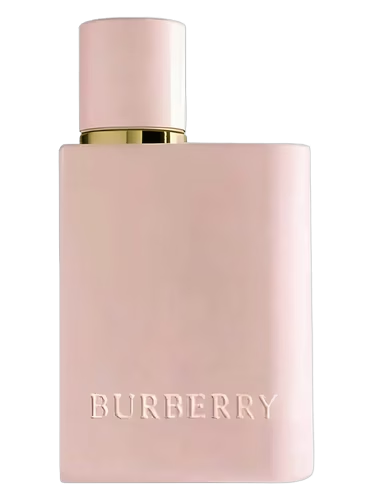
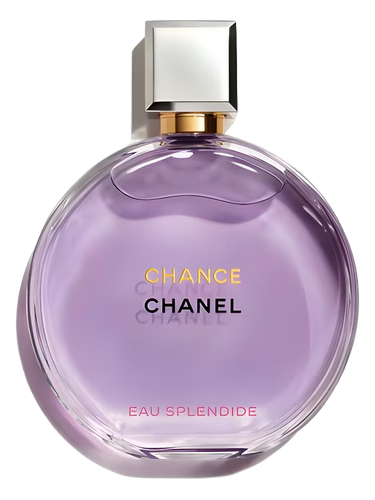
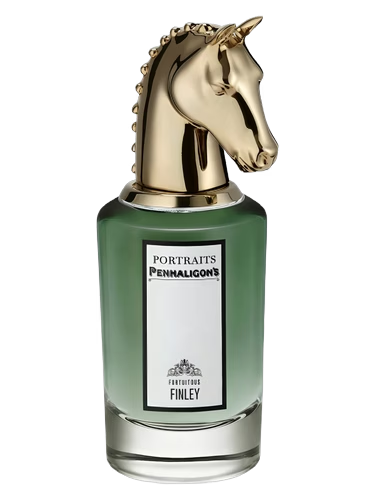
Most Popular Scents Using Lysylang
What is Lysylang?
Lysylang is a refined, high-tech fraction of ylang-ylang essential oil, specifically engineered by Robertet to capture the flower's luminous and solar qualities while removing its heavier, medicinal facets.What does Lysylang smell like?
It features a pure white floral bouquet with notes of jasmine, frangipani, and spicy lily, rounded out by a tropical, creamy gourmand coconut milk undertone.How is Lysylang different from traditional ylang-ylang?
Unlike standard ylang-ylang, which can be heavy and narcotic, Lysylang is cleaner, brighter, and more transparent, making it easier for perfumers to dose in modern compositions.How is Lysylang essence extracted?
It is obtained through the precision fractionation and molecular distillation of ylang-ylang oil, typically sourced from flowers in the Comoros.What are some top perfumes featuring Lysylang?
Notable fragrances include Roberto Cavalli Paradiso Assoluto, Givenchy Eaudemoiselle de Givenchy Eau Florale, and Polo Earth Antilles Vetiver.When is Lysylang in season?
While the source trees bloom year-round in tropical climates, its solar and creamy profile is most commonly associated with late spring and summer fragrance launches.