Fragrance Notes Are Layers Of Scent That Are Layered To Form The Final Fragrance. Fragrance Notes Are Categorised Into Three Main Elements Based On How Long They Take To Evaporate, And How Long They Typically Last Following Application: Top Notes, Heart Notes And Base Notes.
Lucuma
Lucuma offers a unique, complex aroma blending sweet, creamy, and succulent notes reminiscent of caramel and butterscotch with tropical fruitiness. It often features nuances of maple and pumpkin, lending a rich, velvety gourmand texture and depth to fragrance compositions, along with subtle earthy or powdery undertones.

Origin & Extraction Of Lucuma
Lucuma, derived from the fruit of the Pouteria lucuma tree native to the Andean valleys of Peru, has an ancient history as a food source, dating back to 200 A.D. with the Moche people. However, its use as a distinct note in fine perfumery is a modern development. Given its unique aroma profile—often described as a blend of sweet caramel, butterscotch, and tropical fruit with nuances of maple and pumpkin—it belongs firmly in the contemporary gourmand fragrance family.
Because Lucuma does not produce a traditional essential oil, the note is typically created using synthetic accords that capture its rich, velvety, and complex gourmand facets. It is valued by modern perfumers for lending a sophisticated, creamy, and exotic depth, offering a warm texture distinct from more common vanilla or caramel notes, and is primarily found in niche and avant-garde compositions rather than classical perfumery.
Extraction Methods of Lucuma
Historically, the extraction of lucuma compounds and oils relied on traditional manual and mechanical methods. For dietary use, the pulp is typically dehydrated and ground into a fine powder. To obtain the oil, historically known for its healing properties, lucuma nuts were dried, ground, and subjected to simple fluid extraction or mechanical pressing to capture the bioactive lipids. Traditional solvent extraction using hexane or heptane has also been a standard practice for isolating the oily fraction from the seeds and skins.
Modern commercial and scientific extraction has evolved toward more efficient and sustainable techniques. Supercritical fluid extraction (SFE) using CO2 is now utilized to obtain high-quality lucuma seed oil without the environmental impact of organic solvents. Additionally, advanced "green" chemistry methods, such as ultrasound-assisted extraction (UAE) and the use of natural deep eutectic solvents (NADES), are employed to isolate polyphenols and antioxidants. For analytical purity, high-resolution techniques like HR-LC-ESI-Orbitrap-MS are used to profile the fruit's metabolites, ensuring the preservation of its medicinal and nutritional integrity.
Lucuma is a distinctly modern and exotic gourmand note, prized for its unique aroma blending caramel, butterscotch, and tropical fruitiness. Since it is often created as a synthetic accord to capture its creamy, velvety texture, it is predominantly showcased in contemporary niche perfumery rather than classical compositions. This note serves to provide a sophisticated, warm depth and an exotic twist on traditional sweet fragrances.
- Guille Scent Lover, a house specializing in avant-garde compositions, has notably utilized Lucuma extensively across its lines, cementing the note's place in modern gourmand fragrance.
The brand's dedication to highlighting this Peruvian fruit is evident in its specialized releases. Fragrances such as the bright and daring Lucum Sour Extreme (2022) focus on integrating the note's complex fruitiness with energetic accords, while Lucum Royal Gourmand (2024) likely emphasizes its rich, buttery caramel facets. These examples demonstrate how Lucuma's profile can be manipulated to achieve different effects, from intensely sweet to elegantly balanced, setting a benchmark for its use in the high-end market.
- Further explorations into the note's versatility can be seen in upcoming releases like Lucum Luxury Oud (2024) and Lucum Exclusif Leather (2025), where Lucuma is paired with heavy base notes.
By blending the creamy, tropical sweetness of Lucuma with complex materials like oud and leather, perfumers create innovative contrasts, bridging the initial comforting gourmand sweetness with deep, enduring textures. This demonstrates Lucuma's potential to add an exotic, nuanced richness, ensuring it remains a sought-after ingredient for sophisticated fragrances designed for warmth, depth, and a memorable signature.
Sustainability Of Lucuma
Sustainability of Lucuma
- Supporting small-scale farmers and rural communities in the Andean region by providing a valuable source of income and preserving traditional agricultural practices
- Promoting biodiversity and soil health through the use of agroforestry systems that integrate trees with other crops and wildlife habitats
- Utilizing drought-tolerant trees that require minimal water and fewer pesticides, making them suitable for cultivation in sub-optimal or arid conditions
- Contributing to climate change mitigation through carbon sequestration and preventing soil erosion with deep-rooted tree systems
- Advancing a circular economy by repurposing fruit by-products, such as seeds and skins, as raw materials for the pharmaceutical and skincare industries
- Implementing clean production technologies, such as hybrid solar dehydration, to reduce energy consumption and lower production costs
Trivia
Known as the "Gold of the Incas," lucuma is also nicknamed "eggfruit" because its dry, starchy yellow-orange flesh has the unique texture of a hard-boiled egg yolk.
Most Popular Scents Using Lucuma
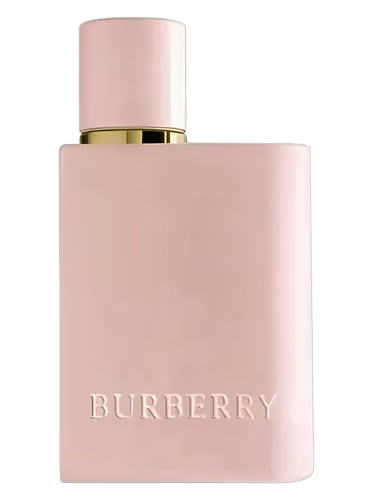
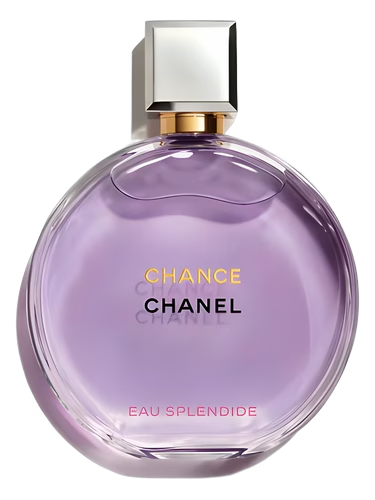
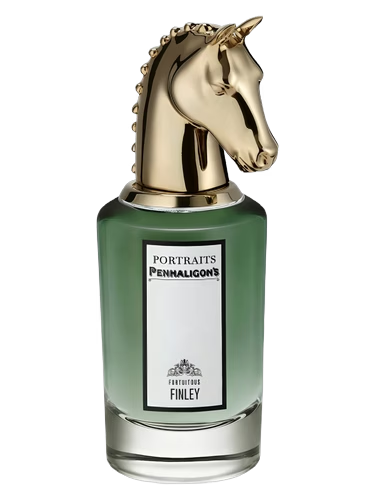
What is Lucuma?
Lucuma is a subtropical fruit native to the Andean valleys of Peru, Chile, and Ecuador, known as the Gold of the Incas and prized in modern perfumery as an exotic gourmand note.What does Lucuma smell like?
It offers a unique, creamy aroma that blends sweet caramel and butterscotch with tropical fruitiness, often featuring nuances of maple and pumpkin.How is Lucuma essence extracted for perfumes?
Since it does not produce a traditional essential oil, the note is typically created using synthetic accords or captured through advanced methods like supercritical CO2 extraction of the seed oil.What are some top perfumes featuring Lucuma?
The note is prominently featured in niche fragrances such as Inthiq Perfumes Lucum Sour Extreme, Lucum Luxury Oud, Lucum Royal Gourmand, and Lucum Exclusif Leather.When is Lucuma in season?
The evergreen tree can bear fruit year-round in its native habitat; however, the primary harvest typically occurs from October to March in Peru and from June to November in Chile.