Fragrance Notes Are Layers Of Scent That Are Layered To Form The Final Fragrance. Fragrance Notes Are Categorised Into Three Main Elements Based On How Long They Take To Evaporate, And How Long They Typically Last Following Application: Top Notes, Heart Notes And Base Notes.
Lotus Seed
Lotus Seed offers a delicate, aqueous, and slightly sweet aroma in perfumery, evoking the fresh, clean scent of the aquatic flower with subtle nutty and starchy undertones. It imparts a luminous, serene, and almost milky softness, often used to lend a tranquil transparency and refined texture to watery floral and oriental compositions.

Origin & Extraction Of Lotus Seed
The use of Lotus Seed in perfumery is primarily modern, capitalizing on the broader appreciation for aquatic and transparent floral notes that became popular in the late 20th and early 21st centuries. While the Lotus flower itself has profound ancient symbolism in various Asian cultures—representing purity, serenity, and resurrection—the specific scent profile derived from the seed (which is delicate, subtly nutty, and starchy) is not rooted in classical Western perfumery traditions like those associated with essential oils such as Bergamot or Rose.
Perfumers use the Lotus Seed note, often synthesized as an accord, to impart a luminous, serene, and milky softness to compositions. It functions to soften sharper aquatic notes or to introduce a tranquil, refined texture to light floral and oriental fragrances, lending a sense of weightless clarity and clean freshness. Its modern application focuses on creating sophisticated, contemplative scents that evoke an element of natural freshness and refined subtlety.
Extraction Methods of Lotus Seed
Historically, the aromatic essence of lotus seeds was captured through traditional methods such as steam distillation and solvent extraction. These processes involve collecting the seeds at peak ripeness and processing them to preserve the delicate, nutty, and slightly earthy nuances integral to their olfactory profile. In some artisanal contexts, maceration in alcohol or oils was also used to extract the subtle fragrance of the seeds for use in traditional medicines and early perfumery.
In modern perfumery and aromatherapy, advanced techniques such as supercritical CO2 extraction are increasingly utilized to obtain high-quality blue lotus seed oil. This method uses CO2 gas under high pressure to act as a solvent, resulting in a pure, organic extract that captures a fuller spectrum of aromatic compounds—including spicy and inky notes—without the use of harsh chemicals. While these physical extractions exist, lotus seed is also frequently recreated as a "fantasy accord" in commercial fragrance, using a blend of watery, green, and nutty synthetic notes to mimic its calming and grounding scent profile.
While Lotus Seed is a relatively modern and niche note in perfumery, the broader Lotus and Lotus Flower accords are celebrated for imparting an aquatic, serene, and clean freshness to compositions. These notes are particularly popular in fragrances aiming for a watery, transparent, or meditative effect. An iconic fragrance utilizing the related water floral note is HERMÈS Un Jardin sur le Nil Eau de Toilette, where the lotus/aquatic elements combine with green mango and grapefruit to create a vibrant, fresh garden scent.
- Jo Malone London Fig & Lotus Flower Cologne uses the Lotus Flower to add a delicate, aqueous sweetness and luminosity, balancing the earthy greenness of the fig.
Modern perfumery increasingly uses these notes in sophisticated, naturalistic scents. The delicate, slightly sweet, and clean profile of Lotus notes—like the one found in Lotus Seed—lends itself well to contemporary, light-wearing Eau de Parfums and Eaux de Cologne. For example, The 7 Virtues Lotus Pear Eau de Parfum showcases this clean quality, likely using the lotus accord to provide a fresh backdrop for the sweet fruit notes.
Fragrances featuring the Lotus note, or its seed/flower variations, are often chosen for their tranquil, serene quality. They provide a sense of weightless clarity and are instrumental in aquatic floral and light oriental compositions, offering a softer, more refined alternative to sharper citrus top notes. This emphasis on subtle sweetness and transparency, as seen in many contemporary releases, ensures these notes remain highly valued for creating sophisticated, contemplative scents.
Sustainability Of Lotus Seed
Sustainability of Lotus Seed
- Promoting ecological health through biofiltration, as lotus plants play a crucial role in water purification and the restoration of aquatic habitats
- Supporting microbial biodiversity within the aquatic rhizobiome, fostering eco-friendly relationships between microbes and plant roots
- Advancing a zero-waste circular economy by utilizing every part of the plant, including the production of sustainable "Lotus Silk" nano-fibers from stems
- Enhancing climate resilience through local adaptation practices, such as cultivating lotus on raised beds in flood-prone regions to ensure food security and income
- Encouraging sustainable agriculture and genetic research to improve seed longevity and the development of functional food industries
- Implementing organic and ecologically based horticulture programs that eliminate synthetic pesticides and fertilizers to protect beneficial organisms
Trivia
Lotus seeds are regarded as a symbol of longevity in Chinese culture because they can remain viable for over a millennium, with the oldest recorded germination occurring from a seed that was approximately 1,300 years old.
Most Popular Scents Using Lotus Seed
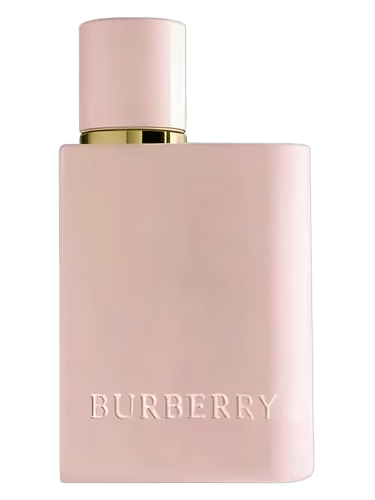
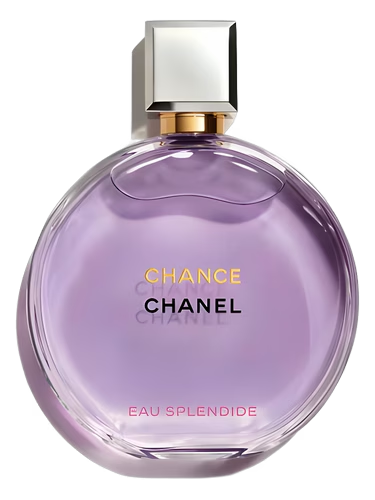
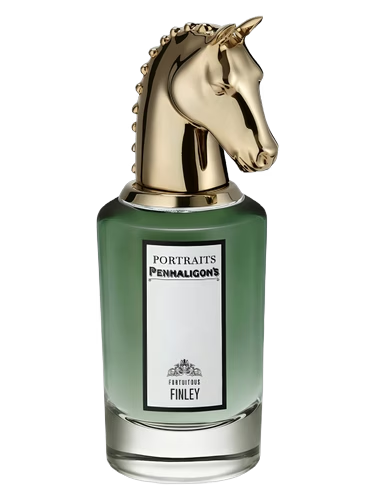
What is Lotus Seed?
Lotus Seed is a fragrance note derived from the seeds of the sacred lotus plant, Nelumbo nucifera, known for its calming and grounding qualities in modern perfumery.What does Lotus Seed smell like?
It offers a delicate, aqueous, and slightly sweet aroma with subtle nutty and starchy undertones, providing a serene and milky softness to scents.How is Lotus Seed essence extracted?
While historically obtained via steam distillation or solvent extraction, it is often recreated as a fantasy accord in modern perfumery or extracted using advanced supercritical CO2 methods.What are some top perfumes featuring Lotus Seed?
Popular fragrances include Jo Malone London Fig & Lotus Flower, Hermès Un Jardin Sur Le Nil, and The 7 Virtues Lotus Pear.When is Lotus Seed in season?
The seeds are typically harvested from late summer into early autumn, following the peak blooming period of the lotus flower in July and August.