Fragrance Notes Are Layers Of Scent That Are Layered To Form The Final Fragrance. Fragrance Notes Are Categorised Into Three Main Elements Based On How Long They Take To Evaporate, And How Long They Typically Last Following Application: Top Notes, Heart Notes And Base Notes.
Lotus
Lotus offers a light, airy, and soft aquatic floral note. It delivers a serene watery freshness to fragrances, often unfolding in the heart. This luminous scent provides a clean, ethereal, and slightly dewy effect, adding sophistication and transparency, like a flower floating on water.

Origin & Extraction Of Lotus
The Lotus flower, particularly the Sacred Lotus (Nelumbo nucifera) and the Egyptian Blue Water Lily (Nymphaea caerulea), holds profound cultural and religious significance across Asia, India, and ancient Egypt, symbolizing purity, rebirth, and tranquility. While traditional perfumery relied heavily on European florals, the use of the Lotus note in fine fragrance is a relatively modern development, gaining prominence with the rise of the "aquatic" and "sheer floral" fragrance categories in the late 20th century. Before this, the plant's use in fragrant preparations was primarily for spiritual ceremonies and traditional medicine rather than complex scent compositions.
The note truly entered the mainstream perfumery palette as perfumers sought to capture the serene, watery, and transparent freshness of nature, moving away from heavier, richer florals. The development of synthetic materials and advanced extraction techniques allowed for the accurate rendering of the light, dewy, and slightly green-floral profile of the flower. This rendered Lotus essential for fragrances that aimed for a minimalist, clean, and airy aesthetic, making it a key component in the revolutionary aquatic scents that defined the 1990s and beyond, where it provides sophistication and a luminous transparency.
Extraction Methods of Lotus
The primary modern methods for extracting lotus essential oil are steam distillation and solvent extraction, typically using hexane or petroleum ether to produce a concrete or absolute. Because lotus flowers are delicate and contain a low yield of essential oil, solvent extraction is often preferred to capture the full aromatic profile without the risk of thermal degradation associated with high-heat processes. Recent innovations include enzymatic hydrolysis, where petals and filaments are treated with cellulase and pectinase before distillation to break down cell walls and increase oil yield by 20-30%, as well as advanced headspace extraction and supercritical CO2 techniques to capture highly volatile and water-soluble compounds.
Historically, lotus scent was captured through traditional methods such as enfleurage, which involved layering fresh blossoms over fats to absorb their fragrance, or maceration in oils and alcohols. In regions like Vietnam, lotus petals have long been used to scent tea leaves through a manual process of layering. Ancient techniques also involved simple hydro-distillation, boiling the flowers in water to create fragrant floral waters. Modern quality control now utilizes gas chromatography-mass spectrometry (GC-MS) to analyze the chemical composition and ensure the purity of the extracted oil, distinguishing between cultivated and wild-harvested samples.
The Lotus note, prized for its light, airy, and aquatic floral freshness, is a key ingredient in fragrances that seek to evoke tranquility and clean transparency. It is often employed to give a serene, watery lift, moving away from heavy traditional florals towards a more ethereal composition. This gentle scent is essential for conveying the image of a dewy, floating flower, lending sophistication and a luminous quality to the heart of a fragrance. It is especially prominent in compositions aiming for a modern, minimalist, and refreshing feel, particularly within the aquatic and sheer floral families.
- A classic example of the Lotus note's serene deployment is in the iconic **L'Eau d'Issey** by Issey Miyake, where it is instrumental in establishing the fragrance's revolutionary watery-floral signature.
- Another notable usage is in **Omnia Crystalline** by Bvlgari, where the note contributes to a luminous, crisp, and clean heart, balancing the bamboo and tea elements.
- The delicate freshness of Lotus is also central to **CK One Summer** editions, where it reinforces the refreshing, easy-going, and unisex aquatic themes.
The note has also found a significant role in contemporary niche perfumery, where its complexity—blending slight sweetness, green nuances, and wateriness—allows for unique storytelling. In these modern interpretations, the Lotus note is often paired with contrasting elements, such as sheer musks or deep woods, to anchor its lightness and extend its longevity. The result is a scent that is both clean and enduring, reflecting a sophisticated balance between nature and minimalist elegance.
Sustainability Of Lotus
Sustainability of Lotus
- Promoting the conservation of aquatic ecosystems through the cultivation of Nelumbo nucifera, which acts as a natural water purifier by absorbing excess nutrients and heavy metals
- Supporting a circular economy by upcycling all parts of the plant, including using seeds for food, leaves for biodegradable packaging, and stems for artisanal textile fibers
- Adopting organic aquaculture practices that eliminate the need for synthetic pesticides and fertilizers, protecting local groundwater and biodiversity
- Empowering rural communities through sustainable harvesting programs that provide stable seasonal income and preserve traditional botanical knowledge
- Utilizing lotus-derived ingredients as biodegradable alternatives to synthetic chemicals in the fragrance and cosmetic industries to reduce environmental toxicity
Trivia
The lotus seeds possess the remarkable ability to lie dormant for centuries before germinating, and authentic lotus absolute requires approximately 75,000 to 100,000 handpicked blossoms to produce just one kilo of oil.
Most Popular Scents Using Lotus
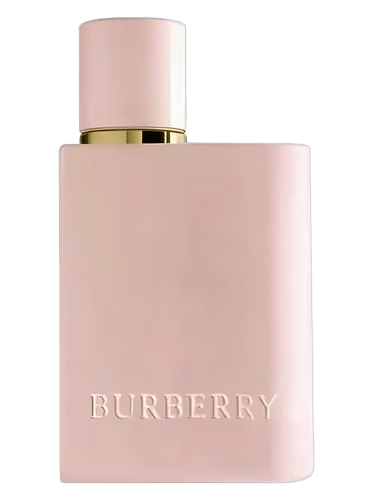
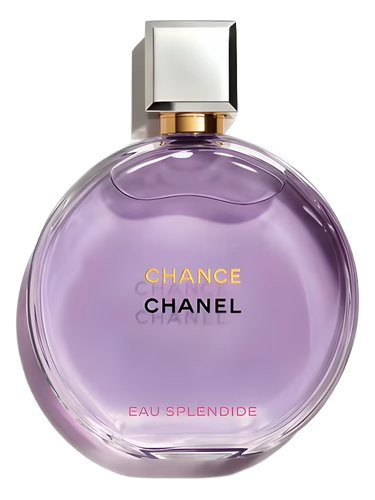
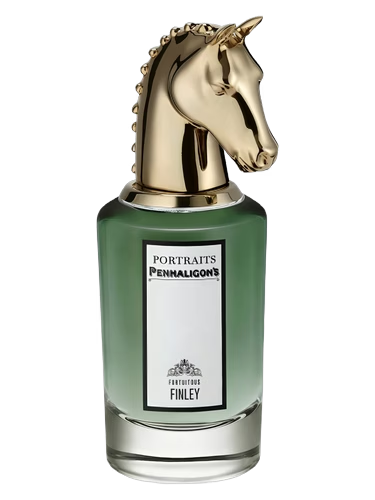
What is Lotus?
Lotus is an aquatic floral note derived from or inspired by the Nelumbo nucifera plant, symbolizing purity and rebirth, and is a staple in modern aquatic and sheer fragrance categories.What does Lotus smell like?
It offers a light, airy, and serene scent profile characterized by watery freshness, soft floral sweetness, and a clean, ethereal quality reminiscent of a flower floating on water.How is Lotus essence extracted?
Natural lotus absolute is obtained through solvent extraction or steam distillation, though its low yield often leads perfumers to use headspace technology or synthetic reconstructions to capture its delicate aroma.What are some top perfumes featuring Lotus?
Iconic fragrances highlighting this note include Issey Miyake L'Eau d'Issey, Bvlgari Omnia Crystalline, Versace Bright Crystal, and Jo Malone London Fig & Lotus Flower.When is Lotus in season?
Lotus flowers typically bloom during the warm, humid months of summer, with peak flowering occurring between June and August in many regions.