Fragrance Notes Are Layers Of Scent That Are Layered To Form The Final Fragrance. Fragrance Notes Are Categorised Into Three Main Elements Based On How Long They Take To Evaporate, And How Long They Typically Last Following Application: Top Notes, Heart Notes And Base Notes.
Longoza
Longoza (Phoenix Flower) offers a distinctive spicy-floral profile with rich, vibrant depth. Harvested in Madagascar, this "flower of eternity" note blends sweet aromatic facets with subtle woody undertones, often serving as a unique, refined top note to enhance sensuality and add complexity to luxury compositions.

Origin & Extraction Of Longoza
Longoza, or Phoenix Flower (Aframomum angustifolium), is a plant native to Madagascar, and its use in perfumery is relatively modern. Unlike classic notes like rose or jasmine, Longoza does not have a deep, centuries-long history in traditional European fragrance. Its introduction and prominence are closely tied to contemporary, high-end designer perfumery, specifically for its unique spicy-floral profile and ability to add exotic depth and vibrancy.
This note gained significant recognition and is primarily associated with the House of Dior, which has pioneered its use, particularly in the creation of the J'Adore fragrance line. Dior, recognizing the Longoza's "flower of eternity" symbolism and its distinct rich scent, integrated it as a key element to lend a signature nuance, enhancing the sophistication, longevity, and luxurious texture of their iconic floral compositions.
Extraction Methods of Longoza
Longoza essence is primarily obtained through steam distillation of the plant's leaves or seeds. Historically, the plant, which is endemic to Madagascar, has been processed using artisanal distillation techniques where the seeds are sun-dried before being distilled to extract an essential oil characterized by its green, fresh, and woody aromatic profile.
Modern extraction methods have expanded to meet the needs of the cosmetic industry, utilizing polar solvents like glycols or hydroalcoholic mixtures to create high-purity extracts. Advanced "green" extraction processes now focus on lower energy consumption, often involving a two-step method: an initial cold extraction at room temperature followed by a second extraction at mild temperatures of around 55°C. These contemporary techniques are designed to preserve the delicate bioactive compounds, such as those used for anti-aging and skin regeneration, while ensuring the solvents used are ecologically friendly and cosmetically acceptable.
Longoza, or Phoenix Flower, is most famously associated with the Dior J'Adore line, where it serves as a key ingredient to provide a distinct, rich floral depth and spicy nuance. This note, often sourced from Madagascar, is essential in lending a refined, unique signature that differentiates these fragrances from traditional floral compositions. The use of Longoza in scents like J'Adore L'Or Essence de Parfum highlights its role in adding both warmth and complexity, enhancing the overall longevity and luxurious feel of the perfume.
- ***
While Dior J'Adore remains the iconic fragrance utilizing Longoza, several niche and designer brands have recently incorporated this 'flower of eternity' to elevate their exotic floral and amber scents. Its spicy-floral profile and subtle woody undertones make it an excellent material for modern perfumers looking to create compositions that are both intensely vibrant and subtly sensual. In these creations, Longoza often bridges the bright floral top notes with deeper, richer bases.
- ***
The Longoza note is valued not just for its aroma but also for its symbolic resonance, representing eternal bloom and vibrancy. This translates into fragrances that feel opulent and enduring. For example, when used in conjunction with vanilla or sandalwood, as seen in various iterations, Longoza helps achieve a smooth, creamy texture while retaining its vibrant floral-spicy character, contributing to the sophisticated trail of perfumes such as J'Adore Injoy and other high-end Dior offerings where the ingredient is a signature element.
Sustainability Of Longoza
Sustainability of Longoza
- Promoting ethical sourcing and community support by ensuring fair trade practices that provide stable livelihoods for local harvesters in Madagascar
- Implementing sustainable wild-harvesting protocols to protect the biodiversity of Madagascar’s humid forests and prevent overexploitation
- Adopting low-impact steam distillation methods and solar-drying techniques to minimize the carbon footprint of essential oil production
- Encouraging circular economy principles by utilizing the plant’s natural regenerative properties, which allow it to recover rapidly after disturbances
- Supporting small-scale, artisanal operations that prioritize environmental stewardship and the preservation of rare botanical genetic diversity
Trivia
Known as the "flower of eternity," longoza earned its nickname for its remarkable ability to rapidly regenerate and bloom again even after being scorched by fire.
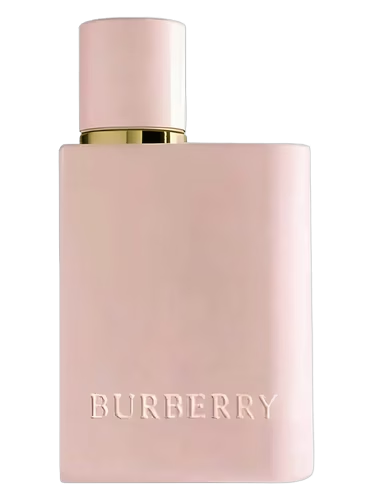
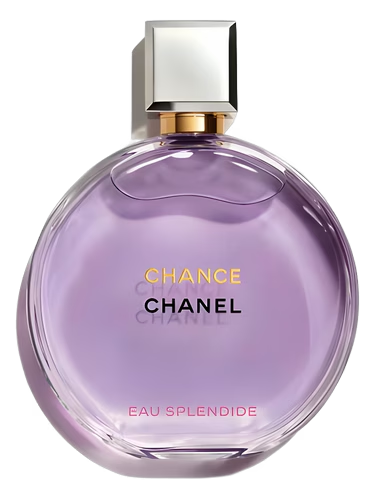
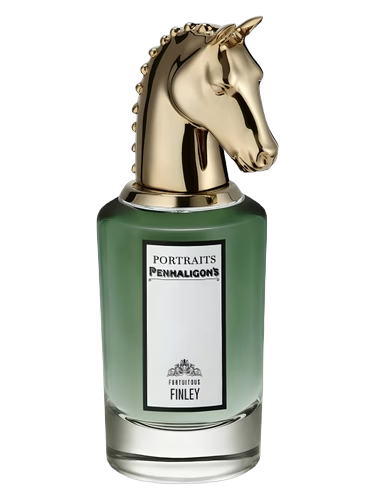
Most Popular Scents Using Longoza
What is Longoza?
Longoza, also known as the Phoenix Flower, is an aromatic ginger plant native to Madagascar that is celebrated in luxury perfumery for its exotic depth and symbolic association with eternity.What does Longoza smell like?
It offers a distinctive spicy-floral profile with rich, vibrant depth, blending sweet aromatic facets with subtle woody undertones to enhance sensuality in fragrance compositions.How is Longoza essence extracted?
The essence is primarily obtained through the steam distillation of the plant's leaves or seeds, while modern "green" extraction techniques are also used to preserve its delicate bioactive compounds.What are some top perfumes featuring Longoza?
Longoza is famously a signature note in the Dior J'Adore line and is also featured in fragrances like Florascent Longoza, Mind Games Prodigy, and Memo Paris Red Island.When is Longoza in season?
The plant flourishes during Madagascar's warm, rainy season from November to April, though its growth and aromatic potency remain of interest throughout the island's year-round tropical cycle.