Fragrance Notes Are Layers Of Scent That Are Layered To Form The Final Fragrance. Fragrance Notes Are Categorised Into Three Main Elements Based On How Long They Take To Evaporate, And How Long They Typically Last Following Application: Top Notes, Heart Notes And Base Notes.
Litchi Blossom
Litchi Blossom offers a delicate, airy floral scent with a translucent, sweet-tart fruitiness reminiscent of lychee pulp. It is bright, slightly aquatic, and possesses gentle rose-like nuances, creating an uplifting, luminous, and elegant opening note, often used to inject a modern, fresh sweetness into floral compositions.

Origin & Extraction Of Litchi Blossom
The Litchi Blossom (Lychee Blossom) note is a relatively recent, specialized addition to the perfumer's palette, distinguishing itself from the simple fruit note. Unlike foundational citrus or floral notes which date back centuries, the inclusion of specific fruit blossom accords reflects a modern trend in the late 20th and 21st centuries towards creating sophisticated, luminous, and photorealistic fresh-floral compositions. The focus shifted from heavy traditional florals to lighter, more transparent effects, which the airy, sweet-tart profile of Litchi Blossom perfectly provides.
In contemporary perfumery, Litchi Blossom and related lychee accords are highly valued for their ability to bridge the gap between sparkling fresh openings and soft, rosy floral hearts (such as rose or peony). This note offers a translucent, slightly aquatic sweetness that is neither heavy nor cloying, contributing an elegant, youthful vitality to feminine fragrances. Its modern prominence underscores the ongoing evolution of the floral category, where notes are sought not just for their scent, but for their ability to add brightness, complexity, and a signature 'sparkle' to a composition.
Extraction Methods of Litchi Blossom
The extraction of litchi blossom (lychee flower) aromatic compounds has traditionally relied on techniques designed to capture delicate floral volatiles without the harsh heat of standard steam distillation. Historically, litchi flowers were often processed through solvent extraction or simple maceration in ethanol to produce concretes and absolutes. These traditional methods involve submerging the blossoms in a solvent to dissolve the aromatic compounds, followed by the removal of the solvent to leave behind a highly concentrated, true-to-nature absolute that preserves the characteristic green-metallic and honeyed nuances of the fresh bloom.
Recent advancements have introduced more sophisticated and eco-friendly technologies to enhance yield and purity. Modern latest methods include the use of supercritical CO2 extraction and specialized continuous phase transformation devices (CPTD) using solvents like n-butane. These pressurized fluid extraction techniques allow for precise control over temperature and pressure, effectively capturing the complex volatile profile—including key components like cis-rose oxide—while avoiding thermal degradation. Additionally, experimental approaches now explore enzymatic treatments to break down cell walls and ultrasonic-assisted extraction to accelerate the release of active ingredients, ensuring a more efficient and sustainable recovery of the flower's precious essence.
The Litchi Blossom note, with its delicate, sweet-tart, and slightly aquatic floral profile, has become a signature element in modern feminine perfumery, particularly for designers seeking a luminous and sophisticated freshness. It is often utilized to create a transparent, sparkling opening that enhances traditional floral hearts. One prominent example is the use of a similar lychee/floral accord in fragrances like Delina by Parfums de Marly, where the juicy, sweet fruitiness is paired with rose and peony, elevating the composition from a simple floral into a complex, radiant statement.
- While Litchi Blossom itself is a specific note, its function often mirrors that of the broader lychee note, providing a translucent, modern fruitiness. This accord is instrumental in creating bright, cheerful, and elegant scents that appeal to a contemporary audience. Another fragrance that captures this vibrant, ethereal fruitiness is L’Eau d’Issey Pure Nectar de Parfum by Issey Miyake, which utilizes a sweet, dewy accord that echoes the light, watery floral sweetness of a fruit blossom.
The success of Litchi Blossom lies in its ability to bridge the gap between fresh citrus openings and richer floral hearts, offering an uplifting sweetness without becoming heavy or cloying. For instance, the use of bright, light fruit-floral notes in fragrances such as Chloé Eau de Parfum utilizes a similar sparkling lychee-like lift in its top notes, proving how essential this sweet, airy dimension is to achieving a modern, signature elegance.
Sustainability Of Litchi Blossom
Sustainability of Litchi Blossom
- Promoting a circular economy by repurposing discarded litchi flowers into high-value essential oils and natural fat-lowering products to reduce environmental pollution
- Adopting organic farming practices, such as composting with herbal residues, to enhance soil fertility, maintain delicate ecosystems, and prevent soil compaction
- Implementing integrated nutrient management based on leaf standards and physical growth regulation to ensure sustainable, consistent production and tree health
- Utilizing precision agricultural technologies, including UAV remote sensing and AI-based cluster detection, to optimize orchid management and minimize resource waste
- Advancing climate resilience through innovative cultivation techniques like sandbagging branches for strength and improving drainage systems to manage extreme weather
- Reducing chemical dependency by replacing excessive plant growth regulators with physical methods like stem girdling to improve flowering and prevent phytotoxicity
Trivia
Litchi blossom has no commercial extraction; the fragrance used in perfumery is actually a fantasy accord meticulously reconstructed from rose-like materials, tropical fruit modifiers, and honeyed notes to mimic the tree's subtle scent.
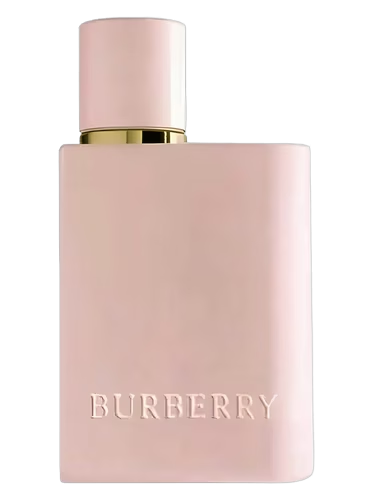
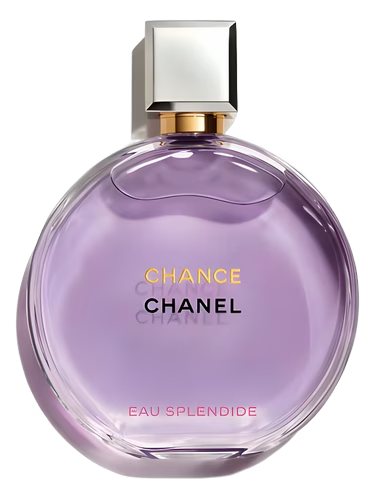
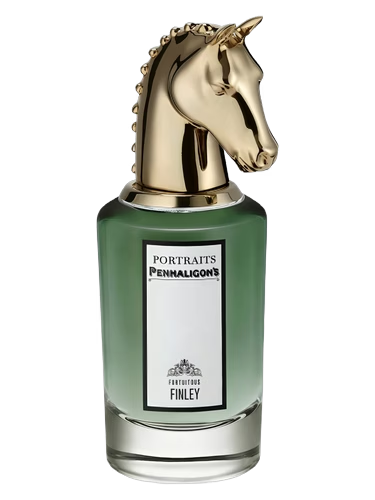
Most Popular Scents Using Litchi Blossom
What is Litchi Blossom?
Litchi Blossom is a modern floral fragrance note that offers a delicate, airy scent with a translucent, sweet-tart fruitiness reminiscent of lychee pulp and rose.What does Litchi Blossom smell like?
It features a bright, slightly aquatic, and luminous aroma with gentle rose-like nuances and a honeyed sweetness that adds a fresh, youthful vitality to perfumes.How is Litchi Blossom essence extracted?
In commercial perfumery, there is no direct extraction; it is a fantasy accord reconstructed using rose-like materials, tropical fruit modifiers, and honeyed notes to mimic the subtle scent of the flowers.What are some top perfumes featuring Litchi Blossom?
Notable fragrances include Nest New York Lychee Rose, The 7 Virtues Candied Lychee, Kayali Eden Sparkling Lychee | 39, and The Body Shop Lychee Blossom.When is Litchi Blossom in season?
The trees typically follow an annual flowering cycle during cooler winter and early spring months, with peak blooming occurring from February through May in the Northern Hemisphere.