Fragrance Notes Are Layers Of Scent That Are Layered To Form The Final Fragrance. Fragrance Notes Are Categorised Into Three Main Elements Based On How Long They Take To Evaporate, And How Long They Typically Last Following Application: Top Notes, Heart Notes And Base Notes.
Lingonberry
Lingonberry offers a complex, tart, and fresh berry fragrance, often balancing a juicy, slightly sour red fruit essence (similar to cranberry/raspberry) with subtle aromatic and spicy undertones like cinnamon and anise. It provides an uplifting, crisp, and slightly sweet-sour note, lending a vibrant, natural lift to compositions.

Origin & Extraction Of Lingonberry
Lingonberry (Vaccinium vitis-idaea), native to the boreal forests of Eurasia and North America, has a long history in Northern European cultures for its culinary and medicinal uses, but its specific application in fine perfumery is relatively modern. Unlike classical ingredients such as rose or jasmine, the use of distinct berry notes, particularly those with a tart, complex profile like Lingonberry, emerged prominently in contemporary fragrance. This shift is driven by perfumers seeking to capture authentic, naturalistic forest and fruit accords that move beyond generic fruity notes.
In perfumery, the Lingonberry note is often utilized to add a vibrant, crisp, and slightly sour-sweet burst, providing lift and an interesting complexity to compositions, especially in fresh, gourmand, or woody fragrances. As a niche and evocative note, it helps convey a sense of Nordic or wilderness freshness. Its presence is generally realized through synthetic accords or specialized extracts that emphasize its signature blend of tart berry, subtle aromatic spice, and natural juiciness.
The primary method for extracting lingonberry seed oil is cold pressing, a mechanical process that involves pressing the seeds under low-temperature controlled conditions, typically between 80-90°F (26-32°C). This unrefined approach preserves the fruit's potent antioxidants, such as vitamin E and carotenoids, without the use of chemical solvents or high heat that could degrade its nutritional profile.
Historically, lingonberries were processed through traditional maceration and infusion techniques, where the fruit was soaked in water or alcohol to capture its medicinal properties. Modern advancements have introduced highly specialized techniques including supercritical CO2 extraction, which uses pressurized carbon dioxide to isolate volatile compounds at low temperatures, and adsorptive membrane chromatography to fractionate specific phenolic compounds like anthocyanins for pharmaceutical and cosmetic applications.
The Lingonberry note, valued for its complex, tart, and fresh berry profile, is predominantly utilized in niche and contemporary perfumery to evoke a sense of Nordic wilderness or sophisticated, crisp gourmand freshness. Because of its unique balance of sweet-sour red fruit essence and subtle spice, it serves as a modern alternative to traditional berry notes, lending an uplifting and vibrant lift to compositions. Its presence often signifies a fragrance that aims for a naturalistic, slightly aromatic fruit accord.
- Among modern fragrances, the Lingonberry note is featured prominently in several contemporary niche releases. For example, in DIRISTA BENEATH THE SNOW, the note likely contributes to a crisp, cold atmosphere, blending its tartness with deeper wintery accords. Similarly, Aroma Karelia Panka (Панка) utilizes Lingonberry to capture an authentic Karelian or Russian soul essence, pairing its fresh, slightly sour quality with natural, woody, or aromatic elements.
- The note also finds a place in the gourmand and designer-inspired categories. Oakcha Sugar Rush, for instance, uses Lingonberry to inject a vibrant, tart fruitiness into a sweet composition, preventing it from becoming overly heavy by providing a juicy, uplifting top note. As perfumers continue to explore unique and evocative fruit accords, Lingonberry is increasingly favored for its ability to convey a high-definition, complex natural freshness that stands out from more common berries.
While major design houses like Dior and Tom Ford are listed as being associated with Lingonberry on some databases, its most explicit and celebrated appearances are in smaller, artisanal lines that focus on authentic, complex natural themes, leveraging the berry's distinct character to create memorable and invigorating openings.
Sustainability Of Lingonberry
Sustainability of Lingonberry
- Reducing pressure on wild populations by transitioning from wild harvesting to commercial agricultural cultivation to meet global demand
- Utilizing micropropagation and tissue culture techniques to efficiently mass-produce high-quality, disease-resistant plants without genetic modification
- Promoting a circular economy through bio-refining processes that combine bio-extraction with food production to maximize resource value
- Implementing organic farming practices and integrated pest management to eliminate synthetic pesticides and fertilizers, protecting local biodiversity
- Supporting ecosystem services by cultivating plants that stabilize soil, prevent erosion through rhizomatous growth, and provide food for wildlife
- Developing adaptive governance and community-based resource management to ensure ethical and sustainable harvesting practices
Trivia
Known as "cowberries" in some regions, lingonberries are hardy enough to survive temperatures as low as -40°C and are often hand-harvested in the wild Arctic tundra to capture their fresh, tart essence for high-end niche perfumery.
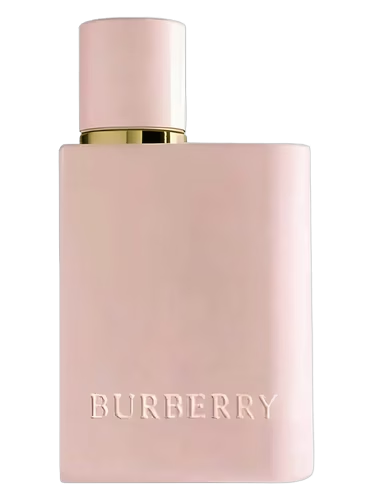
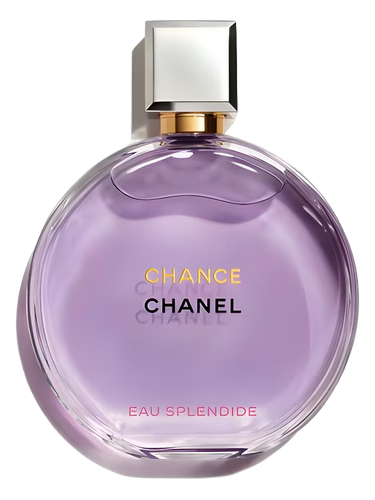
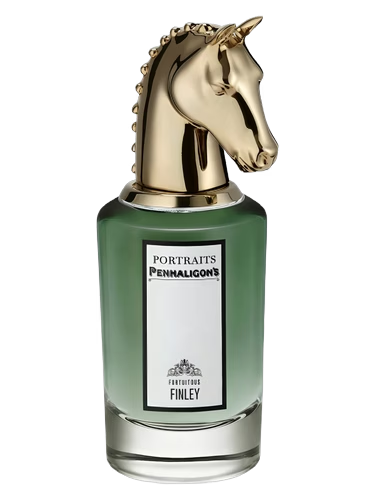
Most Popular Scents Using Lingonberry
What is Lingonberry?
Lingonberry is a tart, fresh red berry native to the boreal forests of the Northern Hemisphere, historically used in Nordic culture and now valued in modern perfumery for its crisp, naturalistic character.What does Lingonberry smell like?
It offers a complex, tart, and slightly sour red fruit fragrance similar to cranberry or raspberry, often balanced with subtle aromatic and spicy undertones like cinnamon and anise.How is Lingonberry essence extracted?
In perfumery, its scent is typically recreated through synthetic accords or specialized extracts, while the seed oil is obtained through cold pressing to preserve antioxidants.What are some top perfumes featuring Lingonberry?
Notable fragrances include Oakcha Sugar Rush, VDOHNI Russian soul, Aroma Karelia Panka, and DIRISTA BENEATH THE SNOW.When is Lingonberry in season?
The hardy evergreen shrub typically blooms in spring and summer, with the primary fruit harvest occurring from late August through October.