Fragrance Notes Are Layers Of Scent That Are Layered To Form The Final Fragrance. Fragrance Notes Are Categorised Into Three Main Elements Based On How Long They Take To Evaporate, And How Long They Typically Last Following Application: Top Notes, Heart Notes And Base Notes.
Limetta
Limetta, or Sweet Lime, offers a scent profile that is less tart and sharper than regular lime, providing a softer, sweeter, and more delicate citrus aroma. It is bright, refreshing, and clean, with subtle green and floral undertones, often used in perfumery to give a gentle, uplifting top-note opening that is light and airy.

Origin & Extraction Of Limetta
Limetta, or Sweet Lime (Citrus limetta), originates from Southeast Asia and India, later spreading across the Mediterranean and tropical regions. Unlike its more popular, sharper relative, the common lime, the essential oil of Limetta has historically been valued for its low acidity and unique, delicate sweetness. While not a cornerstone of classical perfumery like Bergamot or traditional Lemon, Limetta has been intermittently used to soften harsh citrus openings and introduce a gentle, sweet freshness.
Its relevance in modern perfumery has increased as creators seek subtle, less aggressive citrus profiles. Limetta is particularly utilized to provide an airy, clean top note that harmonizes well with white florals, such as neroli and orange blossom, lending a sophisticated, slightly sweet illumination without the tart bite. This nuanced profile makes it ideal for contemporary "water" or sheer floral compositions where a soft, natural, and uplifting citrus signature is desired over a dominant zest.
Extraction Methods of Limetta
The primary method for extracting essential oil from Limetta (sweet lime) is cold expression of the fruit's peel. This mechanical process involves breaking the oil-containing cells in the rind, typically using a machine that rasps or presses the skin and utilizes a water spray to flush away the released essence, which is then isolated through centrifugation. This method is preferred for preserving the delicate citrus aromatic compounds that would otherwise be degraded by heat.
Historically, limetta oil was obtained through labor-intensive manual techniques such as the sponge method or the "ecuelle a piquer," which involved pressing or pricking the rinds by hand to collect the volatile oils. Traditional medicinal and culinary preparations also utilized simple maceration or infusion in water or alcohol to create aromatic spirits and tinctures.
Modern extraction developments have introduced more efficient and specialized techniques. Superheated steam distillation (SHSD) is increasingly utilized as a more effective alternative to traditional hydro-distillation, offering higher yields and preserving greater antioxidant activity. Furthermore, experimental methods explore hydrothermal liquefaction (HTL) using organic solvents like methanol to convert fruit waste into high-energy biocrude, as well as supercritical fluid CO2 extraction to capture pure, solvent-free aromatic molecules.
Limetta, or Sweet Lime, offers a unique profile in perfumery—softer, less acidic, and more delicate than traditional lime—making it a sophisticated choice for fragrances aiming for gentle, airy freshness rather than sharp zest. While not as common as Bergamot or Lemon, it is often featured in contemporary and niche creations where a nuanced, slightly floral citrus opening is desired. It lends an uplifting sweetness without overwhelming the composition, serving as an elegant bridge to lighter floral and aquatic hearts.
A notable example utilizing the delicate charm of Limetta is often found in the works of Italian houses that specialize in citrus blends. These brands frequently draw inspiration from Mediterranean orchards, where Sweet Lime is cultivated. While specific high-profile commercial examples explicitly centering on Limetta can be rare, its subtle sweetness often contributes to the bright opening of fragrances such as certain limited-edition summer offerings from houses like Acqua di Parma or the nuanced citrus structures found in lines such as those by Atelier Cologne, where notes like "Sweet Lemon" or "Limetta" are used to ensure the top notes feel luminous and soft, such as in Pomélo Paradis, which features a similar light citrus effect.
In modern perfumery, Limetta is employed to soften sharper green and herbaceous notes, or to add a dewy, clean facet to white floral perfumes. This prevents the fragrance from becoming too heavy or indolic. It functions as a sophisticated alternative to Orange Blossom or Neroli, adding a subtle green freshness. Its use suggests an intentional refinement, often seen in niche releases where ingredient quality and authenticity are paramount, helping to give a gentle, natural lift to scents that might include components like gardenia or tuberose.
Sustainability Of Limetta
Sustainability of Limetta
- Promoting a circular bioeconomy by repurposing juice industry waste, such as peels and pomace, into high-value products like pectin to reduce environmental impact
- Utilizing fruit peel biowaste as an eco-friendly, low-cost biosorbent for the removal of heavy metals and industrial dyes from contaminated wastewater
- Advancing waste-to-wealth initiatives by converting discarded peels into activated carbon for sustainable groundwater treatment and fluoride removal
- Adopting green extraction technologies, such as ultrasound-assisted extraction, to minimize energy consumption and solvent use during the processing of citrus derivatives
Trivia
Limetta is considered a natural hybrid between bitter orange and citron, offering a unique bittersweet aromatic profile that serves as a softer, more floral alternative to traditional lime.
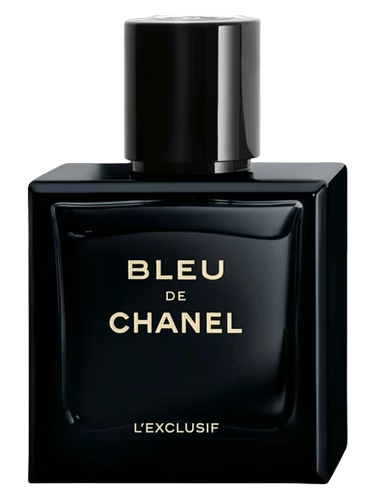
Most Popular Scents Using Limetta


What is Limetta?
Limetta, also known as Sweet Lime or Sweet Lemon, is a citrus fruit prized in perfumery for its delicate, low-acid scent and unique hybrid origin between bitter orange and citron.
What does Limetta smell like?
It offers a soft, sweet, and airy citrus aroma that is less tart than regular lime, featuring subtle green and floral undertones that provide a luminous opening.
How is Limetta oil extracted?
The essential oil is primarily obtained through cold expression of the fruit's peel to preserve its delicate aromatic compounds from heat degradation.
What are some top perfumes featuring Limetta?
Fragrances utilizing this note include Guerlain Aqua Allegoria Limon Verde, Tom Ford Azure Lime, Creed Virgin Island Water, and Atelier Cologne Pacific Lime.
When is Limetta in season?
While the tree can fruit year-round, the primary blooming occurs in spring, with the peak harvest for high-quality essential oil typically falling between November and February.