Fragrance Notes Are Layers Of Scent That Are Layered To Form The Final Fragrance. Fragrance Notes Are Categorised Into Three Main Elements Based On How Long They Take To Evaporate, And How Long They Typically Last Following Application: Top Notes, Heart Notes And Base Notes.
Lime
Lime, a vibrant top note, delivers a sharp, effervescent, and tart citrus aroma, instantly recognizable for its zesty brightness. Its scent is intensely refreshing, often described as greener and slightly more bitter than lemon. It adds a powerful, clean, and energizing lift, perfect for invigorating colognes and fresh summer compositions.

Origin & Extraction Of Lime
Lime has been an important note in perfumery, particularly since the development and popularization of Eaux de Cologne in the 18th century, though it was often used interchangeably or alongside lemon and bergamot. Its sharp, distinctively zesty, and highly volatile nature made it ideal for the invigorating, fresh top notes required in these early fragrances, providing a potent and immediately recognizable burst of clean energy. The use of natural lime oil, often derived from its rind, became standardized as perfumery techniques advanced, securing its role as an essential, bright opener.
In modern perfumery, lime maintains its importance but is often employed for its greener, slightly bitter facets, distinguishing it from the sweeter profiles of mandarin or orange. It is a favored note in contemporary fresh, aquatic, and masculine compositions where it lends a crisp, dynamic freshness that evokes images of tropical climates or sophisticated cocktails. The pairing of lime with aromatic or woody elements allows its sharp character to persist longer in a composition, offering a clean, energetic contrast throughout the fragrance's development.
Extraction Methods of Lime
The primary method for extracting lime (calcium oxide) is calcination, a process where calcium carbonate—typically sourced from limestone, chalk, or shells—is heated in a kiln to temperatures above 900°C. Historically, this was achieved using simple clamp kilns, which were essentially mounds of layered fuel and stone covered with clay or turf and burned slowly over several days. The Romans advanced this technology by developing stone-built flare kilns, which required periodic loading and cooling, and eventually draw kilns, which allowed for a more continuous production process by layering fuel and limestone and drawing finished lime from the bottom.
Modern commercial extraction has evolved into highly efficient industrial operations using continuous shaft kilns and rotary kilns. These advanced systems utilize sophisticated heat exchange and regenerative techniques to minimize energy consumption and maximize purity. Recent developments include the use of annular shaft kilns that provide uniform gas flow for medium-burned lime and the implementation of automated mechanical grates and carbon capture technologies to improve environmental sustainability and production consistency for specialized industrial and chemical applications.
Lime is a vital, sharp component used extensively in classic and modern perfumery to provide an immediate burst of clean energy. In traditional Eaux de Cologne, it often works in tandem with notes like Bergamot and Lemon to establish a crystalline, invigorating top layer, defining the quintessential "fresh" scent profile. This characteristic tartness and brightness ensure that the fragrance opens with an undeniable feeling of cleanliness and vitality, making it a foundational element in many timeless compositions, even if the primary structure is complex.
- A famous modern example of its potent use is in Virgin Island Water by Creed, where lime is combined with coconut and white rum to evoke a tropical cocktail, showcasing its ability to transport the wearer to an exotic, vibrant setting.
In contemporary perfumery, lime’s role extends beyond just the top note, often being leveraged for its green, slightly bitter facets. It provides a sharp counterpoint to sweeter, more aromatic elements, preventing compositions from becoming dull or overly heavy. For instance, in fragrances like Terre d'Hermès Eau Très Fraîche, lime is used to amplify the feeling of freshness, giving the earthy vetiver and mineral notes a scintillating, effervescent lift.
- Another notable usage is in Jo Malone's Lime Basil & Mandarin, where the lime note is rendered with a unique aromatic complexity, pairing its zesty quality with the peppery, herbal scent of basil to create a distinctive, sophisticated, and gender-neutral fragrance.
Due to its highly volatile nature, perfumers often employ captive molecules or specific blend techniques to extend the presence of lime, ensuring its refreshing impact lasts longer than typical citrus oils. Whether supporting green notes, enhancing aquatic accords, or providing a sparkling contrast to spicy ingredients, lime remains indispensable for crafting bright, uplifting, and memorable top notes across diverse fragrance genres, from light summer colognes to powerful statement scents like Dior's Eau Sauvage.
Sustainability Of Lime
Sustainability of Lime
- Utilizing trees in orchards for carbon sequestration, which captures carbon from the atmosphere and traps it in the ground
- Implementing integrated pest management and organic farming techniques to reduce the environmental impact of high agrochemical and nitrogen fertilizer usage
- Adopting precise irrigation methods and water management systems to mitigate the high water footprint required in regions with low rainfall
- Promoting the use of agricultural lime to neutralize soil acidity, which reduces reliance on destructive swidden agricultural systems and prevents deforestation
- Improving nutrient availability and soil health, allowing for more efficient use of land and reduced need for chemical fertilizers that cause greenhouse gas emissions
- Developing circular supply chains for related industries, such as battery recycling partnerships to recover and reuse critical minerals
Trivia
In the 1800s, British sailors were nicknamed "Limeys" because they were required to consume a daily allotment of lime juice to prevent scurvy during long sea voyages.
Most Popular Scents Using Lime
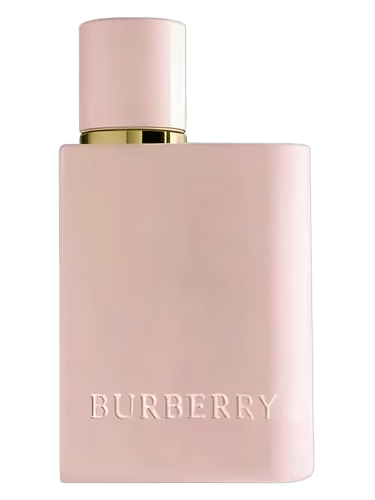
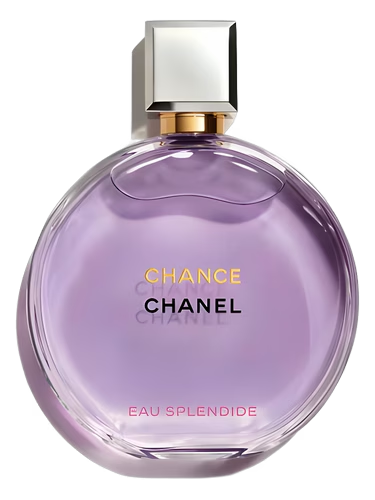
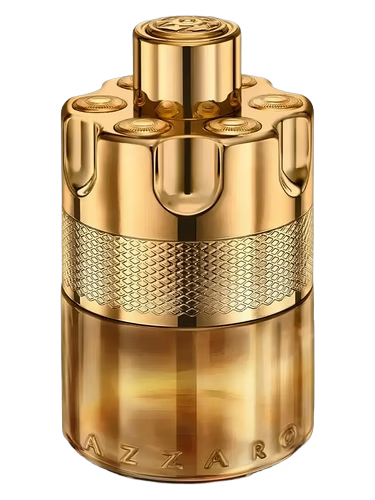
What is lime in perfumery?
Lime is a vibrant citrus top note derived from the Citrus aurantifolia or Citrus latifolia species, prized for its sharp, effervescent, and tart aromatic profile.How is lime oil extracted?
The essential oil is primarily obtained through cold expression of the fruit's peel, though it is unique among citruses as it can also be extracted via steam distillation to achieve different olfactory facets.What does lime smell like in a fragrance?
It offers an intensely fresh and zesty scent that is often described as greener, sharper, and slightly more bitter than lemon, providing a powerful energizing lift.What are some famous perfumes that feature lime?
Iconic fragrances featuring a prominent lime note include Creed Virgin Island Water, Jo Malone London Lime Basil & Mandarin, Guerlain Homme, and Atelier Cologne Pacific Lime.Is lime a seasonal fragrance note?
While lime trees can bear fruit year-round in tropical climates, the note is classically associated with summer compositions due to its cooling and refreshing ability to cut through heat.