Fragrance Notes Are Layers Of Scent That Are Layered To Form The Final Fragrance. Fragrance Notes Are Categorised Into Three Main Elements Based On How Long They Take To Evaporate, And How Long They Typically Last Following Application: Top Notes, Heart Notes And Base Notes.
Lilac
Lilac offers a sweet, intoxicating, and recognizable floral profile. Since it doesn't yield essential oil, the scent is recreated synthetically, often dominated by compounds like benzyl benzoate and phenylethyl alcohol. This results in a fresh, authentic, slightly powdery, and iconic floral essence.

Origin & Extraction Of Lilac
The Lilac note, while highly prized for its sweet, intoxicating, and recognizable floral profile, presents a unique challenge in perfumery because the flower does not yield an essential oil through traditional methods. Historically, its scent has been recreated synthetically, a practice that gained prominence alongside advancements in chemistry, allowing perfumers to capture the authentic, slightly powdery essence of the flower. This synthetic creation became vital for giving structure and depth to large floral bouquets, playing a key role in the development of rich, opulent scent profiles in classic European perfumery.
In the modern era, the Lilac note has maintained its relevance, transitioning seamlessly from vintage romantic compositions to lighter, contemporary fragrances. Its association with spring and nostalgia is frequently utilized in sophisticated scents, such as Frédéric Malle’s *En Passant*, which focuses on the sheer, airy, and aquatic aspects of the flower. Today, Lilac is often blended with contrasting notes, like green or gourmand accords, to create fresh, uplifting, and versatile compositions that appeal to contemporary tastes.
Extraction Methods of Lilac
Lilac is considered a silent or mute flower because its delicate scent cannot be captured through conventional steam distillation, which destroys its aromatic compounds. Historically, the most effective traditional method for capturing the true essence of lilac was cold enfleurage. This labor-intensive process involves laying fresh blossoms on a substrate of odorless animal or vegetable fat, allowing the living flowers to exhale their fragrance into the fat over 24 hours. The spent blossoms are painstakingly replaced with fresh ones daily for up to 33 days until the fat, known as a pomade, is saturated. This pomade can then be washed with ethyl alcohol to create a lilac absolute.
In modern perfumery, while artisanal enfleurage is still practiced by a few, the scent of lilac is most commonly reconstituted by perfumers using an accord of natural and synthetic raw materials. Recent technological advancements have introduced more efficient methods, such as supercritical CO2 extraction, which uses pressurized carbon dioxide to extract the essence at low temperatures, preserving the flower's delicate profile. Additionally, the headspace technique is used to analyze and capture the molecules in the air surrounding a living lilac bloom, allowing for highly accurate chemical reconstructions that add naturalness to the top notes of a fragrance.
The Lilac note, prized for its sweet, intoxicating, and slightly powdery floral essence, is central to many classic and contemporary fragrances, often symbolizing spring and nostalgia. One of the most iconic fragrances to feature a pronounced Lilac accord is **En Passant** by Frédéric Malle. Created by Olivia Giacobetti, this fragrance captures the scent of a rainy morning in a garden, focusing on the sheer, airy, and aquatic aspects of the flower, often cited as a masterpiece of modern floral simplicity.
- * * *
Lilac also plays a vital role in historical perfumery, giving structure and depth to large floral bouquets. In the 1970s, fragrances like **Chloe Eau de Parfum (Original)** utilized Lilac alongside other white florals, creating a rich, opulent, and assertive scent profile that defined the decade's glamorous aesthetic. Furthermore, the note contributes to the romantic and complex character of other well-known compositions, ensuring the lilac scent remains a timeless fixture in the world of high perfumery.
- * * *
In more modern contexts, Lilac is often blended with green notes or gourmand accords to give it a fresh spin. For instance, in **White Lilac & Rhubarb** by Jo Malone London, the delicate floral heart of lilac is contrasted with the tart, juicy sharpness of rhubarb, creating an uplifting and contemporary scent. This illustrates the note's versatility, allowing it to transition seamlessly from vintage romantic bouquets to light, modern, and refreshing compositions.
Sustainability Of Lilac
Sustainability of Lilac
- Enhancing local biodiversity by providing critical support and habitats for pollinator populations, including bees and butterflies
- Integrating lilacs into agroforestry and forestry projects for soil stabilization, windbreaks, and carbon sequestration
- Utilizing organic and sustainable fertilization protocols, such as well-rotted manure and slow-release formulas, to boost soil carbon and biological activity
- Employing eco-friendly disease and pest management strategies, including the use of neem-based solutions, potassium bicarbonate, and beneficial insects
- Promoting a circular economy by upcycling spent lilac biomass into mulch or compost to recycle nutrients back into the soil
- Adopting low-impact cultivation techniques that prioritize full sun and proper drainage to reduce the need for intensive chemical interventions and supplemental watering
Trivia
In Celtic cultures, the deep floral fragrance of lilac was believed to have the power to transport humans into fairyland and the spiritual world.
Most Popular Scents Using Lilac
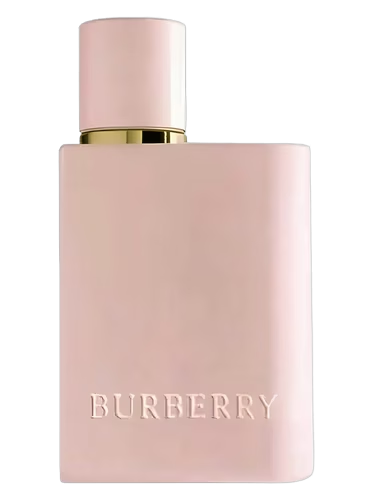
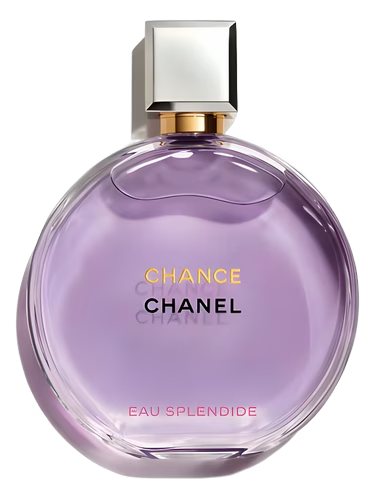
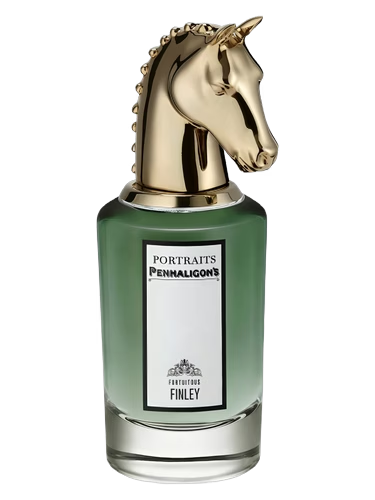
What is Lilac?
Lilac is a sweet, intoxicating floral note derived from the Syringa plant, primarily native to the Balkan Peninsula and Asia, and is a quintessential symbol of spring in perfumery.What does Lilac smell like?
It features a multi-faceted profile that is sweet, fresh, and slightly powdery, often described as having dewy green undertones and nuances of honey, almond, and rose.How is Lilac essence extracted?
Lilac is a "silent flower" that does not yield oil through steam distillation; while historically captured via labor-intensive cold enfleurage, it is now typically recreated using synthetic accords or headspace technology.What are some top perfumes featuring Lilac?
Popular fragrances include Frédéric Malle En Passant, Aerin Lilac Path, Gucci Guilty Pour Femme, Amouage Lilac Love, and Vilhelm Parfumerie A Lilac A Day.When is Lilac in season?
Lilacs are spring-blooming shrubs that typically flower from April through June, with peak fragrance occurring in mid-to-late spring.