Fragrance Notes Are Layers Of Scent That Are Layered To Form The Final Fragrance. Fragrance Notes Are Categorised Into Three Main Elements Based On How Long They Take To Evaporate, And How Long They Typically Last Following Application: Top Notes, Heart Notes And Base Notes.
Liatrix
Liatrix offers a sweet, coumarinic, and highly complex profile. It is deeply herbaceous, reminiscent of dried grass, with pronounced tobacco-like and creamy vanilla-like facets. It lends a sophisticated, long-lasting sweetness with a subtle, earthy, and slightly honeyed nuance to compositions.

Origin & Extraction Of Liatrix
Liatrix, with its coumarinic, sweet, and distinctive tobacco-like facets, has been utilized in perfumery to provide a sophisticated, long-lasting sweetness and an earthy, hay-like texture. Often known as Deer Tongue, this note is highly valued for its complexity, which allows it to bridge herbaceous elements with warmer, vanillic accords. Its use dates back to classic compositions, notably featuring in Caron's landmark fragrance, Tabac Blond, where it was integral to the scent's signature dry, smoky, and complex tobacco accord, securing its place in sophisticated perfumery.
In modern perfumery, Liatrix continues to be a unique ingredient, often employed to create rich, nuanced compositions, particularly in the Fougere and Oriental fragrance families. It is valued for its tenacity, ensuring the sweet, hay-like aroma endures in the dry-down. Its subtle vanilla and creamy undertones make it useful for enhancing 'gourmand' or 'boozy' aspects in contemporary scents, providing an adult, sophisticated sweetness that avoids being overtly sugary, as seen in fragrances like Guerlain's Samsara where it contributes to the complex, enveloping structure.
Extraction Methods of Liatrix
The primary method for obtaining liatrix essence is through solvent extraction of the plant's leaves, specifically from species like Liatris odoratissima. Historically, the process begins with hand-collecting the leaves and drying them in the sun, which allows lighter molecules to evaporate and concentrates the heavier, coumarin-rich compounds. The dried leaves are then treated with volatile hydrocarbons such as hexane, benzene, or petroleum ether to produce a "concrete"—a pasty extract containing natural waxes.
To produce the final liatrix absolute, the concrete undergoes a secondary purification step involving alcohol. The concrete is mixed with alcohol and subjected to a glazing process at low temperatures (around 32 °F) to precipitate the insoluble waxes. After filtration and subsequent evaporation of the alcohol, a thick, dark absolute is obtained. In modern perfumery, while natural absolutes remain highly valued for luxury compositions, advanced reconstitutions are also used, blending captive ingredients to replicate the complex sweet-herbaceous profile of natural liatrix with greater stability and fewer regulatory constraints.
Liatrix, with its coumarinic, sweet, and tobacco-like facets, has been a key component in sophisticated fragrances seeking an earthy, long-lasting sweetness. This unique profile allows it to bridge herbaceous notes with warmer, vanillic accords. While not as universally common as notes like jasmine or sandalwood, Liatrix is highly valued in classic and niche perfumery for adding depth and a hay-like texture. One prominent example of a fragrance utilizing this note is **Tabac Blond** by Caron, a landmark scent where Liatrix contributes to the signature dry, smoky, and complex tobacco accord.
- Liatrix, often known as Deer Tongue, is used sparingly but effectively to create rich, nuanced compositions.
In modern perfumery, Liatrix is often incorporated to enhance the "gourmand" or "boozy" aspects of a scent, thanks to its vanilla and creamy undertones. It provides an adult, sophisticated sweetness that avoids being overtly sugary, making it popular in cold-weather and evening fragrances. A fragrance where Liatrix plays a role in creating a rich, opulent feel is **Samsara** by Guerlain, contributing to its complex, enveloping oriental structure, though it is often blended seamlessly with other rich materials like tonka and sandalwood.
- The note’s tenacity is highly prized, ensuring the sweet, hay-like aroma endures in the dry-down of a fragrance.
Niche perfumery frequently embraces Liatrix for its distinctive earthy and herbaceous quality, using it to evoke natural landscapes or vintage themes. Its tobacco facet makes it a natural fit for scents categorized as Fougeres or Orientals, providing a sophisticated backdrop for other materials. Although sometimes overshadowed by the more dominant Tonka Bean (Coumarin), Liatrix provides a softer, more nuanced interpretation of that creamy, hay-like sweetness. An excellent modern example is its use in fragrances like **Havana** by Aramis, where it helps anchor the tobacco and spice notes with its creamy, earthy foundation.
Sustainability Of Liatrix
Sustainability of Liatrix
- Promoting the use of drought-tolerant native species in xeriscaping and low-water gardens to conserve water resources and reduce maintenance requirements
- Supporting local biodiversity by providing critical nectar sources for pollinators, such as the Monarch and spicebush swallowtail butterflies, during the late summer and fall
- Advocating for the conservation of endangered genetic diversity and the protection of natural habitats from threats like development, agricultural conversion, and invasive species
- Implementing responsible gardening practices, including the use of organic fertilizers and mulch, to enhance soil fertility and moisture retention naturally
- Encouraging the cultivation of hardy, deer-resistant perennials that reduce the need for chemical deterrents and intensive management in ornamental landscapes
Trivia
While the fresh leaves of Liatrix are nearly odorless, the plant's characteristic sweet, hay-like fragrance only develops during the drying process through a natural chemical transformation that converts odorless compounds into fragrant coumarin.
Most Popular Scents Using Liatrix
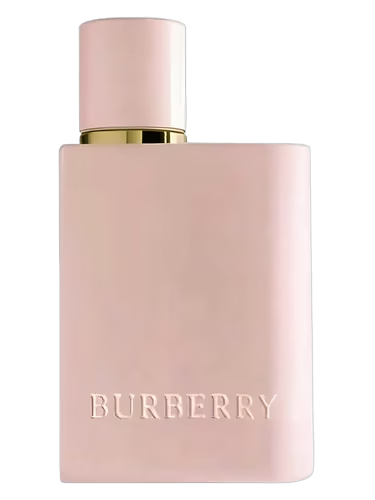
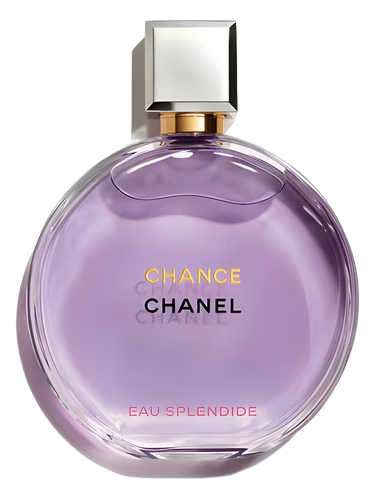
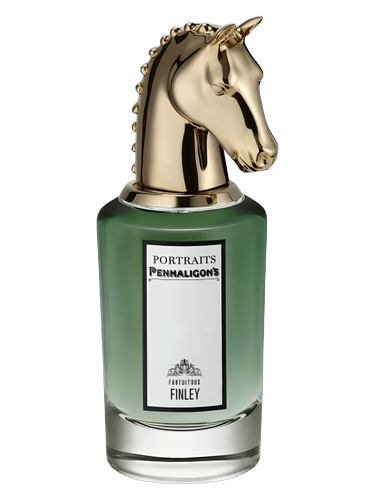
What is Liatrix?
Liatrix, also known as Deer Tongue, is a North American flowering plant valued in perfumery for its complex, sweet, and herbaceous aroma.What does Liatrix smell like?
It offers a sophisticated profile of sweet coumarin, dried grass, and tobacco-like facets with creamy vanilla and honeyed undertones.How is Liatrix essence extracted?
The essence is obtained through solvent extraction of the plant's dried leaves to create a concrete, which is then refined into a high-quality absolute.What are some top perfumes featuring Liatrix?
Notable fragrances include Caron Tabac Blond, Guerlain Samsara, Meo Fusciuni Little Song, and Parfums Dusita Erawan.When is Liatrix in season?
Liatrix is a summer and fall blooming perennial, typically producing its characteristic purple flower spikes from July through October.