Fragrance Notes Are Layers Of Scent That Are Layered To Form The Final Fragrance. Fragrance Notes Are Categorised Into Three Main Elements Based On How Long They Take To Evaporate, And How Long They Typically Last Following Application: Top Notes, Heart Notes And Base Notes.
Lemongrass
Lemongrass presents a vibrant, crisp, and intensely green citrus scent, often described as a fresher, sharper alternative to lemon. It carries grassy, herbaceous undertones with a hint of warm, earthy spice, giving it an energizing and clean character. It is frequently used to add a lively, uplifting top note in cologne and fresh compositions.

Origin & Extraction Of Lemongrass
Lemongrass, derived from the plant species Cymbopogon, has a long history in traditional medicine and culinary arts across Asia. While its usage in fine Western perfumery is more recent compared to classic Mediterranean citruses like Bergamot and Lemon, its essential oil has always been valued for its high citral content, which delivers an intense, vibrant, and clean aroma. Its initial use in fragrance was often functional, found in soaps, repellents, and refreshing body products. However, its distinct green-citrus profile—sharper than lemon with herbaceous undertones—was eventually recognized for its sophistication.
In modern perfumery, particularly within the niche and natural fragrance sectors, Lemongrass is prized as a sophisticated, energetic alternative to traditional citrus. It is strategically incorporated into compositions to offer a powerful, invigorating lift and to bridge sparkling top notes with green or herbal heart notes. Its popularity is tied to the contemporary demand for scents that evoke therapeutic, clean, and exotic natural environments, making it a prominent feature in modern colognes, light summer scents, and aromatic compositions that focus on vitality and nature.
Extraction Methods of Lemongrass
The primary and most widely used method for extracting lemongrass essential oil is steam distillation. In this process, saturated or superheated steam is passed through the fresh or partially dried grass, causing the volatile aromatic compounds to vaporize. The resulting vapor is then condensed and collected, allowing the pure oil to be separated from the water. Historically, lemongrass oil was often obtained through simple hydrodistillation, where the plant material was boiled directly in water-filled vessels over open fires. This traditional method, while effective, sometimes led to the thermal degradation of fragile constituents like citral due to prolonged exposure to high heat.
Modern commercial production has evolved to incorporate advanced technologies to improve yield, efficiency, and oil quality. Microwave-assisted hydrodistillation (MAHD) and solvent-free microwave extraction (SFME) have emerged as greener alternatives, significantly reducing extraction times and energy consumption while preserving the plant's delicate chemical profile. Furthermore, supercritical fluid extraction (SFE) using carbon dioxide (CO2) is increasingly utilized in the industry to achieve maximum recovery and high-purity extracts without the risk of solvent residue or thermal damage. Other contemporary techniques include ultrasonic-assisted extraction (UAE), which uses sound waves to rupture plant cells and enhance mass transfer.
Lemongrass, known for its vibrant, crisp, and green-citrus scent, is frequently utilized to provide an energetic and clean opening in modern fragrances. While it is not a traditional cornerstone like Bergamot or Neroli, its sharp, refreshing quality makes it ideal for uplifting compositions. A notable example of its use is in Acqua di Parma's Colonia Essenza, where it supports the classic citrus structure with a clean, herbaceous brightness, ensuring the opening is both sparkling and sophisticated.
- *
In contemporary niche and artisan perfumery, Lemongrass is often employed to introduce an exotic or spa-like freshness. It can stand out as a central theme, as seen in fragrances like Jo Malone's Lime Basil & Mandarin Cologne (where similar herbaceous citrus notes dominate) or more directly in certain aromatherapy-inspired lines. These applications leverage its clean, slightly spicy, and intensely green profile, moving beyond traditional citrus accords to evoke a sense of clarity and vitality.
- *
The note also plays a crucial role in enhancing tropical or green-tea-themed scents due to its inherent grassy and subtly spicy undertones. Its versatility allows it to bridge the gap between bright top notes and more complex herbal or aquatic hearts. For instance, in many popular 'fresh' or 'sport' fragrances, Lemongrass contributes an enduring, non-sweet zest that maintains the overall feeling of clean, natural energy, often appearing in fragrances like L'Occitane en Provence Verbena Eau de Toilette, where it complements other green citrus elements for an invigorating signature.
Sustainability Of Lemongrass
Sustainability of Lemongrass
- Promoting a circular economy by using spent lemongrass biomass as boiler fuel for the steam distillation process
- Empowering smallholder farmers by introducing lemongrass as a high-value crop to diversify income and increase socio-economic resilience
- Implementing water-efficient cultivation practices as lemongrass requires minimal groundwater and can thrive in rain-fed conditions
- Supporting community development through initiatives such as building school infrastructure and providing health training for farming families
- Ensuring ethical labor practices and fair wages through transparent, audited supply chains and direct partnerships with local cooperatives
- Utilizing steam distillation, a clean extraction method that relies on heat and water rather than harsh chemical solvents
Trivia
In some cultures, lemongrass is nicknamed fever grass due to its historical use in medicinal teas to reduce body temperature and treat fevers.
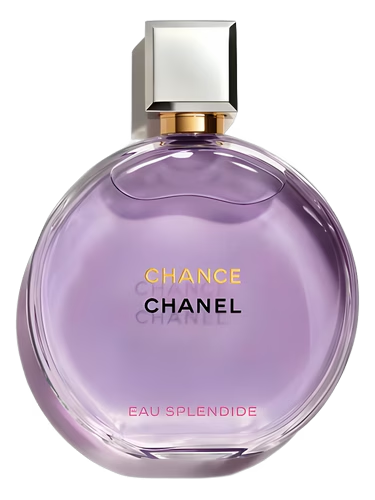
Most Popular Scents Using Lemongrass


What is lemongrass in perfumery?
Lemongrass is a vibrant, aromatic grass native to South and Southeast Asia, valued in perfumery for its crisp, citrusy, and intensely green scent profile.
What does lemongrass smell like?
It offers a sharp, clean citrus aroma with fresh grassy undertones and a hint of warm, earthy spice, often described as a more herbal alternative to lemon.
How is lemongrass essence extracted?
The essential oil is primarily obtained through steam distillation of the plant's fresh or partially dried stalks and leaves to capture its pure aromatic compounds.
What are some top perfumes featuring lemongrass?
Notable fragrances featuring lemongrass include Acqua di Parma Colonia Essenza, L'Occitane en Provence Verbena, Issey Miyake L'Eau Bleue d'Issey Pour Homme, and Xerjoff Casamorati Fiero.
When is lemongrass in season?
Lemongrass thrives in warm, humid conditions with a primary growing season from spring through autumn, though it can be harvested year-round in tropical climates.